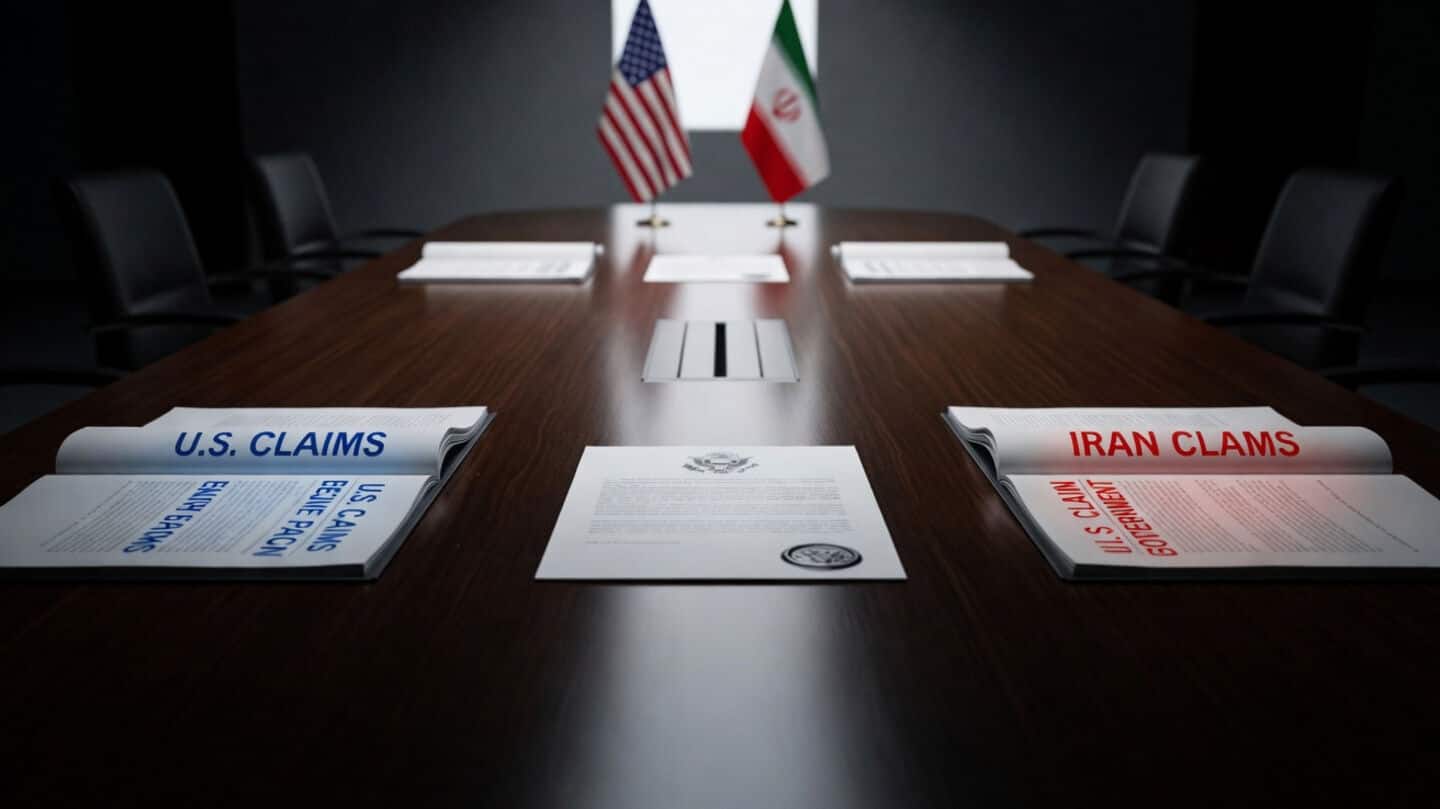
Why US and Iran have different versions of peace deal
What's the story
The United States and Iran have reached a peace deal after over three months of conflict in West Asia. The agreement is expected to be signed in Geneva on Friday (June 19) and will reopen the Strait of Hormuz. However, there are major discrepancies between the two nations' accounts of what the deal entails.
Disputed control
Who controls Strait of Hormuz
According to Iranian authorities, the peace deal gives Iran control over the Strait of Hormuz. They say Iran can charge for passage and reopen it on their terms.
In contrast, US officials claim the strait will be open to all as it was before the war.
This difference could lead to future disputes over maritime navigation and trade routes.
Nuclear debate
Nuclear program restrictions
The Iranian side claims that the peace deal does not impose any new restrictions on its nuclear program.
They say it allows them to keep their enriched uranium while future talks are held.
However, US President Donald Trump has said that if no agreement is reached on Iran's nuclear program within 60 days after signing the deal, military action could resume.
Regional implications
Ceasefire extension to allied fronts
Iran claims that the ceasefire applies to all fronts, including conflicts involving allies in Lebanon.
However, Israeli Prime Minister Benjamin Netanyahu has said that the peace deal will not apply to Lebanon and military operations there will continue.
This could further complicate regional dynamics and escalate tensions in Lebanon.
Economic impact
Compensation for war damages
Iran claims that the US and its allies would pay $300 billion for reconstruction as part of the peace deal.
A Reuters report also confirmed an economic development plan for Iran, but did not mention a specific corpus for this compensation.
Iran's primary demands during the 60-day negotiation framework also include sanctions relief and the repatriation of frozen assets. However, implementing these measures would mandate statutory clearance from the US Congress.