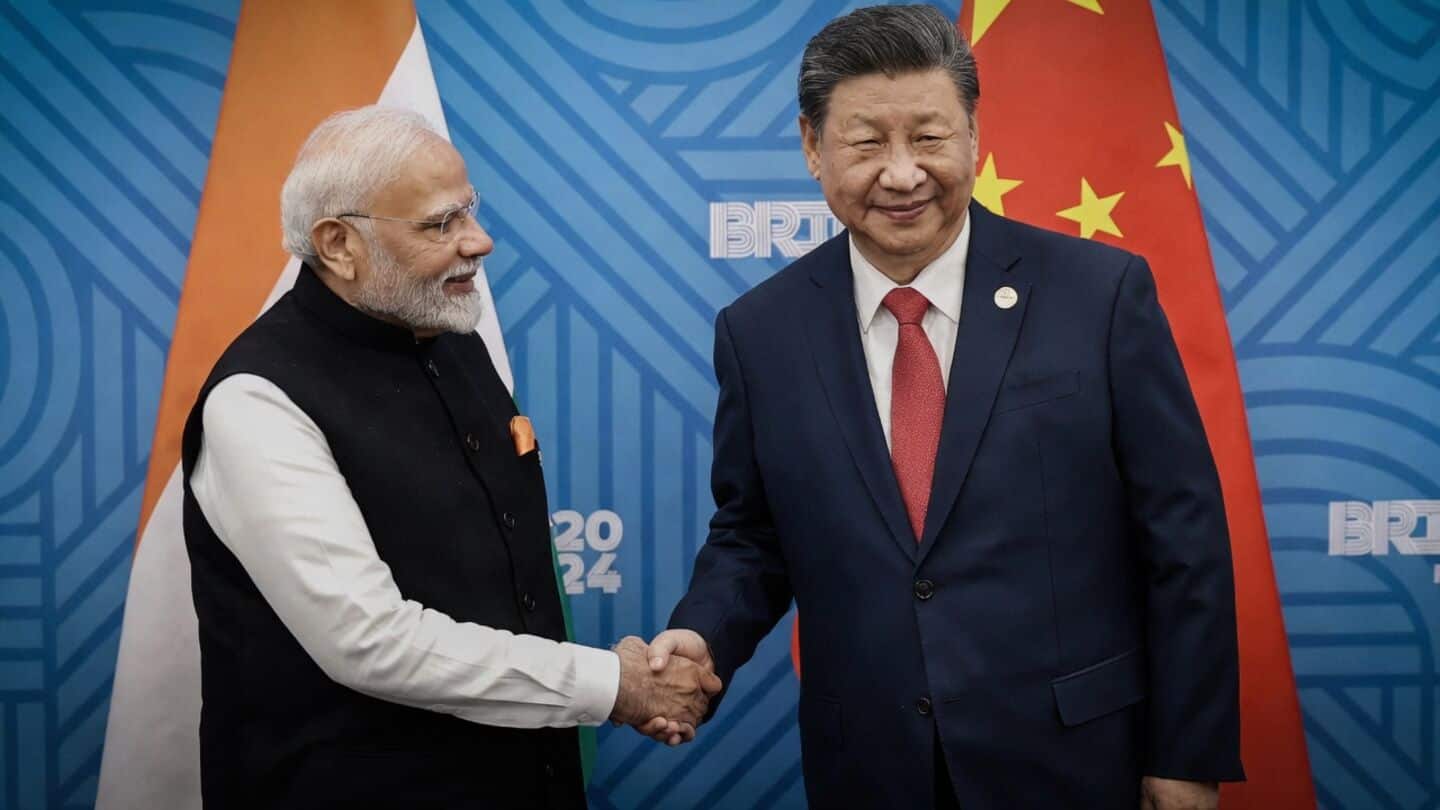
Chinese President Xi Jinping likely to attend BRICS summit: Report
What's the story
Chinese President Xi Jinping is likely to attend the upcoming BRICS summit in New Delhi next month, according to a Reuters report. If confirmed, this would be his first visit to India in seven years and could be indicative of improving relations after years of tension over the two countries' disputed border. The summit is scheduled for September 12-13 and will be hosted by India.
Diplomatic thaw
Xi to be accompanied by large delegation
Xi is expected to be accompanied by a large delegation of around 400 officials, much larger than the fewer than 200 who accompanied him on his last visit to India in 2019.
This development could indicate a possible thaw in relations between Beijing and New Delhi, which have been strained over border disputes.
Summit preparations
China yet to confirm Xi's travel plans
An Indian source familiar with the preparations told Reuters that Chinese officials are busy finalizing hotel bookings and security arrangements for the possible visit.
However, China's foreign ministry has not officially confirmed Xi's travel plans. It only said that Beijing "attaches great importance to and actively participates in BRICS cooperation" and supports India as the host.
Ongoing tensions
India-China relations strained over border disputes
The India-China relationship has been marred by border tensions since a deadly clash in June 2020, which left 20 Indian soldiers and four Chinese soldiers dead.
The clash triggered a military standoff along the disputed 3,800-km border.
Although both sides reached a disengagement agreement in October 2024, several differences remain unresolved.
Diplomatic efforts
Efforts to rebuild diplomatic ties
In recent years, both countries have made efforts to rebuild diplomatic ties.
Indian Prime Minister Narendra Modi visited China last year after a seven-year hiatus.
India's National Security Adviser Ajit Doval also visited Beijing recently for talks, which included those with Chinese Foreign Minister Wang Yi on the boundary issue.