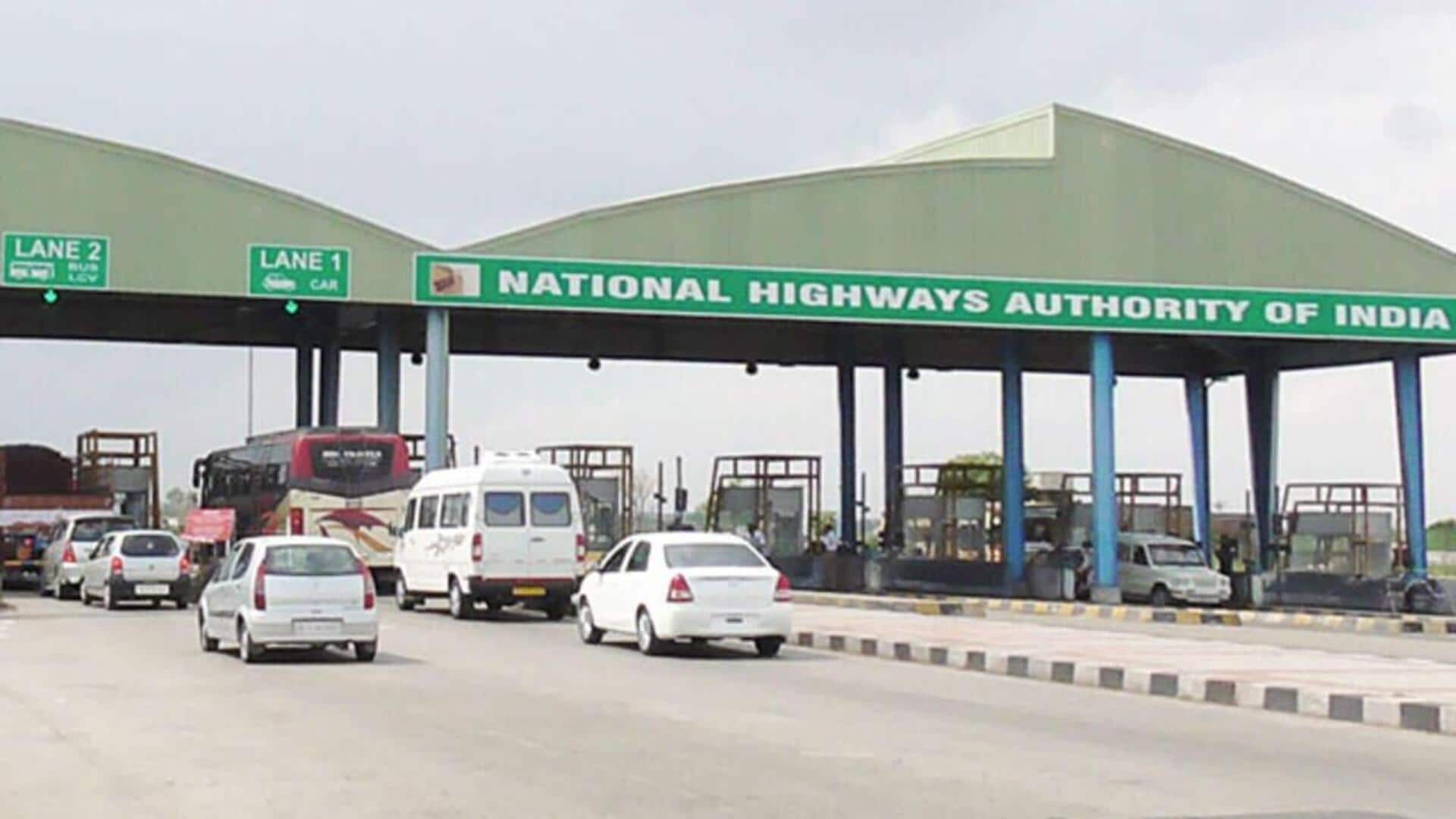
National highway toll plazas to become cashless from April 1
What's the story
The Indian government is set to implement a cashless payment system at national highway toll plazas from April 1. Under this new system, drivers will be required to pay toll charges using either FASTag or Unified Payments Interface (UPI). The move is aimed at reducing traffic congestion and making travel smoother by eliminating the need for cash transactions.
Benefits
Cashless tolls expected to reduce congestion and save fuel
The government hopes that the cashless system will help cut down long lines at toll booths, making journeys faster and more convenient. By eliminating cash transactions, vehicles won't have to stop for payments or wait for change. This is likely to save fuel by reducing repeated braking and acceleration at toll points. Digital payments also promise better transparency as they leave a clear record of every transaction.
Modernization effort
Government aims for barrier-free tolling model
The government is also working toward modernizing India's toll system with a barrier-free tolling model called Multi-Lane Free Flow. This would allow vehicles to pass through toll areas at normal highway speeds without stopping. Advanced technology used in other countries is being studied for this purpose. A trial run of this no-stop toll system is already underway at 25 toll plazas across India, with plans to expand it nationwide based on its success.
Implementation
Vehicles without digital payment options may face penalties
Vehicles sans digital payment options may face delays or penalties at toll gates once the rule comes into force. The move is part of the government's effort to modernize India's toll system and make it more efficient.