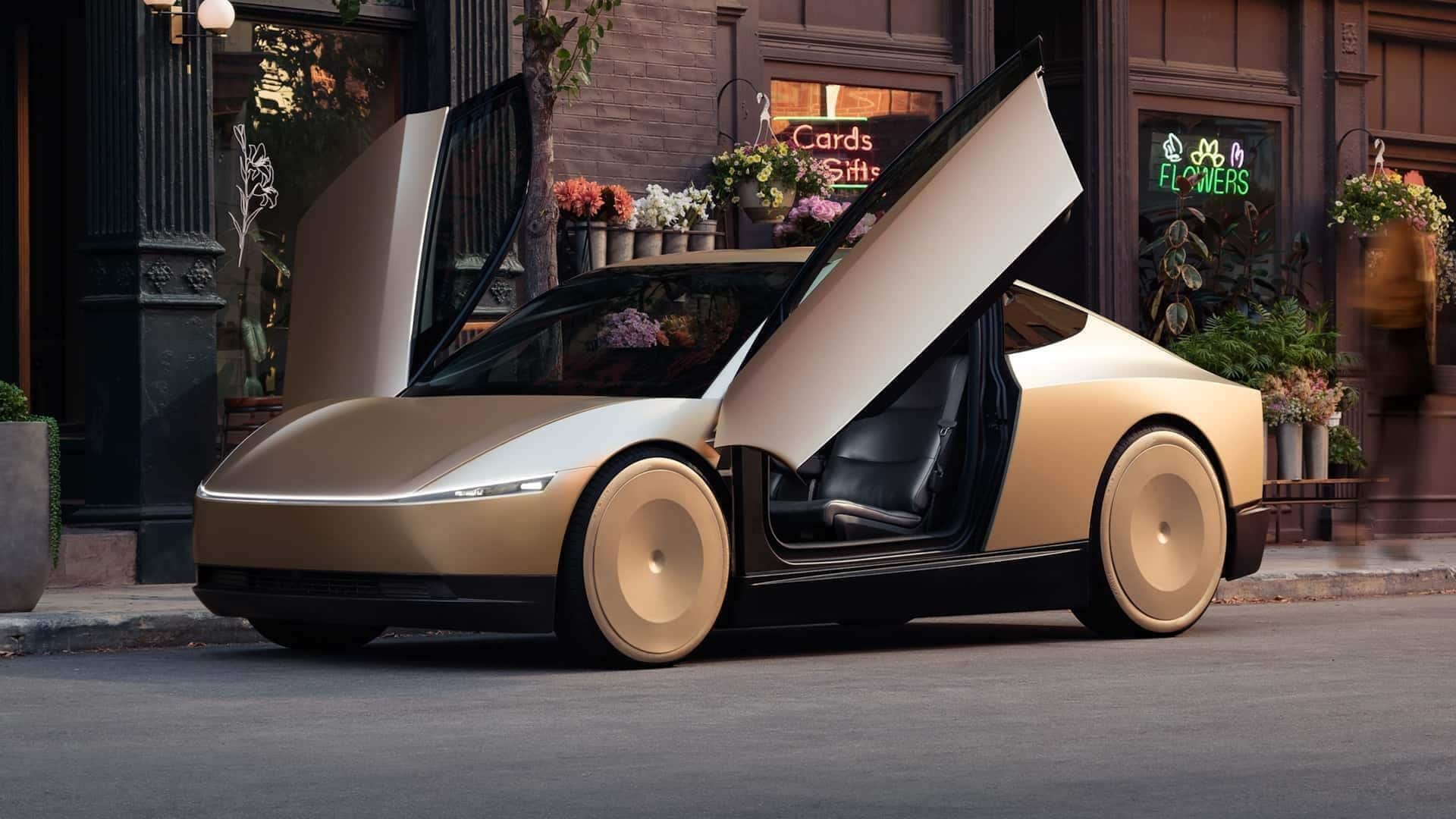
You can soon ride Tesla's autonomous Cybercab in Texas
What's the story
Tesla has started testing a production version of its futuristic Cybercab in Austin, Texas. The unique vehicle features two seats but lacks a steering wheel or pedals. Currently, the tests are being conducted with a safety monitor seated in the right passenger seat. The development comes nearly two years after Tesla first unveiled the design of this fully autonomous robotaxi, which can be hailed via Tesla's app.
Service expansion
Tesla previously launched robotaxi service in Austin
A year ago, Tesla had launched a Robotaxi service in Austin using Model Y SUVs with safety monitors.
In recent weeks, the company has also been testing prototype versions of the Cybercab with steering wheels and pedals in several US cities.
These vehicles have been spotted parked in lots across some of these cities, fueling speculation about a potential large-scale robotaxi network launch.
Regulatory changes
NHTSA proposed allowing vehicles without brake pedals
The National Highway Traffic Safety Administration (NHTSA) recently proposed not requiring brake pedals in "vehicles designed to be driven exclusively by automated driving systems."
The proposal is still open for public comment but is likely to be approved later this year.
This regulatory change could make it easier for Tesla to continue testing its Cybercab without traditional driving controls.
Market strategy
Cybercab could beat Waymo's robotaxis
Tesla CEO Elon Musk has said that the company will be able to beat current robotaxi leader Waymo.
This is because Tesla builds both the cars and driving software, giving it more control over costs than Waymo, which partners with other brands for vehicles.
Unlike Waymo's complex sensor suite including LiDAR and radar, Tesla is trying to make Cybercab fully autonomous using only cameras.
Progress report
Tesla yet to deploy fully autonomous car at scale
Despite years of promises, Tesla has yet to deploy a fully autonomous car at scale. The closest it has come is the Austin robotaxi service, which has seen its size fluctuate over the past year.
Some vehicles have been involved in minor crashes, including two caused by remote operators.
However, these issues have largely gone unnoticed as Tesla uses lightly modified versions of its consumer Model Y SUVs for the service.