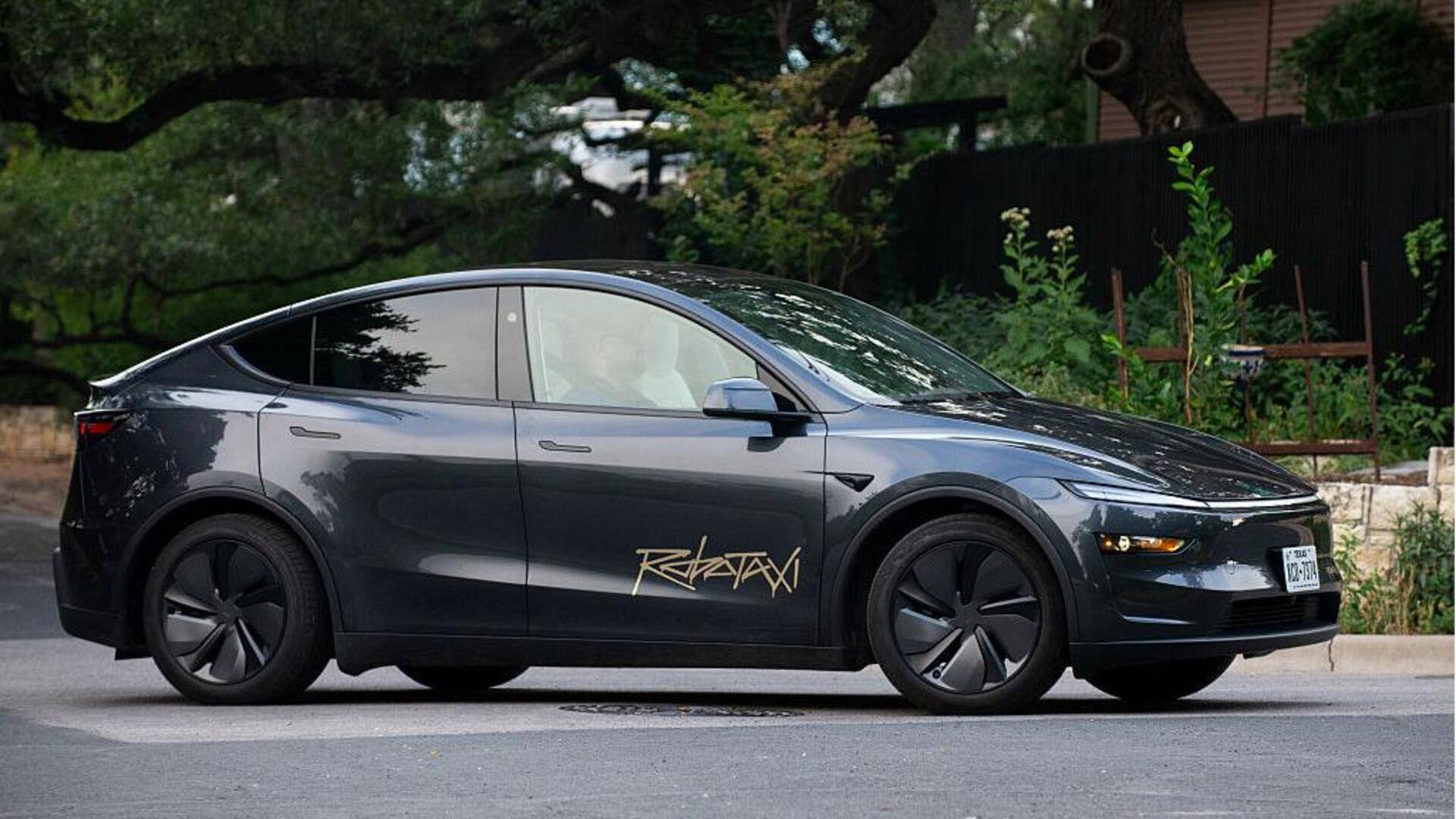
Tesla begins robotaxi rides with no human safety driver onboard
What's the story
Tesla has launched driverless robotaxi rides in Austin, Texas. The announcement was made by CEO Elon Musk on X. He congratulated the Tesla AI team for this major milestone and invited engineers interested in "solving real-world AI" to join them. This is a major step forward for Tesla's autonomous vehicle technology, which has been under development for several years.
Evolution
Tesla's robotaxi journey in Austin
Tesla launched its robotaxis in Austin last June, but the initial deployment had a safety operator in the front passenger seat.
The rides were initially offered to influencers and select customers.
In December, Tesla began testing its robotaxis without a safety driver as part of a gradual transition to unsupervised operation.
However, not all of Tesla's fleet will be fully driverless at this stage.
Strategy
Gradual transition to fully unsupervised fleet
Tesla's AI lead, Ashok Elluswamy, said the company will gradually increase the number of unsupervised vehicles in its broader robotaxi fleet with safety monitors. The ratio will increase over time.
However, it is still unclear whether these rides are free or if Tesla is charging a fare for them.
This gradual approach mirrors Waymo's strategy of starting with a few vehicles and gradually expanding their operations.
Accessibility
The service remains exclusive
Despite the progress, Tesla's robotaxi service is not fully open to the public yet. It still relies on customer waitlists for access.
This exclusivity has been a point of contention among critics who see it as a marketing tactic to showcase a capability that doesn't yet exist on a large scale.
Issues
Tesla's robotaxis have faced some challenges
Even with safety monitors, Tesla's robotaxis have been involved in around eight crashes in just five months, according to Electrek.
This raises questions about the reliability of the technology and its readiness for widespread use.
Despite these challenges, Musk remains confident in Tesla's progress and its potential to lead the way in autonomous driving technology.