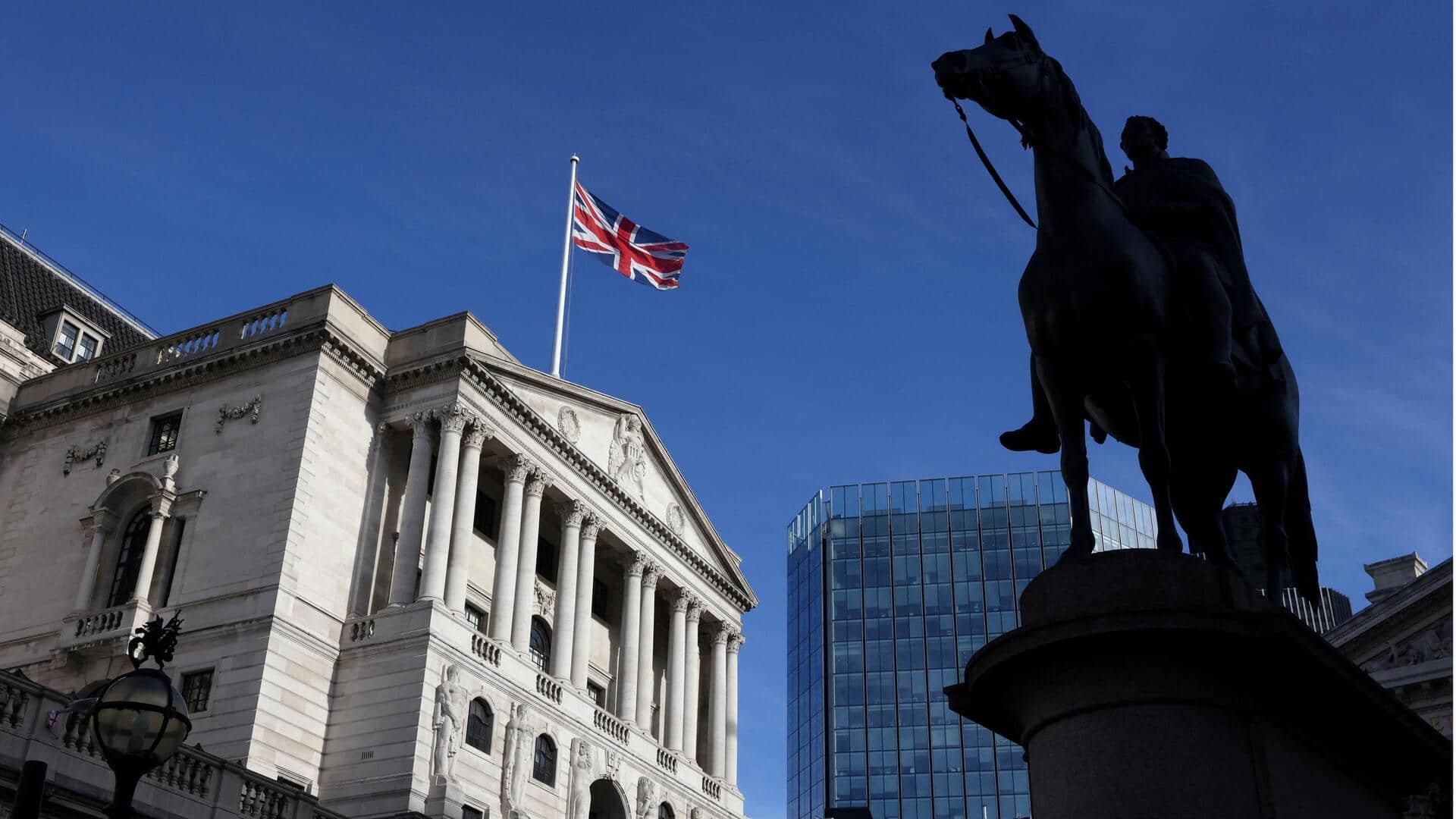
Bank of England won't offer loans to these bondholders anymore
What's the story
The Bank of England has announced a ban on accepting bonds linked to thermal coal for key loan arrangements. The decision, effective from October, is seen as a major step in the global transition away from fossil fuels toward greener energy sources. Thermal coal is one of the most polluting fossil fuels and is mainly used in power plants to generate electricity.
Risk assessment
Shift in central bank's stance
The new policy from the Bank of England suggests that bonds linked to thermal coal are now considered too risky for its balance sheet.
This is because an international shift away from dirty fossil fuels toward greener energy could potentially wipe out their value.
Ellie McLaughlin, a senior policy and advocacy manager at campaign group Positive Money, called it "a strong signal from a central bank, and to the market as well."
Market impact
Impact on commercial banks
The Bank of England's decision also means that commercial banks like Barclays, Lloyds, NatWest, and HSBC will have to rethink their holding of assets linked to thermal coal on their balance sheets.
This is because the central bank regularly lends money to these commercial banks with collateral usually in the form of bonds as a guarantee.
Risk exposure
Financial risks of thermal coal companies
The Bank of England's policy statement noted that thermal coal companies "can be exposed to potential financial risks connected to the adjustment of the economy toward net zero."
The central bank also said it would discount bonds in other relevant sectors "to protect the Bank against financial risks."
This move is more stringent than those adopted by most of its Western counterparts, including the European Central Bank.
Policy scrutiny
Need for broader exclusions
Despite its potential impact, there are concerns over how effective this policy will be.
McLaughlin said, "We've yet to see how the Bank will calculate haircuts to account for climate risks."
She also suggested that exclusions should go beyond thermal coal to include all 'always harmful' activities like fossil fuel expansion or deforestation.