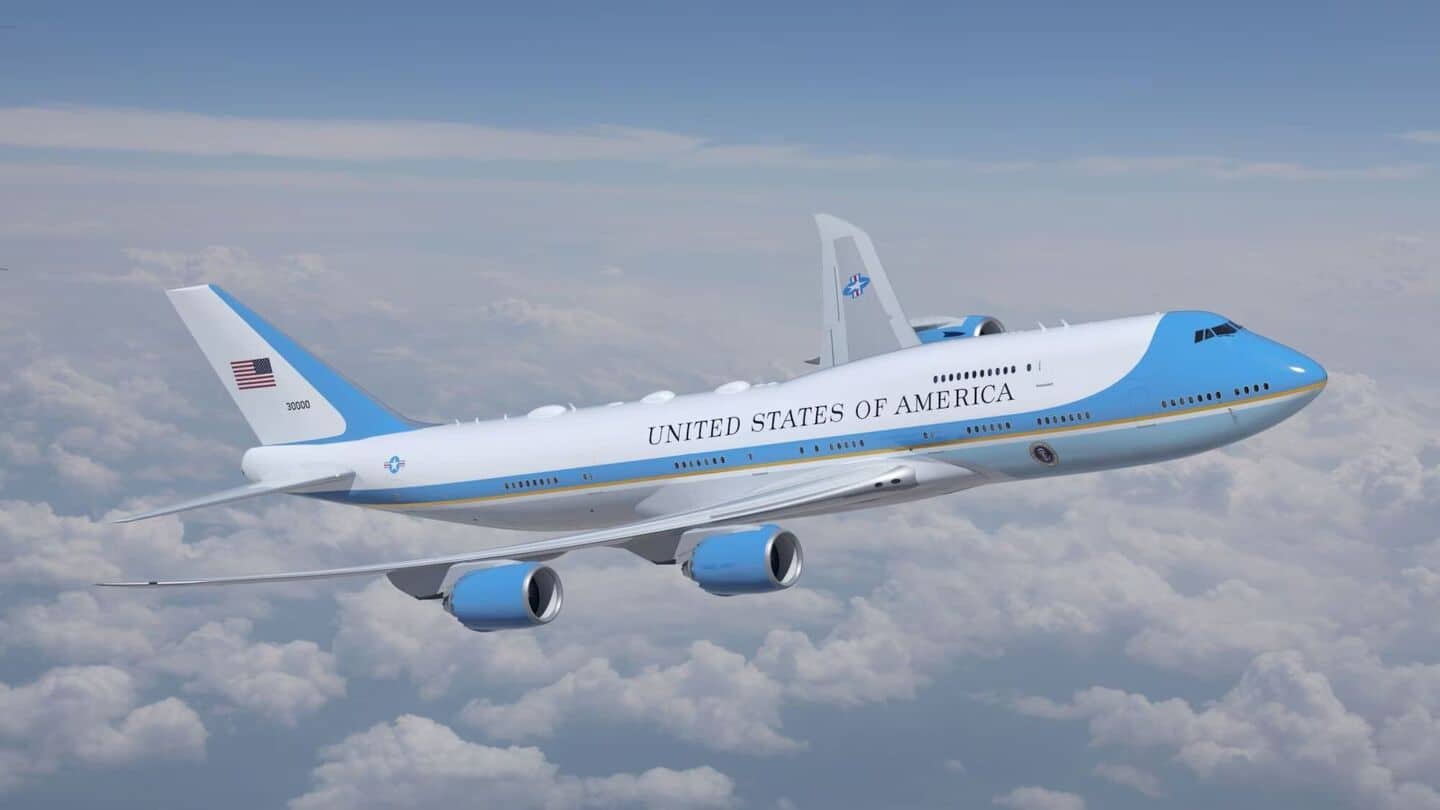
Boeing delays Trump's new Air Force One jets again
What's the story
The US Air Force is facing another year-long delay in receiving its new Air Force One jets from Boeing. The first of two specially-modified 747-8 aircraft is now expected to be delivered by mid-2028, four years behind schedule. The program's cost has now exceeded $5 billion, although the specific reasons for the cost increase are unclear. The latest delay could further frustrate President Donald Trump, who hopes to fly on the new planes before his term ends in January 2029.
Project details
Air Force One program's purpose and progress
The Air Force One program aims to convert two 747-8 aircraft into state-of-the-art jets with advanced communication and defense systems. These will be used as the next generation of US presidential air transport.
Despite the delays, Boeing has said it is making progress on this project.
The company was awarded a $3.9 billion contract in 2018 for this purpose, although costs have since increased significantly.
Financial implications
Boeing's financial impact and alternative plans
Boeing has already taken $2.4 billion in charges against its earnings from the Air Force One project.
Earlier this year, President Trump expressed his dissatisfaction with Boeing over these delays but ruled out European competitor Airbus as a replacement.
In May, the US accepted a luxury Boeing 747 jetliner from Qatar as a gift, and the White House requested the Air Force to rapidly upgrade it for potential use as Air Force One.
Strategic shifts
Boeing's leadership changes and future prospects
In June, Boeing appointed Steve Sullivan, a former Northrop Grumman executive, to lead the Air Force One program.
He replaced Gregg Coffey who moved to another role at the US planemaker.
This strategic shift comes as part of Boeing's efforts to navigate through the challenges and ensure timely delivery of these crucial presidential jets.