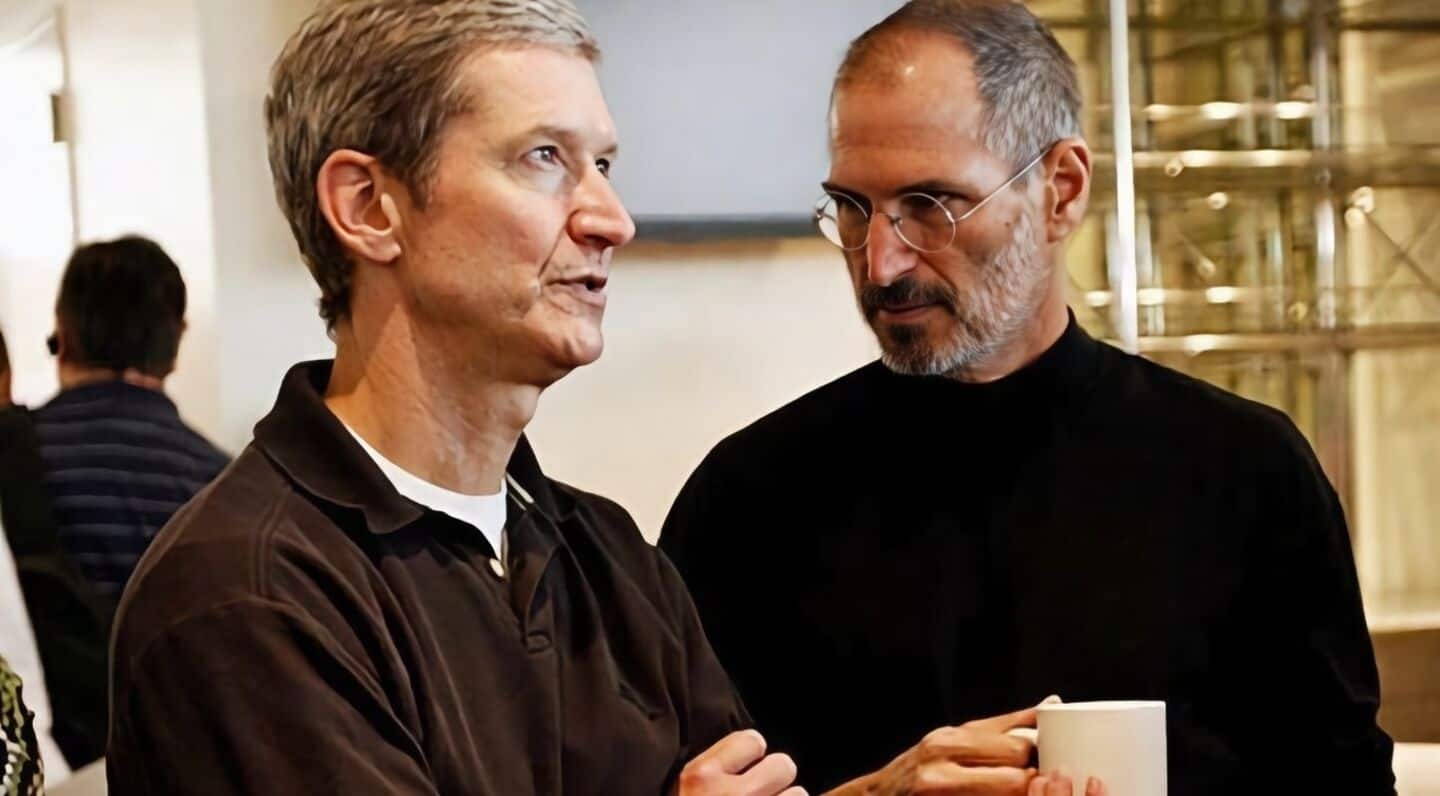
From 1998 to 2026: Here's Tim Cook's journey at Apple
What's the story
Tim Cook, the man who turned Apple into a tech giant, is stepping down as CEO after 15 years in the role. On September 1, he will hand over the reins to John Ternus. His departure comes after nearly three decades at the company, where he played a key role in transforming it into one of the world's most valuable firms. Cook joined Apple in 1998 on Steve Jobs's invitation and has since been instrumental in its growth story.
Career trajectory
Cook's career before Apple
Before joining Apple, Cook was the VP of corporate materials at Compaq for less than a year.
He had also spent over a decade at IBM, where he served as the director of North American fulfillment.
Despite the fierce competition between Apple and IBM, Cook chose to join Jobs at Apple after a brief interview.
He took up the role of Senior Vice President of Operations soon after joining.
Operational shifts
How Cook transformed Apple's operations
As Senior VP of Operations, Cook restructured Apple's processes to make it more efficient.
He pioneered the company's move from in-house manufacturing to contract manufacturing with Chinese assembly partners.
This strategy gave Apple more flexibility and reduced its inventory holding periods, enabling faster adoption of new technologies in products.
Under Cook's leadership, Apple also negotiated aggressively with suppliers to keep production costs low while maintaining high supply chain control.
Leadership transition
How Cook became Apple's CEO
Cook became Apple's COO in 2005, directly reporting to Jobs.
His transition to the CEO role was gradual, prompted by Jobs's declining health.
In August 2011, Jobs announced he could "no longer meet my duties and expectations as Apple's CEO," strongly recommending Cook as his successor.
Under Cook's leadership, Apple saw its market capitalization skyrocket from around $348 billion in August 2011 to $4 trillion in October 2025.
Product expansion
iPhone user base crossed a billion in January 2021
Under Cook, Apple also saw a massive increase in its user base for key products like the iPhone.
In January 2021, Apple announced it had crossed 1 billion active iPhones in use.
The company also made several strategic acquisitions during this period, including Dialog Semiconductor for $600 million in October 2018 and Intel's modem business for $1 billion in 2019.
Strategic shift
Commitment to carbon neutrality by 2030
Cook also emphasized Apple's services segment, which includes the App Store and other digital storefronts. The company has made significant strides in this area under his leadership.
Cook also launched a campaign in 2014 to promote initiatives making the world a better place, including power-saving efforts and refining supply chain environmental practices.
Apple has committed to achieving total carbon neutrality across its entire business by 2030.