Why Modi government is easing radiation limits for 5G towers
What's the story
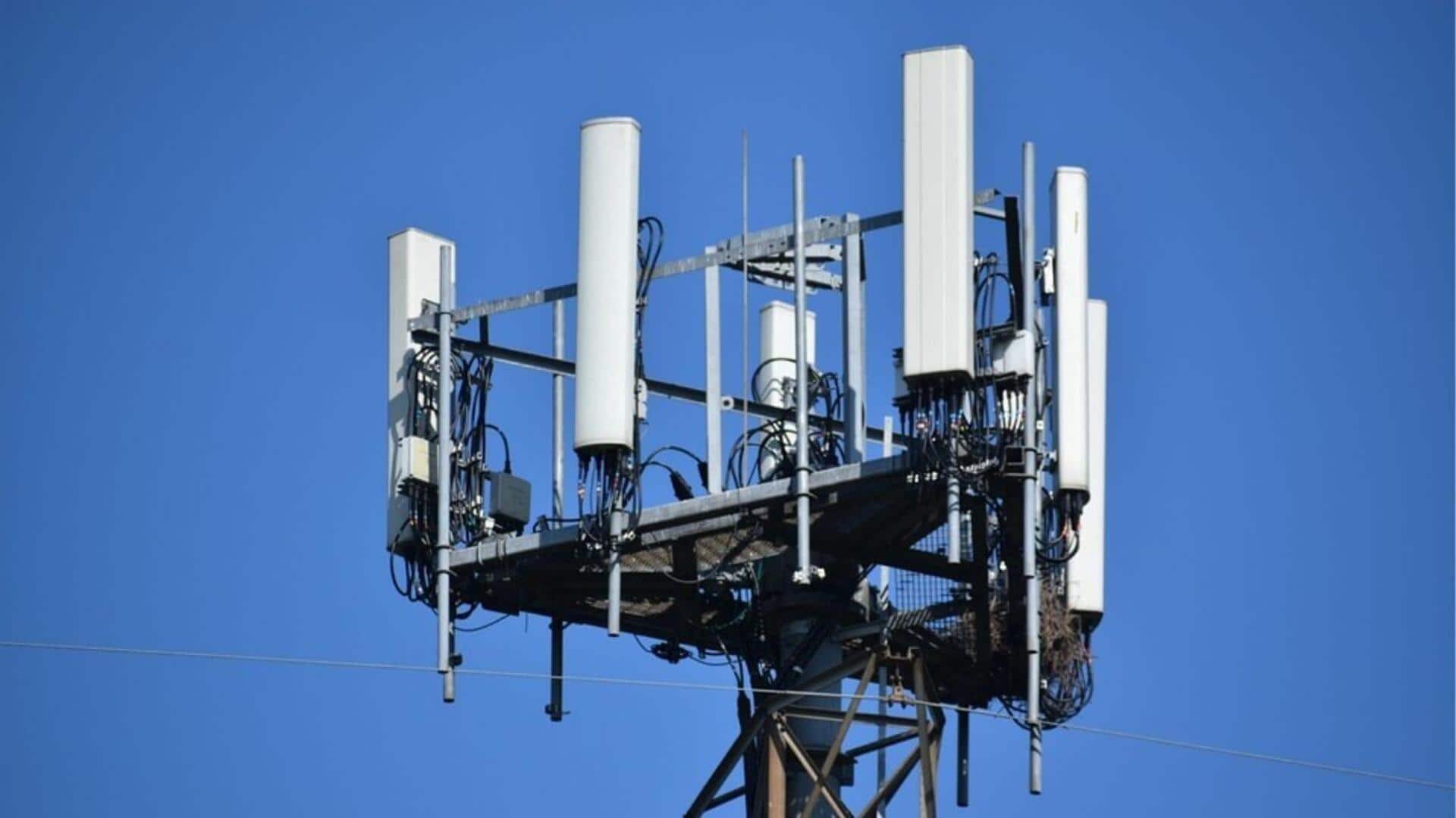
The Indian government has decided to relax the electromagnetic field (EMF) limits for mobile networks, according to The Economic Times. The revised rules, which will come into effect next month, double the power density limit for a 5G base tower station (BTS) from 5W per square meter (W/m2) to 10W/m2. This move is aimed at improving network coverage and reducing expansion costs amid rising 5G traffic.
Coverage expansion
Telecom industry's long-standing demand
The new EMF limits, which define the maximum radio-frequency energy that mobile network equipment can emit, are expected to help signals travel longer distances.
This will allow service providers to cover larger areas from each site and cut down on network expansion costs.
The relaxation has been a long-standing demand of the telecom industry, which argued that earlier limits were hampering efficient 5G coverage.
Global alignment
India has historically maintained stricter emission norms
India has historically maintained stricter radiation emission norms than those recommended by the International Commission for Non-Ionizing Radiation Protection (ICNIRP).
The country was initially following a power density limit of 1W/m2, which was revised to 5W/m2 last year.
The latest move doubles this limit to 10W/m2, in line with ICNIRP's recommendations.
This is likely to help operators cover larger areas from each tower.
Operator advantage
Benefits for telecom operators
The new EMF limits are expected to benefit telecom operators, especially Vodafone Idea, which is in the process of rolling out 5G services.
Bharti Airtel and Reliance Jio, who have already deployed much of their 5G networks, are also likely to benefit from lower incremental capital expenditure and more efficient use of their existing sites.
The new limit is in line with norms followed in around 137 countries, including most EU nations, the UK, Australia, Japan, South Korea and Singapore.