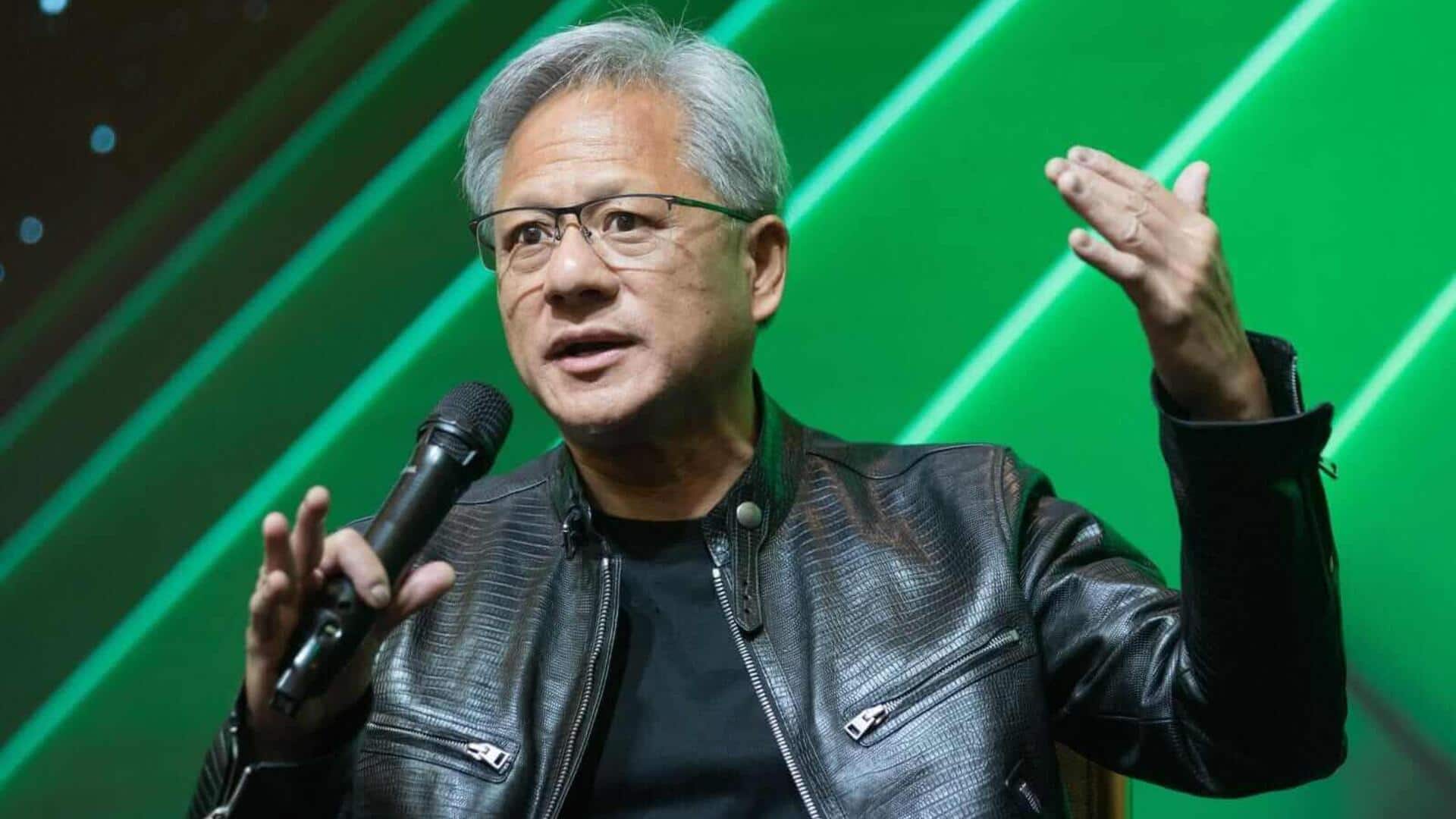
NVIDIA CEO to join advisory board of China's top university
What's the story
NVIDIA CEO Jensen Huang has accepted an invitation to join the advisory board of Tsinghua University's School of Economics and Management (SEM). The prestigious Chinese institution, which also has Apple's Tim Cook as its chair, is known for producing China's top politicians. Huang's acceptance comes despite a US ban on advanced NVIDIA chip exports to China over national security concerns.
Controversial decision
US-China chip export tensions
The US has restricted the sale of NVIDIA's most advanced chips to China since 2022, citing their potential military use.
Despite US President Donald Trump's recent trip to China, there was no indication that the sale of NVIDIA's advanced H200 AI chips to the country would be approved anytime soon.
Board composition
SEM board members
The SEM board, which was formed in October 2000, has 65 members including top US tech leaders like Tesla's Elon Musk, Dell's Michael Dell, Microsoft's Satya Nadella and Meta's Mark Zuckerberg.
Finance executives such as JPMorgan's Jamie Dimon and BlackRock's Larry Fink are also on the board.
The members usually meet every year in Beijing.
National security concerns
Criticism of Huang's appointment
Huang's appointment has drawn criticism from some quarters in the US.
Far-right activist Laura Loomer has called Huang's association with Tsinghua University a "conflict of interest" and a "national security risk."
She alleged that Tsinghua University is closely linked to the Chinese Communist Party and China's military-industrial complex, playing a key role in furthering Beijing's technological ambitions.
Market challenges
Huang acknowledges impact on NVIDIA
Huang has acknowledged the impact of export controls on NVIDIA's business in China.
He said that the company had "largely conceded" the Chinese market to local competitors such as Huawei.
Despite a strong quarterly performance, Huang warned investors not to expect immediate approvals for advanced chip sales to China.
"We would be more than delighted to serve the market," he told CNBC last week.