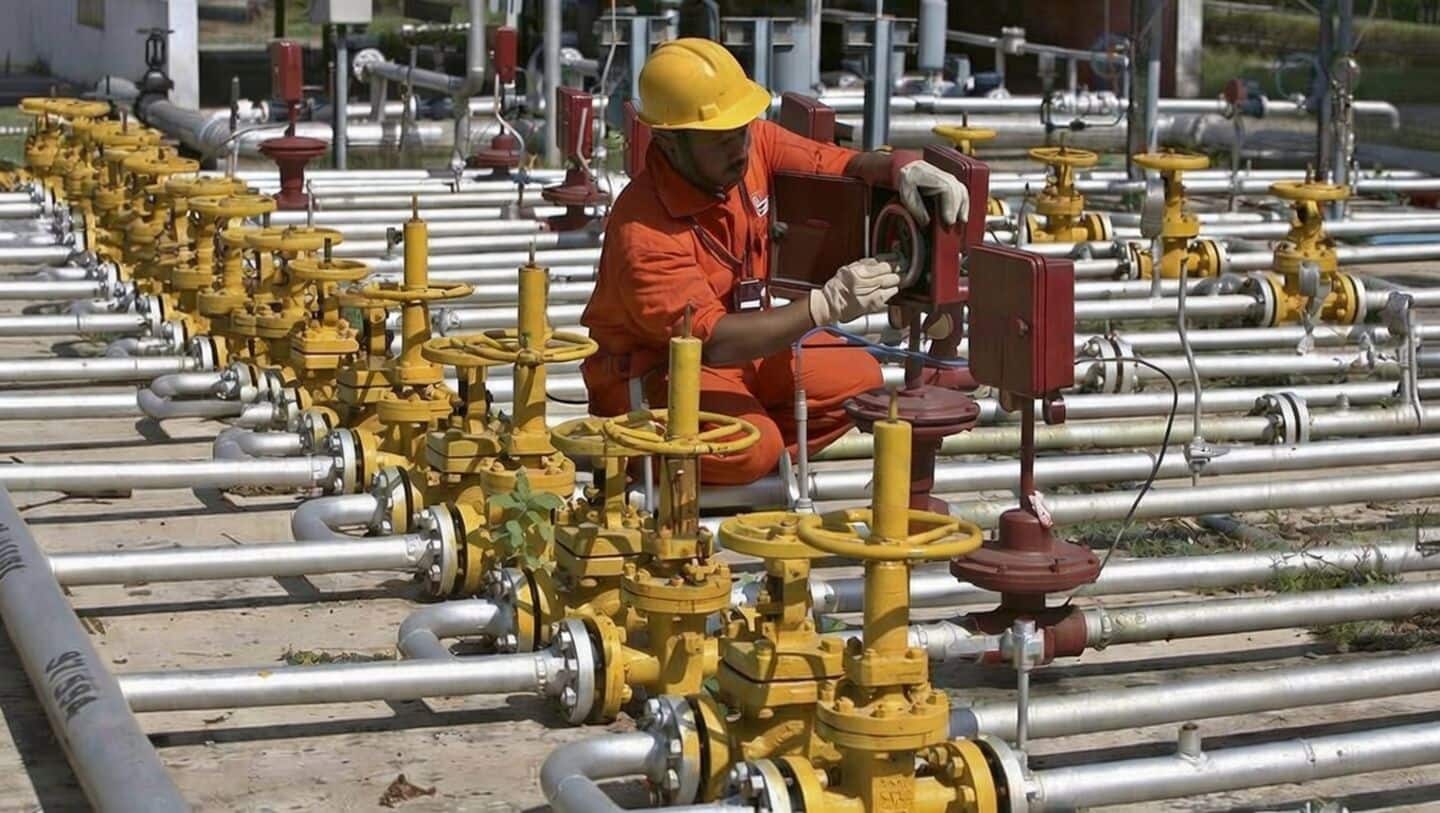
OMCs considering new payment strategy amid rising fuel costs
What's the story
State-owned oil marketing companies (OMCs) are mulling over a strategy to pay refineries less than the imported rates of petrol and diesel. The move is aimed at reducing their losses from a retail fuel price freeze. The decision comes as international oil prices have surged from $70 per barrel before the West Asia conflict to over $100 now. However, retail petrol and diesel prices in India have remained unchanged, putting pressure on OMCs.
Loss mitigation
OMCs explore strategies to minimize losses
The ongoing conflict shows no signs of ending, prompting OMCs to look for ways to minimize their losses on fuel sales.
One strategy being considered is freezing or fixing a discount on the refinery transfer price (RTP).
This is the internal price at which refineries sell fuel to marketing arms.
The idea is to pay refineries less than the import-parity cost of fuels like petrol and diesel.
Impact assessment
Impact on integrated and standalone refiners
The proposed move could prevent refiners from fully passing on higher crude costs through RTP. This would force them to absorb part of the impact if global oil prices remain high.
While integrated state-run firms such as IOC, BPCL, and HPCL can offset some of the hit between refining and marketing operations, standalone refiners relying on market-linked RTP for revenue could face a sharper margin squeeze.
Affected parties
Standalone refiners could face sharper margin squeeze
Standalone refiners such as Mangalore Refinery and Petrochemicals Ltd (MRPL), Chennai Petroleum Corporation Ltd (CPCL), and HPCL-Mittal Energy Ltd (HMEL) could be hit the hardest by this move.
These companies have a negligible retail presence and sell most of their petrol and diesel production to three OMCs.
The changes would also affect private refiners such as Nayara Energy and Reliance Industries if the freeze or discount on RTP is also applied to them.
Pricing structure
Understanding India's fuel pricing mechanism
In India, petrol and diesel have traditionally been priced on an import parity basis.
This means that fuels are valued as if they were imported, even though crude oil is primarily brought into the country and refined locally.
The government adopted trade parity pricing (TPP) in June 2006, which assigns 80% weight to import parity price and 20% to export parity price.
This pricing has protected refinery margins but could be affected by the proposed RTP freeze or discount.