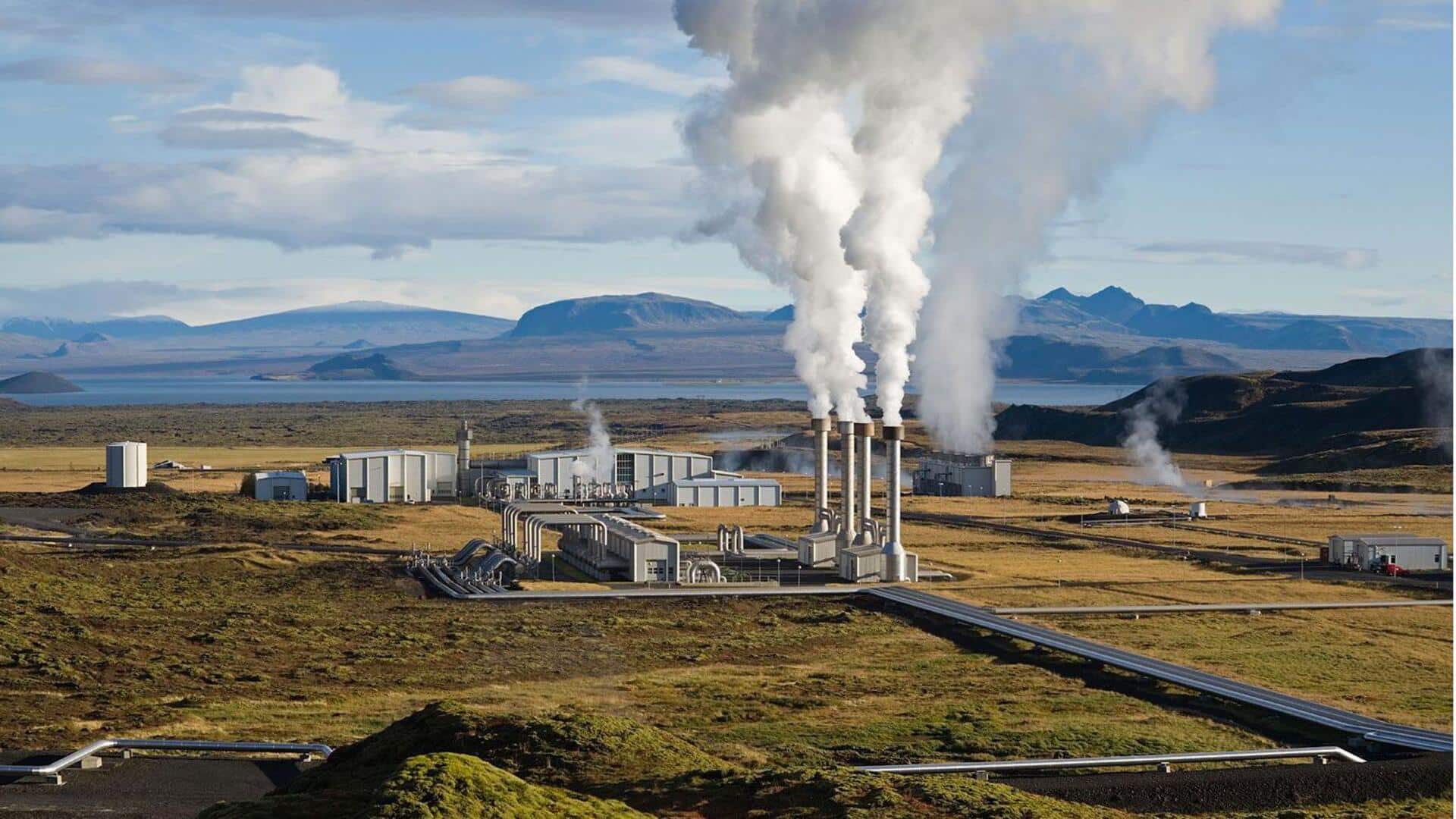
India's first geothermal power plant might be operational soon
What's the story
State-run Oil and Natural Gas Corporation (ONGC) has taken a major step toward establishing India's first pilot geothermal power plant. The company's research and development arm, ONGC Energy Centre, has successfully drilled its second geothermal well in the Puga Valley of Ladakh. The well was drilled to a depth of 1,000 meters at an altitude of over 14,000 feet within a month.
Resource validation
Well validates geothermal resource potential in Puga Valley
The new well further validates the geothermal resource potential of the Puga Valley, building on the success of ONGC's first geothermal well in the area.
This initial well produced steam at temperatures exceeding water's boiling point, proving the area's viability for geothermal energy production.
The second well will help develop India's first 1-megawatt electric (MWe) pilot geothermal power plant and could lead to commercial use of this renewable energy source in India.
Energy diversification
What is geothermal energy?
Geothermal energy harnesses heat from beneath the Earth's surface to generate electricity and provide heating.
It offers a constant source of low-carbon power, unlike solar and wind energy whose output depends on weather conditions.
The Puga geothermal field in Ladakh has been identified as India's most promising geothermal resource for years. However, commercial geothermal power generation has not yet started due to technical and economic challenges.
Energy goals
Geothermal power can help India meet renewable energy targets
India is looking to diversify its renewable energy mix beyond solar, wind, and hydropower.
The country aims to install 500 GW of non-fossil fuel electricity capacity by 2030.
The successful drilling of these wells by ONGC is a major step toward achieving this goal and making geothermal power a part of India's renewable energy portfolio.