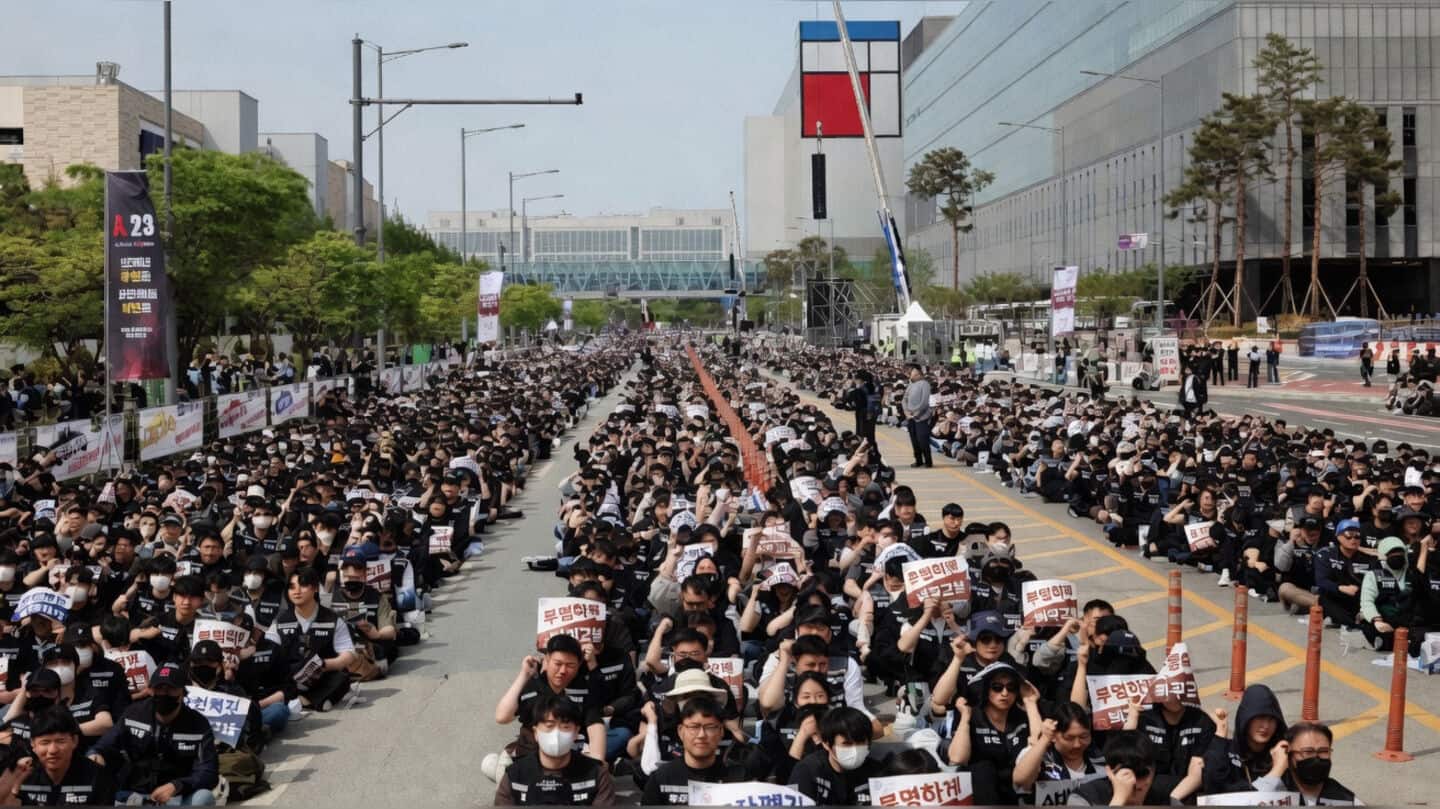
Over 48,000 Samsung workers set to strike tomorrow
What's the story
Samsung Electronics' labor union has announced plans to strike on May 21, after wage negotiations with the tech giant failed. The move could mark one of the largest work stoppages in semiconductor industry history, with some 48,000 employees expected to leave their production lines for an 18-day period. The dispute primarily revolves around disagreements over performance bonuses amid a massive surge in chip income reported by Samsung.
Supply disruption
Global AI supply chain at risk
The strike could have far-reaching implications for the global AI supply chain.
Samsung is one of only three companies in the world that makes high-bandwidth memory (HBM) chips, which are crucial for powering AI data centers used by major tech firms.
Its semiconductor facilities in South Korea are among the most important production sites in this ecosystem.
A single-day strike earlier this year had already caused a major drop in foundry output and memory fabrication output during a single shift.
Market rivalry
Competition with SK Hynix intensifies
The labor unrest comes as Samsung faces stiff competition from rival chipmaker SK Hynix.
The latter had settled wage negotiations with its union last year and is reportedly paying workers bonuses ranging from $460,000 to $477,000 this year.
Reports also suggest that some 200 Samsung engineers have moved to SK Hynix in the past four months.
Economic repercussions
Financial ramifications could be dire
Analysts have warned that if the strike continues, the financial impact could be severe. Estimates range from daily losses of $700 million to a total loss of up to $20 billion.
JPMorgan has projected that this disruption could slash Samsung's operating profit by 2 trillion to 3.5 trillion won, with even more damage possible if the strike drags on.
Production concerns
Global ramifications of the strike
Samsung's entire 2026 production run of next-generation HBM4 chips has reportedly already been sold out.
This raises concerns over potential ripple effects across the global AI sector, including companies such as Meta, Google, and Microsoft that are rapidly expanding their AI infrastructure.
The unfolding labor dispute now puts one of the world's most critical semiconductor supply chains at the center of an escalating confrontation with possible global consequences if production is significantly affected.