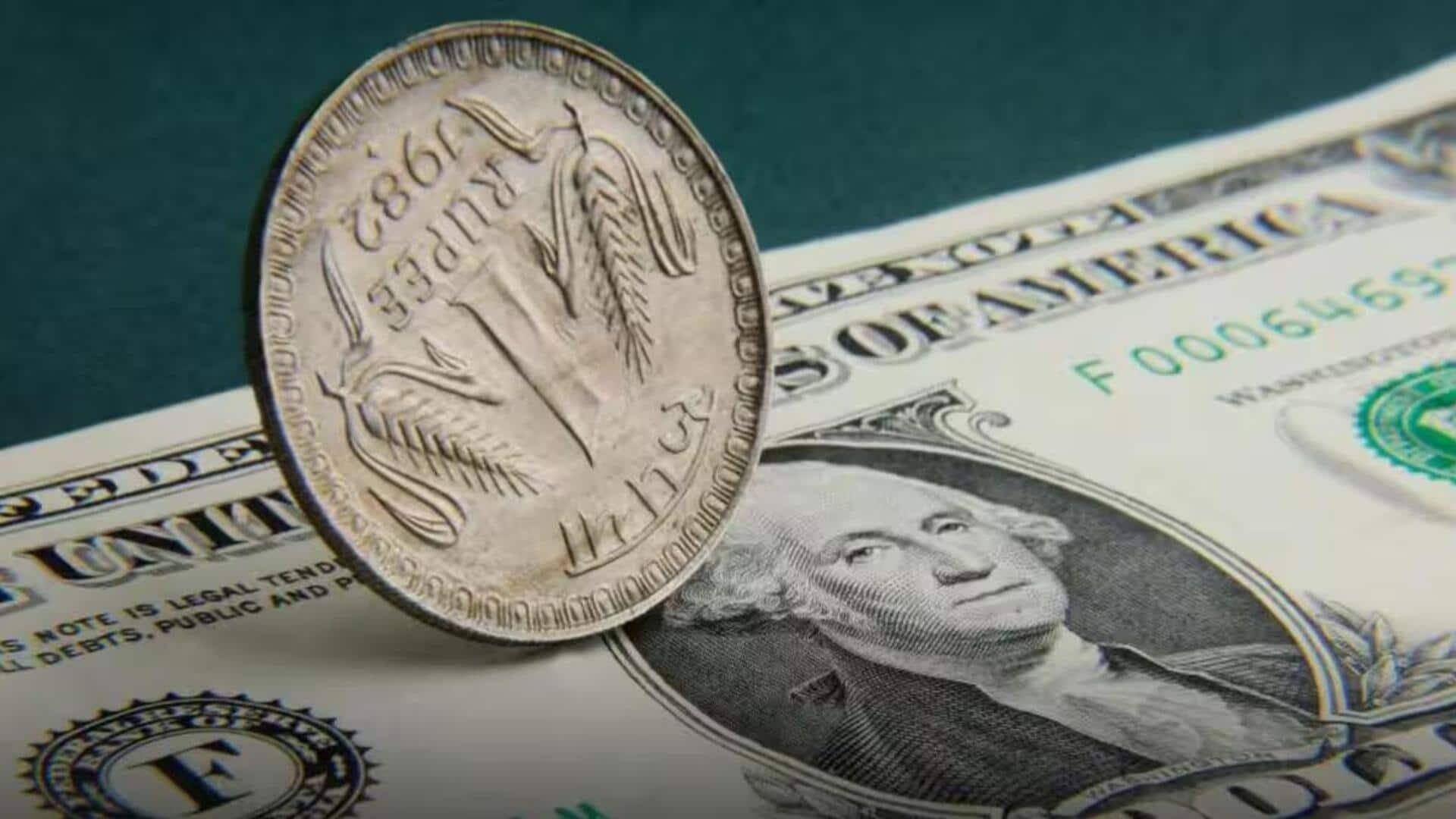
Indian rupee now just shy of 96 against US dollar
What's the story
The Indian rupee has witnessed a marginal decline due to rising oil prices, triggered by stalled diplomatic talks between the US and Iran. The escalating tensions in the Middle East have pushed Brent crude oil prices up by 2.5% to $107 per barrel. In response, the Reserve Bank of India (RBI) intervened to prevent further depreciation of the rupee, which is now at 95.95/USD.
Market response
RBI's intervention leads to decline in forex reserves
The RBI's intervention has kept the rupee from falling past the 96 per dollar mark, similar to its actions in previous trading sessions.
However, this move has also led to a decline in India's foreign exchange reserves.
Data released on Friday showed that these reserves fell by $15 billion week-on-week as of September 18, likely reflecting the central bank's efforts to stabilize the currency amid rising oil prices and global bond yields.
Economic implications
Surge in Brent crude oil prices affects Nifty
The surge in Brent crude oil prices is a result of US President Donald Trump's rejection of an Iranian peace deal to end their conflict and reopen the Strait of Hormuz.
This has kept tensions high in the Middle East, pushing global bond yields higher as investors expect central banks to raise borrowing costs to combat inflation.
The rise in oil prices has also affected India's benchmark stock index, Nifty 50, which fell over 1% today.
Analyst insights
RBI keeps rupee volatility expectations in check
Despite the challenges posed by rising oil prices and global bond yields, the RBI's interventions have kept rupee volatility expectations in check.
The rupee's one-month implied volatility stood at 4.2%, below its year-to-date average of 5%.
Analysts at BofA Global Research noted that "RBI is willing to spend incremental reserves to prevent INR weakness beyond 96/USD level," highlighting the central bank's commitment to maintaining currency stability amid external pressures.