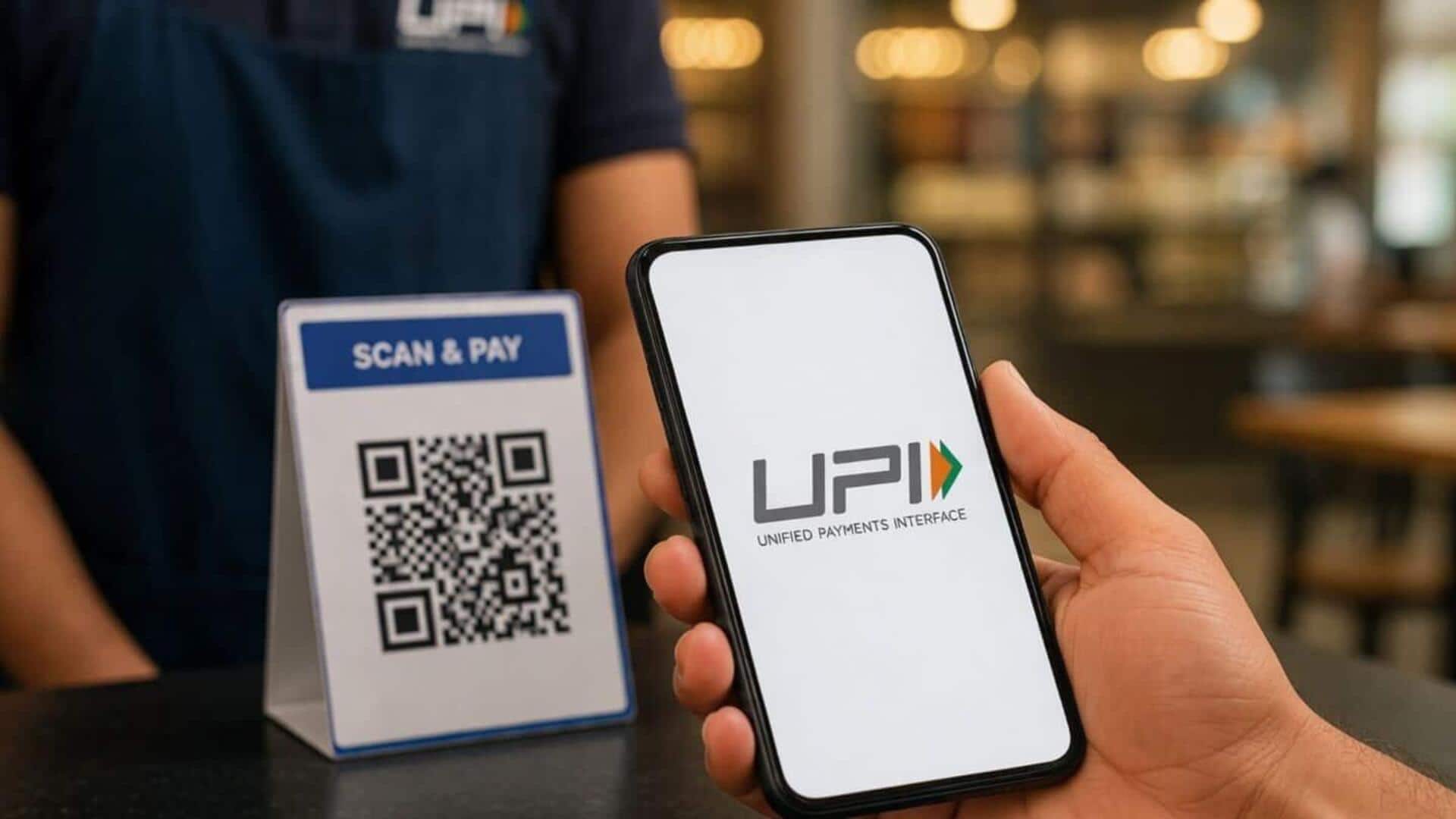
UPI MDR: Who gets what from new merchant fees?
What's the story
The National Payments Corporation of India (NPCI) has released a circular detailing the distribution of the new merchant discount rate (MDR) for Unified Payments Interface (UPI) transactions. The circular states that banks holding customer accounts, also known as issuer banks, will get the largest share of 40% from the new 0.4% MDR on payments over ₹2,000. Merchant acquirers will get 30%, while UPI apps and their bank partners will receive 20% and 10%, respectively.
Revenue allocation
How much will each party get?
For a ₹10,000 UPI transaction, the 0.4% MDR would amount to ₹40.
Out of this, the issuing bank will get ₹16, the acquiring bank will keep ₹12, while UPI apps will get ₹8 and their bank partner will receive the remaining amount.
The NPCI circular issued on September 15 also clarified that a maximum charge of ₹300 per transaction would be applicable under this new fee structure.
Implementation timeline
New MDR charges to come into effect on October 15
The new MDR charges will be applicable from October 15, 2026. This move is aimed at creating a revenue stream across the UPI ecosystem while keeping the cost of accepting UPI payments with merchants instead of customers.
However, NPCI has exempted telecom, railways, fuel, and insurance categories from these charges to protect consumers from any impact.
For these services, an MDR of ₹5 per transaction has been fixed as a flat fee.
Transaction limits
Capital market transactions also included
The NPCI has also fixed an MDR of 0.02% for capital market transactions, which usually involve much higher transaction values.
The corporation has specifically directed acquiring banks to ensure that merchants do not pass on these MDR charges to customers.
UPI app providers are also barred from levying a platform fee or any other charge on payments made through their platforms, further protecting consumers from potential costs associated with this new fee structure.