Is Waymo a threat to national security of US?
What's the story
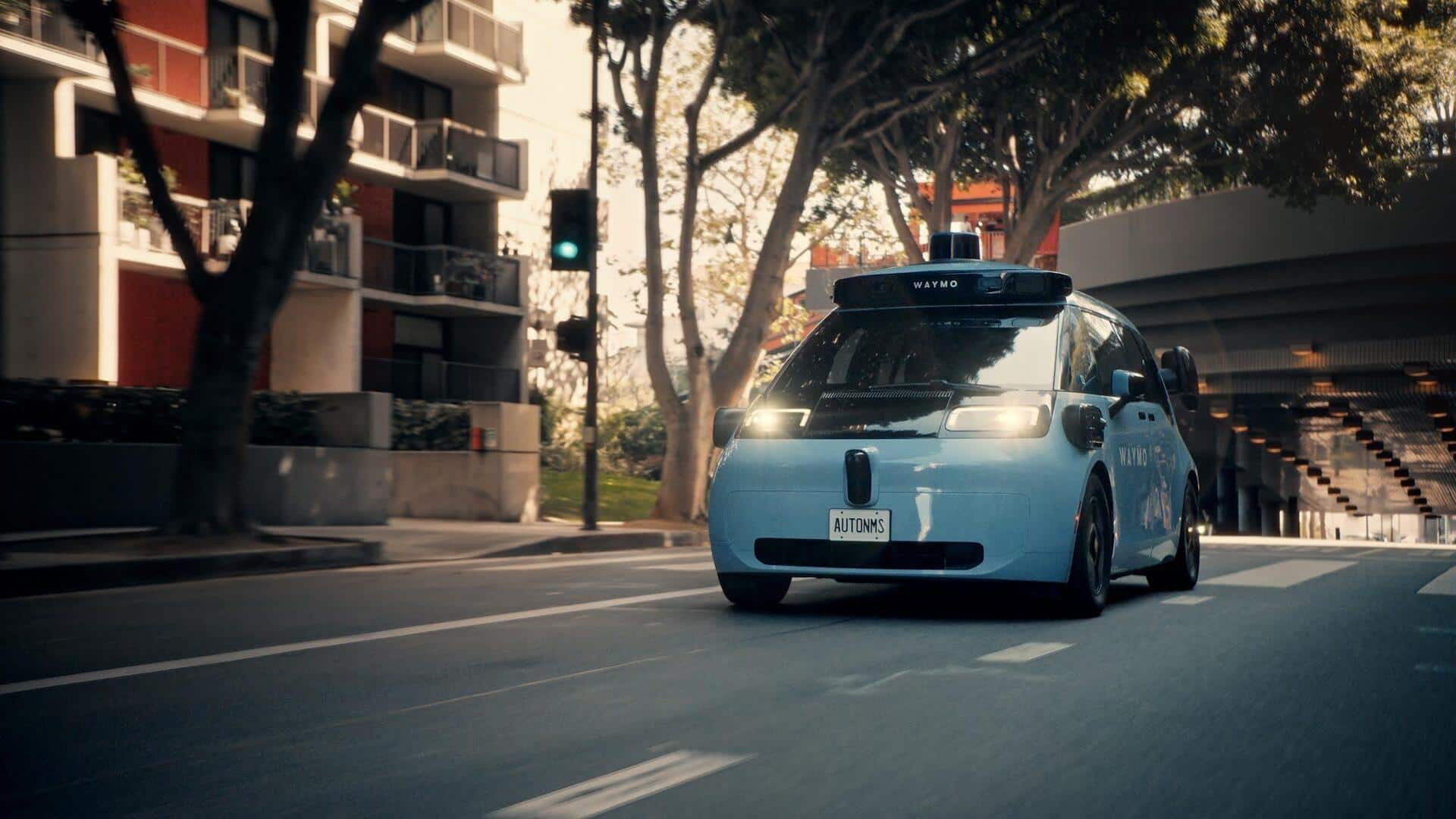
Waymo, the self-driving car subsidiary of Alphabet, has placed an order for thousands of Chinese-made electric vehicles (EVs) to expand its US robotaxi fleet. The move has raised national security and fair competition concerns among US lawmakers. The vehicles are a rebranded version of Zeekr, a unit of the Chinese Communist Party-linked Geely Holding Group.
Fleet growth
Waymo to import some 5,100 Ojai EVs
Waymo plans to import some 5,100 Ojai vehicles by the end of this year, more than doubling its current fleet.
The existing fleet mainly comprises Jaguar I-Pace SUVs imported from Austria and fitted with Waymo's self-driving technology in Arizona.
Despite a Commerce Department ban on importing or selling "connected vehicles" or self-driving software from China or Russia starting model year 2027, Waymo continues to expand its fleet.
Security risks
Critics raise red flags over Waymo's Zeekr partnership
Critics have flagged the partnership between Waymo and Zeekr as a major economic and national security risk.
Missy Cummings, a former senior safety advisor at the National Highway Traffic Safety Administration, questioned Waymo's claims that the Zeekr chassis are free of Chinese technology.
She said, "It's very possible that the Chinese have layered in other sensors that are recording data and sending it back to China."
Data protection
Waymo defends practices amid criticism
In response to the concerns raised, a Waymo spokesperson defended the company's practices.
They said all vehicles undergo rigorous security testing to protect trade secrets.
The spokesperson also clarified that Waymo does not share any data collected on US-based consumers with Zeekr or any other base vehicle manufacturer, and does not license its software to Zeekr, share source code, or allow transfer of algorithms or AI models.
Legislative action
Bipartisan legislation introduced to address the loophole
The Zeekr deal has drawn the attention of DC policymakers.
US auto executives have warned that inexpensive Chinese cars could threaten Tesla and other major American carmakers.
However, lawmakers are also wary of hampering Waymo, a leader in the global self-driving car race.
To address these concerns, bipartisan legislation has been introduced to close the loophole allowing imports of vehicles from China even if a US company adds its own software and sensors afterward.