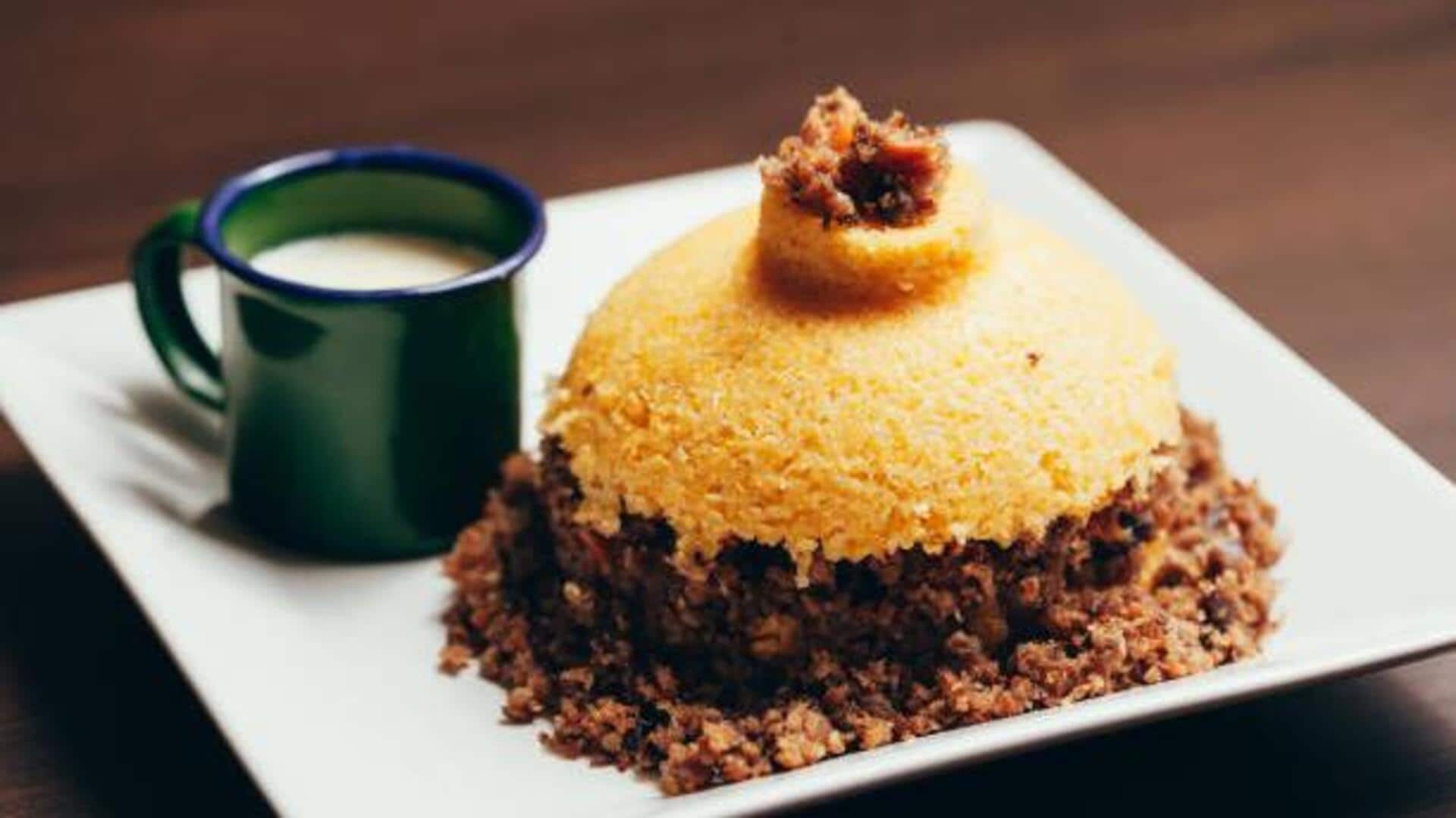
5 tasty dishes that celebrate semolina
What's the story
Semolina, a versatile grain, is an important part of many African cuisines. It is mostly used to prepare traditional dishes that are both nutritious and delicious. Across the continent, semolina is prepared in a variety of ways to suit local tastes and ingredients. Here are five unique African dishes that highlight the diversity of semolina in traditional cooking.
Dish 1
Fufu: A West African staple
Fufu is a popular dish in West Africa, prepared by boiling and pounding starchy foods such as cassava or plantains with semolina. The result is a smooth, stretchy, dough-like consistency. It is usually served with soups or stews, where it soaks up the flavors. Fufu is commonly eaten in Ghana, Nigeria, and Senegal, where it accompanies local delicacies.
Dish 2
Couscous: North African delight
Couscous is a North African dish made from steamed semolina granules. It is a staple in countries like Morocco and Algeria, where it is often served with vegetables and spices. Couscous can be eaten as a side dish or as a main course when mixed with legumes or nuts. Its light texture makes it an ideal base for hearty sauces.
Dish 3
Ugali: East African comfort food
Ugali is a thick porridge made from maize flour or semolina, cooked in water until it reaches a dough-like consistency. A staple in Kenya and Tanzania, ugali is usually eaten with vegetables or grilled vegetables. Its neutral flavor makes it an ideal accompaniment to spicy dishes.
Dish 4
Sadza: Zimbabwean favorite
Sadza is Zimbabwe's version of ugali but with a unique twist, with local grains like millet or sorghum mixed with semolina. This dish is usually eaten during family gatherings and celebrations, symbolizing unity and togetherness. Served hot with leafy greens or tomato-based sauces, sadza provides comfort and nutrition, reflecting Zimbabwe's rich culinary heritage.
Dish 5
To: Burkinabe specialty
To is a traditional Burkinabe dish made from fermented cassava flour blended with semolina to create a thick paste. This paste is then shaped into balls and served with vegetable stews or sauces. To is a staple food in Burkina Faso, where it is consumed daily by many families due to its affordability and nutritional value.