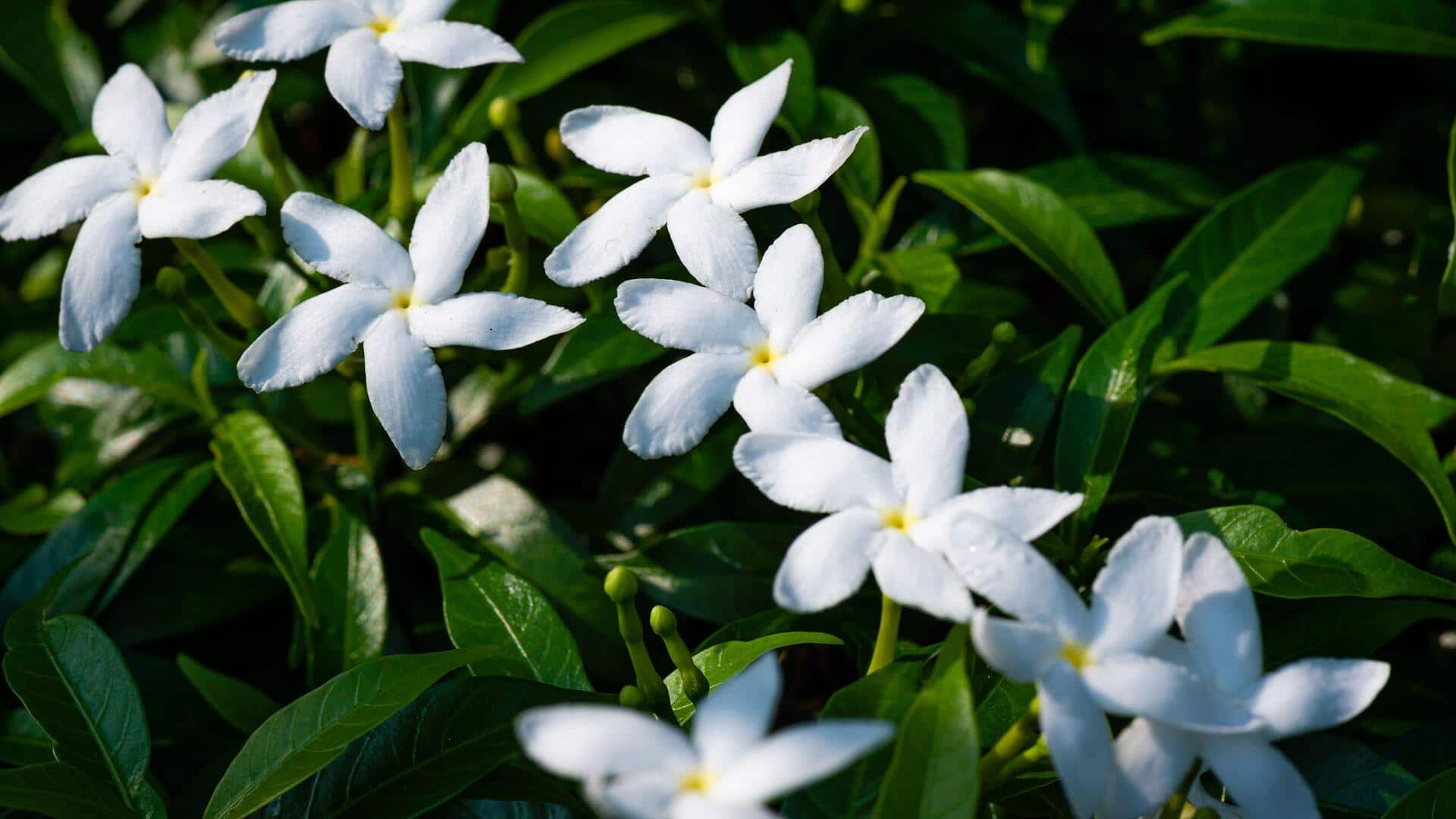
How to cultivate jasmine in your garden
What's the story
Jasmine, with its sweet fragrance and delicate blooms, is a favorite among gardeners. It can add a touch of elegance and charm to any garden. If you want to grow jasmine, knowing its growth habits is important. This article will give you practical tips on how to grow jasmine, including soil conditions, sunlight requirements, watering techniques, and pruning methods. These insights will help you cultivate healthy jasmine plants.
Soil selection
Choosing the right soil
Jasmine plants thrive best in well-drained soil that is rich in organic matter.
A pH level between six and seven is ideal for their growth.
To improve soil quality, you can mix compost or well-rotted manure into the soil before planting.
This not only improves drainage but also provides essential nutrients to the plants.
Sunlight needs
Sunlight requirements for jasmine
Jasmine plants flourish in full sun or partial shade.
Ideally, they should receive at least four hours of direct sunlight each day.
In hotter climates, some afternoon shade can protect them from getting scorched.
Proper sunlight exposure encourages healthy growth and abundant flowering.
Watering tips
Watering techniques for healthy growth
Jasmine needs regular watering, but don't overdo it.
Water the plants deeply when the top inch of soil feels dry to the touch.
Overwatering can lead to root rot, so make sure that the pots have good drainage if you're growing them in containers.
During dry spells, you may need to increase the frequency of watering.
Pruning tips
Pruning methods for optimal blooms
Pruning is essential to keep jasmine plants healthy and blooming well.
The best time to prune is right after flowering has finished. This encourages new growth for the next season's blooms.
Remove dead or damaged stems and shape the plant as desired without cutting too much at once.