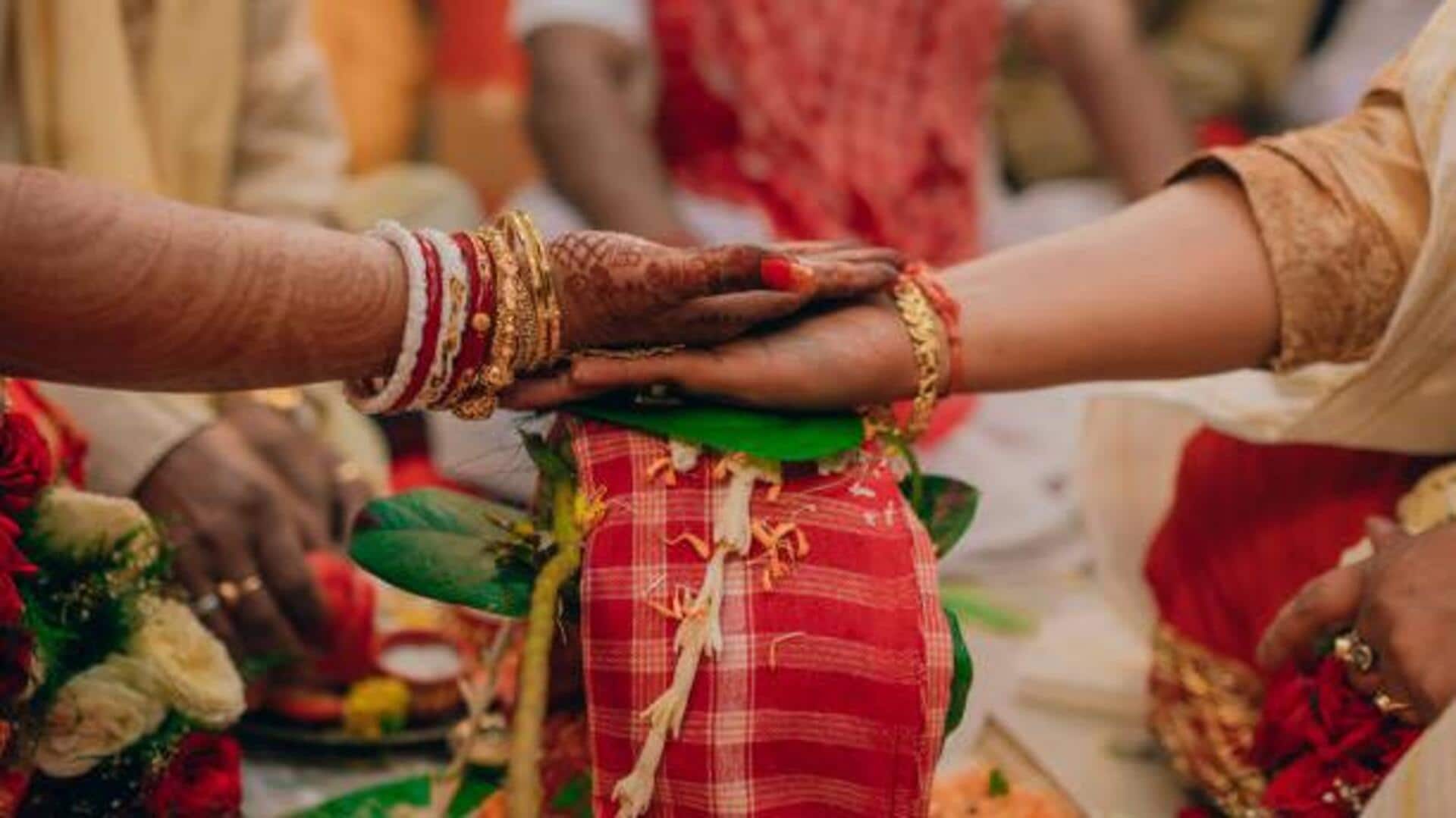
This is what a Bangladeshi wedding really looks like
What's the story
Bangladeshi weddings are a colorful affair, filled with traditions passed down through generations. These ceremonies are not just about celebrating the union of two people, but also about honoring cultural heritage and family ties. Each custom has its own significance, reflecting the values and beliefs of Bangladeshi society. From pre-wedding rituals to post-ceremony celebrations, every aspect is steeped in meaning and tradition.
#1
The pre-wedding rituals
Pre-wedding rituals in Bangladeshi weddings are elaborate and steeped in tradition.
The Gaye Holud ceremony is one of the most important, where turmeric paste is applied to the bride and groom's bodies. This ritual is supposed to beautify them for the wedding day.
Another important custom is the Paka Katha, where families finalize the marriage agreement with gifts and sweets.
#2
The wedding day traditions
The wedding day itself is filled with various traditions unique to Bangladeshi culture.
The Nikkah is the Islamic marriage contract signing, where both parties consent to the marriage in front of witnesses.
This is followed by celebrations that may include music, dance, and feasting.
The bride often wears traditional attire, adorned with intricate jewelry, symbolizing her family's pride.
#3
Post-wedding celebrations
Post-wedding celebrations in Bangladesh are as lively as the wedding day itself.
One of the most popular customs is Bashor Ghar, where newlyweds spend their first night together under their family's watchful eyes.
This tradition emphasizes respect for privacy while ensuring everything goes smoothly.
Family members often gather around to share stories about their lives together before they start this new chapter.
Tip 1
Modern adaptations of traditions
In recent years, many Bangladeshi couples have started incorporating modern elements into traditional weddings without losing their cultural essence.
For instance, some opt for smaller ceremonies or combine different cultural influences, reflecting globalization's impact on society today.
These adaptations allow individuals to personalize their celebrations while remaining connected to their roots through meaningful rituals passed down over time.