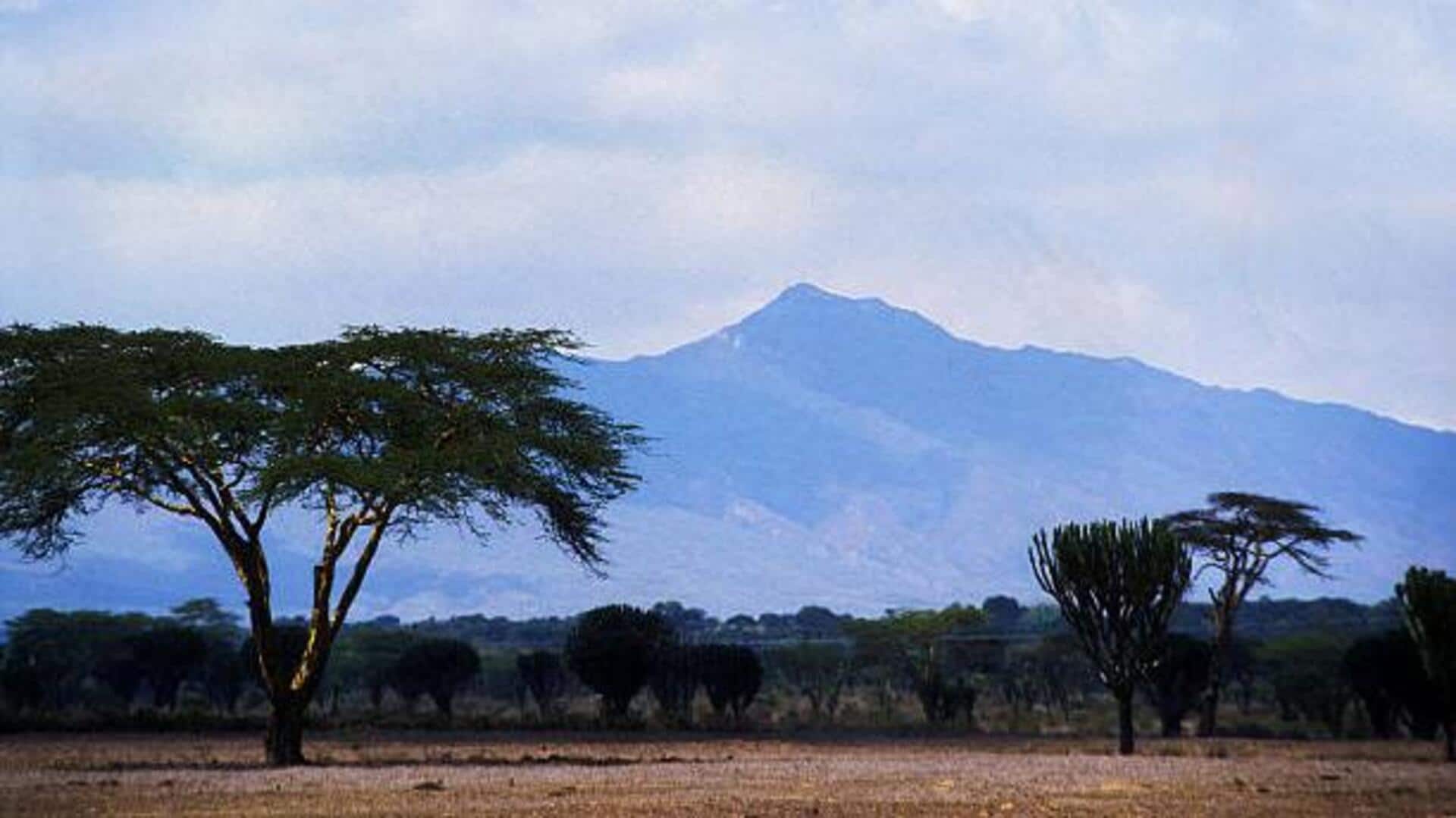
Mount Longonot: A volcanic climb in Kenya
What's the story
Mount Longonot, a dormant volcano in Kenya's Great Rift Valley, makes for an exhilarating climbing experience. The mountain, which stands at 2,776 meters, offers breathtaking views and a unique geological landscape. The trek around its crater rim is not only physically challenging but also a chance to witness diverse flora and fauna. Here's everything you need to know about climbing Mount Longonot.
Preparation
Preparing for the climb
Before you head out to Mount Longonot, it's important to prepare well.
Start by checking the weather forecast to ensure you have clear skies for the best views.
Wear comfortable hiking boots with good grip, as the terrain can be rocky and steep at times.
Carry enough water and snacks to keep your energy levels up during the climb.
A hat and sunscreen are also essential to protect yourself from the sun's rays.
Trail
The trail experience
The trail around Mount Longonot's crater rim is about 13 kilometers long.
It usually takes about five hours to complete, depending on your pace, and how many stops you make for photos or resting.
The initial ascent is steep but gets easier as you reach higher altitudes.
Keep an eye out for wildlife like buffaloes or giraffes that inhabit this area.
Wildlife
Flora and fauna along the way
As you climb Mount Longonot, you'll witness a variety of plant species, from acacia trees to wildflowers.
The mountain's ecosystem is home to various animals, including monkeys, and birds like ostriches and eagles.
These creatures are well-adapted to the volcanic soil and dry climate, making it a unique habitat worth observing during your hike.
Safety
Safety tips for climbers
Safety should be your priority while climbing Mount Longonot.
Always hike in groups, instead of going solo, as it is safer and more fun.
Stay on marked trails to avoid getting lost or damaging the delicate environment.
If you're not used to high altitudes, take your time to acclimatize to avoid altitude sickness.