Iconic Italian carnival costumes you should know
What's the story
Italian carnivals are famous for their vibrant costumes and lively celebrations. These traditions, which vary from region to region, are an integral part of Italy's cultural heritage. Each carnival has its own unique costume traditions, which reflect the local history and customs. From Venice's elaborate masks to Viareggio's satirical floats, these costumes are a feast for the eyes. Here are some of the most iconic Italian carnival costume traditions.
#1
Venice's elaborate masks
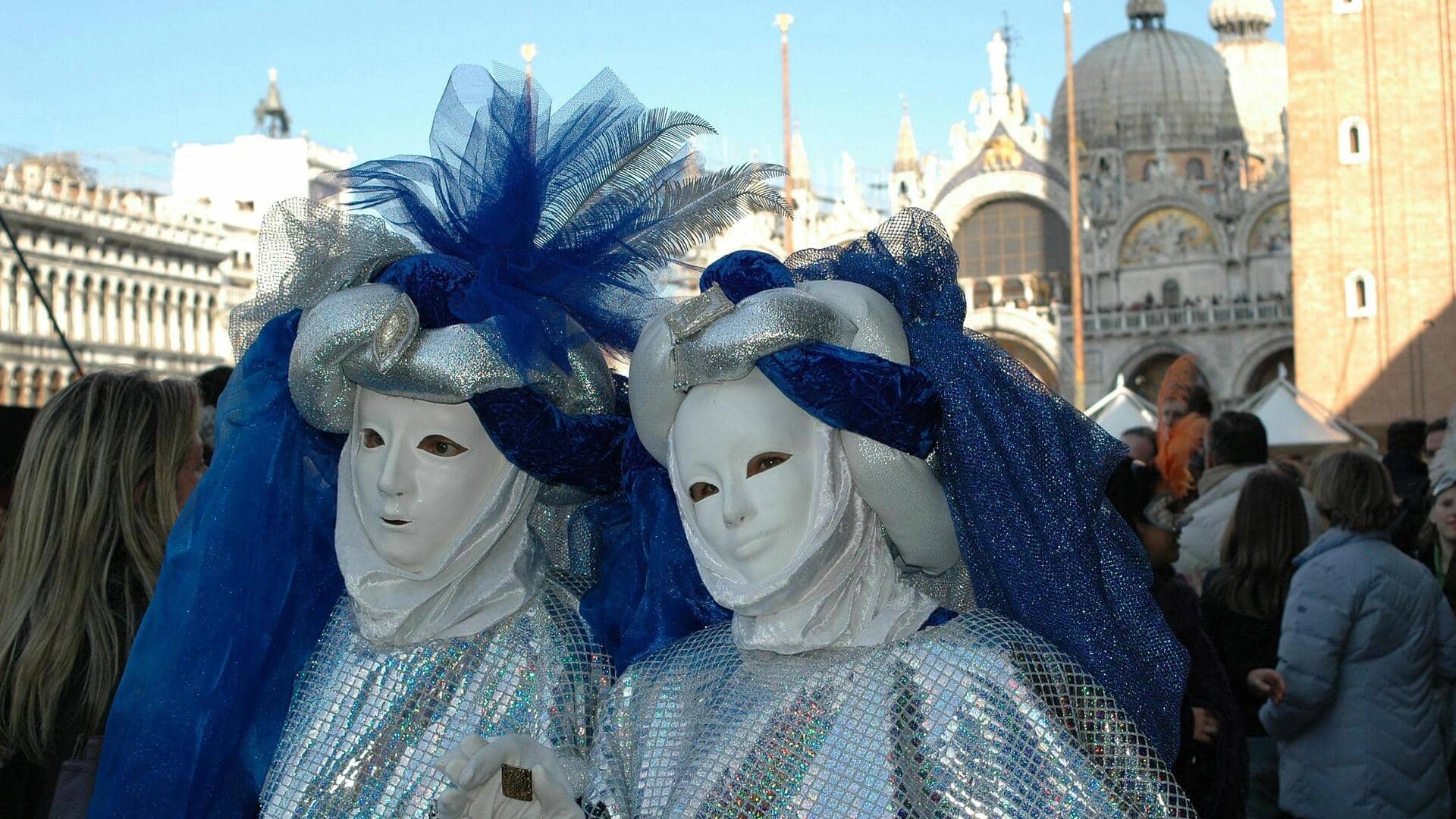
The Venice Carnival is famous for its elaborate masks and costumes.
The tradition of mask-wearing dates back to the 13th century, allowing people to hide their identity and social status.
The masks are usually made of papier-mache and decorated with feathers, beads, and more. They allow for anonymity and equal participation in festivities.
The tradition is still alive today, with visitors donning intricate masks as they stroll through the city's historic streets.
#2
Viareggio's satirical floats
Viareggio Carnival is famous for its satirical floats that lampoon politicians and celebrities.
The floats are made using papier-mache and are paraded down the streets during the carnival.
The tradition started in 1873 as a way to poke fun at local authorities but has since expanded into a national event.
The costumes worn by participants are equally satirical, often depicting exaggerated features of public figures.
#3
Ivrea's historical costumes
The Ivrea Carnival is famous for its historical re-enactments and battles with oranges instead of traditional confetti or flowers.
Participants wear medieval-style costumes that reflect the town's history of revolt against tyranny in the 12th century.
This tradition symbolizes freedom and resistance against oppression.
The orange battles are a highlight of the event, with participants throwing oranges at each other in lively skirmishes.
#4
Putignano's traditional attire
The Putignano Carnival, one of Italy's oldest carnivals, dates back to 1394. It features traditional attire that highlights local culture and folklore.
Participants wear costumes inspired by traditional characters like Mastro Gianni or Ninno, who represent good fortune or mischief, respectively.
These characters interact with crowds during parades, adding an element of storytelling to the festivities.
#5
Cento's unique costume contest
The Cento Carnival features a unique costume contest where participants compete in groups or individually for best costumes based on themes set each year by organizers.
Themes can be historical events or popular culture references relevant at the time.
This competition encourages creativity among participants, who spend months preparing elaborate outfits before showcasing them during parades held throughout the event's duration.