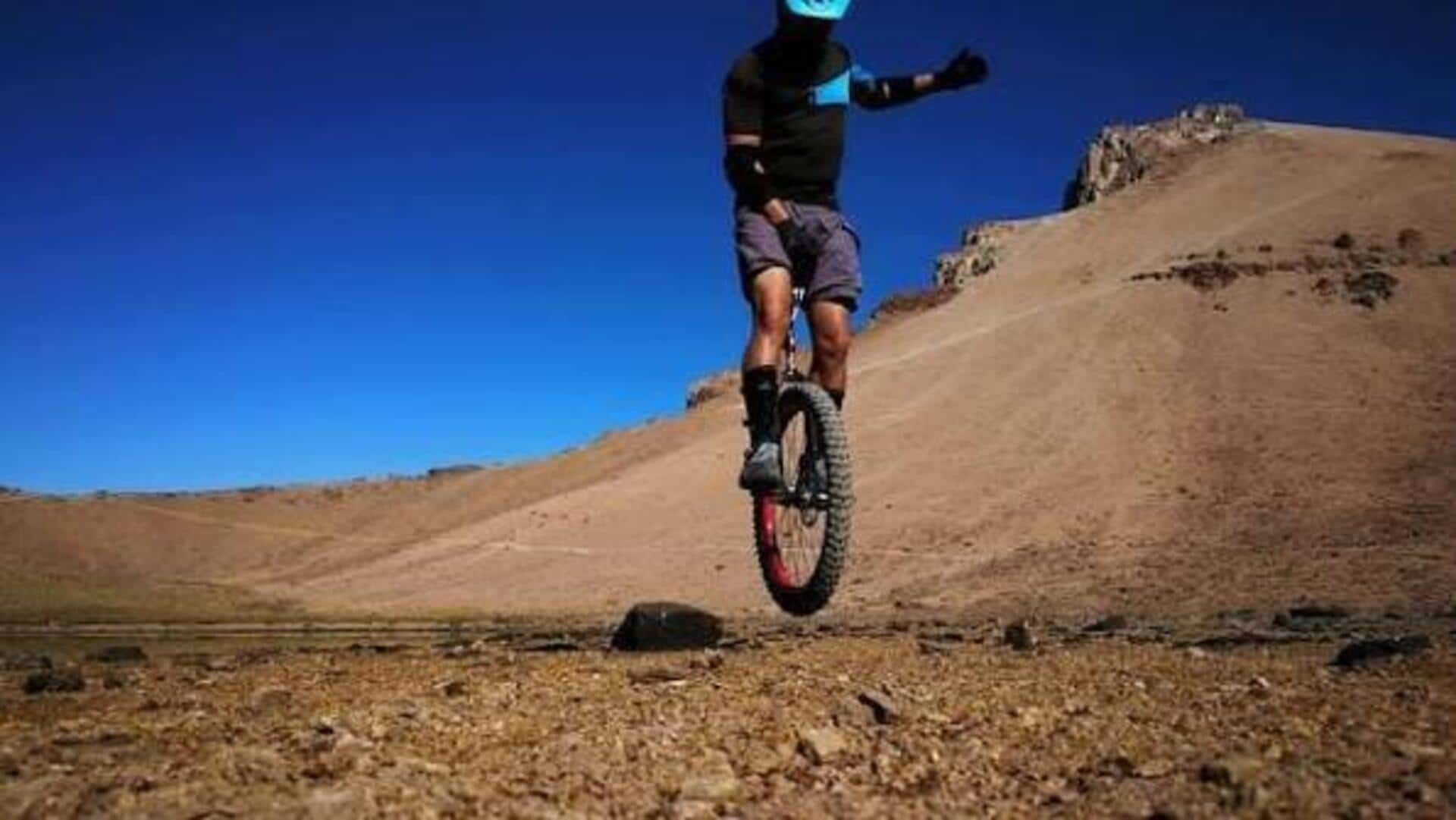
Mountain unicycling: The off-road sport worth trying
What's the story
Mountain unicycling in Lesotho is an exhilarating adventure, combining the thrill of cycling with the stunning landscapes of the African country. The activity involves riding a unicycle on rough terrain, offering a unique way to explore the region's natural beauty. With its mountainous terrain and diverse ecosystems, Lesotho provides an ideal setting for this unconventional sport. Here is what you need to know about mountain unicycling in Lesotho.
#1
Terrain and trails
Lesotho's mountainous landscape offers a range of trails for mountain unicyclists.
From gentle slopes to steep descents, the terrain varies greatly across the country.
The trails are often unmarked and require good navigation skills.
Riders should be prepared for rocky paths, loose gravel, and sudden changes in elevation.
The high altitude can also affect breathing and stamina levels.
#2
Equipment essentials
Proper equipment is crucial for a safe mountain unicycling experience in Lesotho.
A sturdy unicycle designed for off-road use is essential, along with protective gear like helmets, knee pads, and elbow pads.
Given the unpredictable weather conditions in the region, riders should also carry weather-appropriate clothing layers to stay comfortable during their ride.
A repair kit is also recommended to handle any mechanical issues on the trail.
#3
Safety precautions
Safety should always be a priority when mountain unicycling in remote areas like Lesotho.
Riders should inform someone about their planned route and expected return time before heading out.
It is also advisable to travel with a companion or group whenever possible for added safety measures.
Understanding local wildlife risks and being prepared for potential emergencies can further enhance safety during this adventure.
#4
Cultural considerations
Engaging with local communities while mountain unicycling in Lesotho can enrich the experience significantly.
Respecting cultural norms and traditions is vital when interacting with locals along the trails or in nearby villages.
Learning basic phrases in Sesotho, the local language, can facilitate communication and demonstrate respect towards the culture you are experiencing firsthand during this unique adventure.