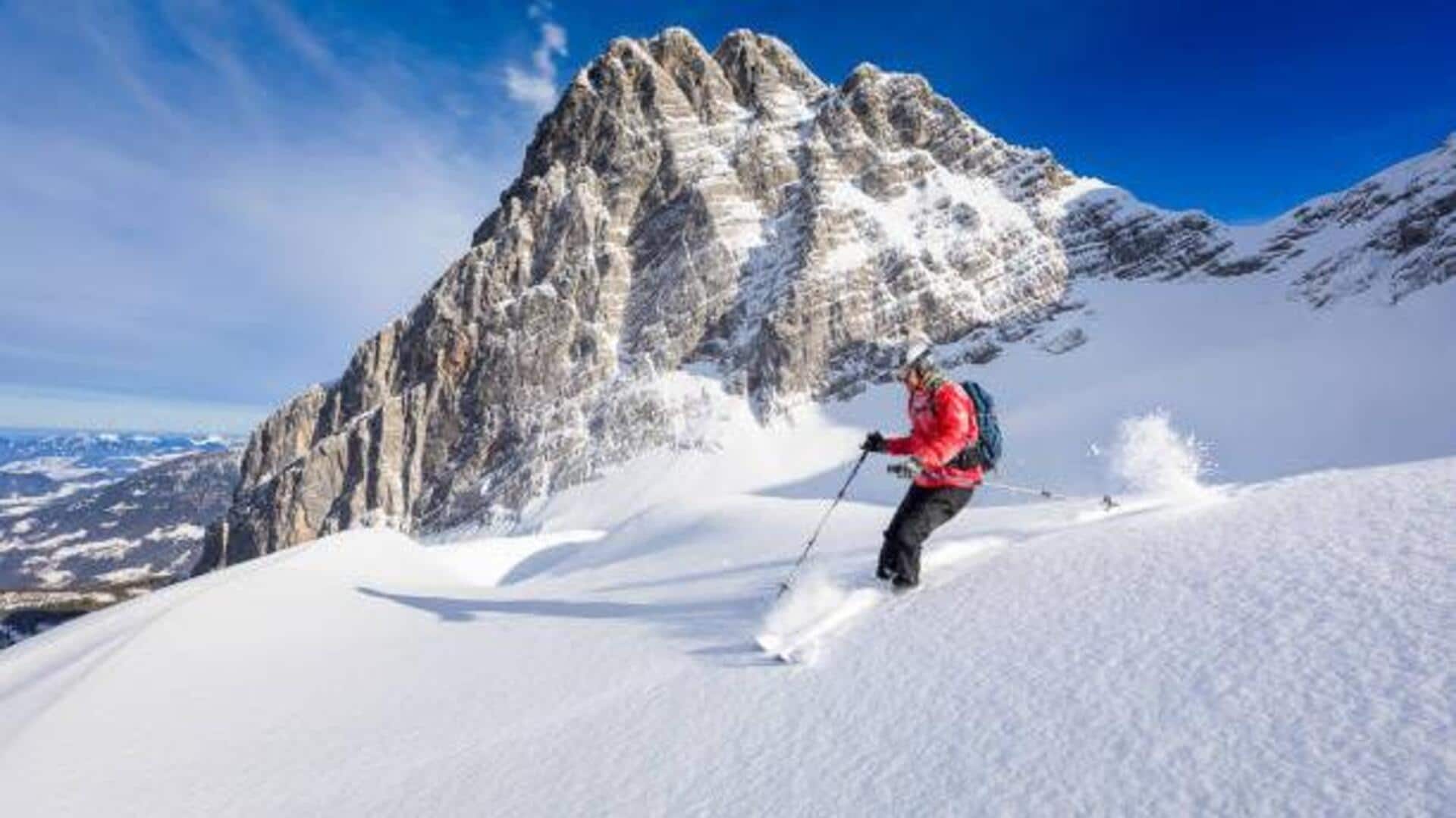
A guide to glacier skiing in Norway
What's the story
Exploring Norway's glaciers on skis is a unique way to experience the country's stunning landscapes. The activity combines the thrill of skiing with the beauty of glacial terrain, offering adventurers an unforgettable experience. From the vast ice fields to breathtaking views, skiing on these glaciers allows you to connect with nature in a way few other activities can. Here are some insights into this extraordinary adventure.
#1
Choosing the right glacier
Selecting the right glacier is crucial for your skiing adventure.
Jostedalsbreen, Norway's largest glacier, offers various routes for different skill levels.
For beginners, smaller glaciers like Nigardsbreen provide a more manageable terrain.
It's important to consider factors like accessibility, weather conditions, and safety measures when choosing your destination.
#2
Essential gear for glacier skiing
Proper gear is essential for a safe and enjoyable experience on Norway's glaciers.
Ski equipment should include sturdy skis, poles, and boots designed for icy conditions.
Climbers should wear layered clothing to adjust to changing temperatures, and waterproof outer layers to stay dry.
Helmets and crampons are recommended for added safety on the icy surfaces.
#3
Understanding weather conditions
Weather plays a key role in planning your glacier skiing trip.
Glacial areas can be unpredictable, with sudden changes in weather patterns.
Before heading out, check forecasts regularly, and be prepared for variations in temperature and visibility.
Early mornings often offer clearer skies but colder temperatures, while afternoons may bring warmer weather but increased cloud cover.
#4
Safety tips for glacier skiing
Safety should always be your priority while skiing on glaciers.
Always travel with a guide or experienced group if you are new to this activity or unfamiliar with the area.
Keep an eye out for crevasses, cracks in ice that can be dangerous if not spotted in time.
Carry essential safety equipment, such as GPS devices, first aid kits, and communication tools, in case of emergencies.