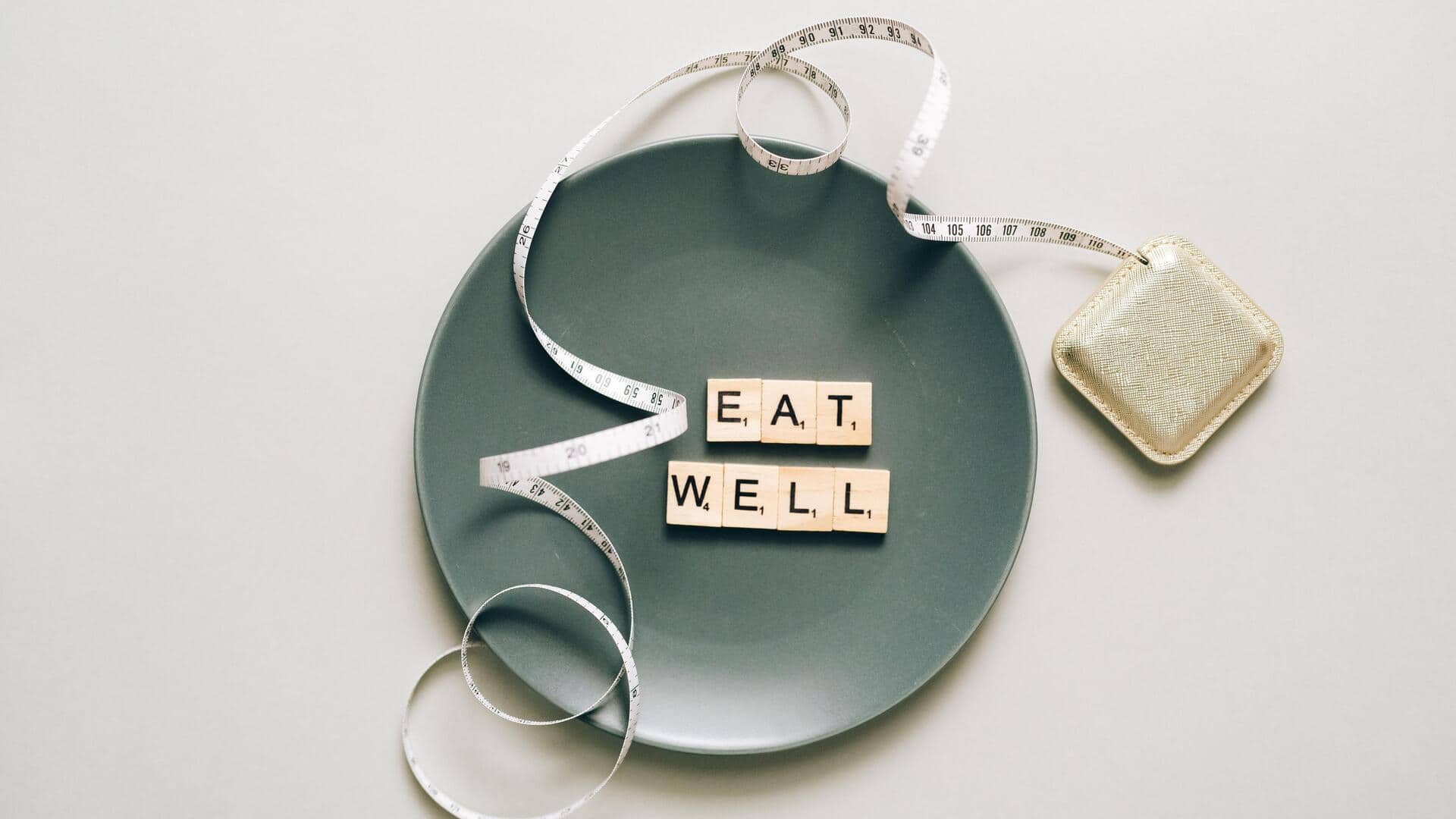
Try the visual plate method for better portion control
What's the story
The visual plate method is a simple yet effective tool to manage portion sizes and promote healthy eating habits. Using visual cues, it helps individuals understand appropriate serving sizes without the need for measuring utensils or scales. This method can be particularly useful for those looking to maintain or lose weight, as it encourages mindful eating practices. Here are some insights on how to effectively implement the visual plate method in daily meals.
Plate concept
Understanding the visual plate method
The visual plate method revolves around dividing your plate into sections for different food groups.
Ideally, half of your plate should be filled with fruits and vegetables, one-fourth with whole grains, and one-fourth with protein sources.
This way, you get a balanced meal while controlling portion sizes naturally.
Health advantages
Benefits of using a visual plate
Using the visual plate method has several health benefits.
It encourages you to eat more fruits and vegetables, which are high in nutrients and low in calories.
This way, you can manage your weight better while getting the essential vitamins and minerals your body needs.
Plus, it promotes mindful eating by making you pay attention to what you eat, instead of eating mindlessly.
Tips for success
Practical tips for implementation
To successfully implement the visual plate method, start by using smaller plates to naturally reduce portion sizes.
Plan meals ahead of time to ensure each plate is balanced according to the recommended sections.
Keep healthy snacks like cut fruits or vegetables handy to avoid unhealthy snacking between meals.
Challenges faced
Overcoming common challenges
One common challenge with the visual plate method is overcoming the habit of larger portions at restaurants or social gatherings.
To deal with this, you can request smaller portions or share dishes with someone else when dining out.
Another challenge is ensuring variety within each food group while sticking to portion control guidelines; experimenting with different recipes can keep meals interesting without compromising on nutrition.