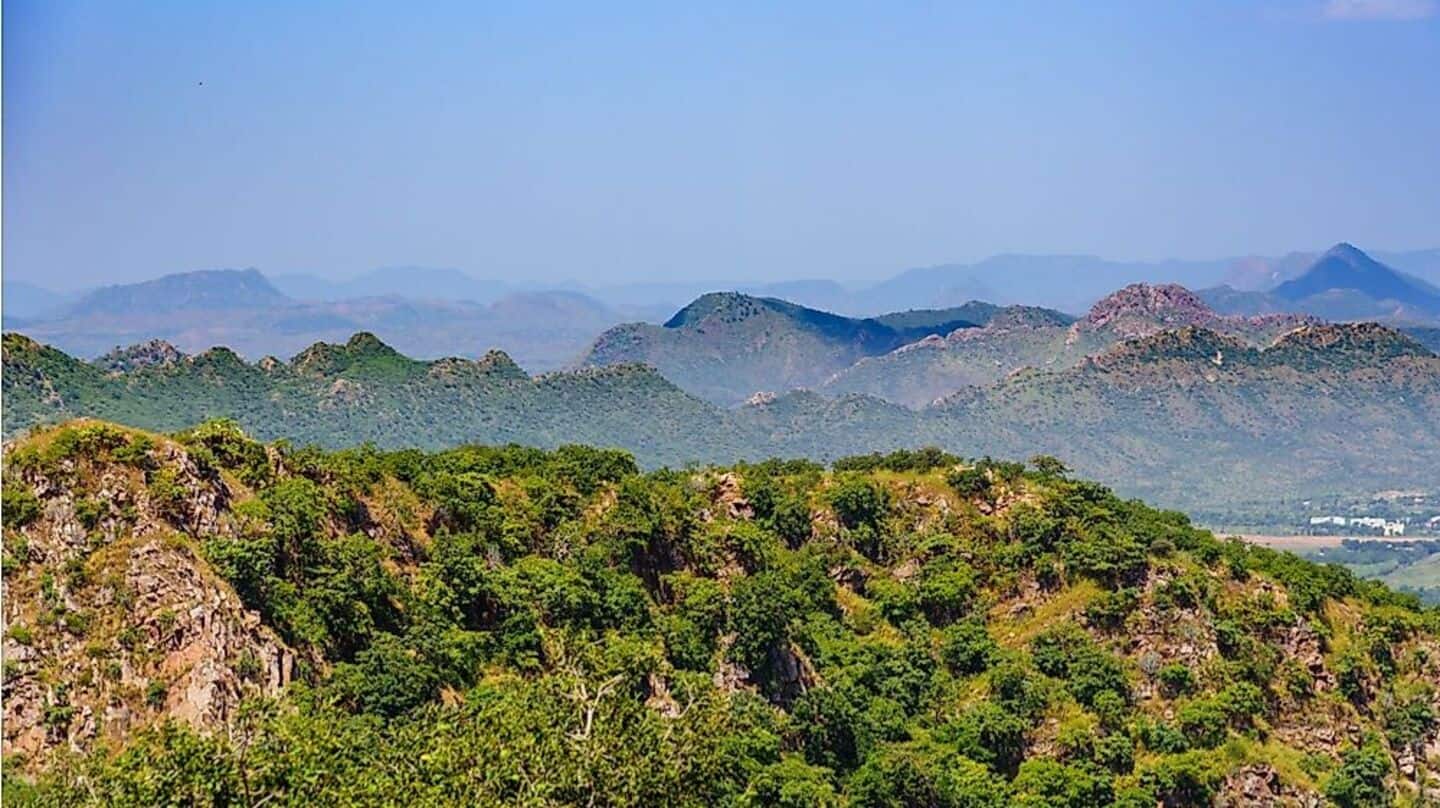
'90% Aravallis under protected zone': Centre refutes Opposition's 'relaxation claims'
What's the story
Union Environment Minister Bhupendra Yadav has dismissed allegations that the Centre has relaxed protections for the Aravalli hills. He said nearly 90% of the region will remain protected under a new definition approved by the Supreme Court. "There are no relaxations on the Aravalli," Yadav said, adding that only landforms rising 100 meters or more above local relief, along with their slopes and adjoining areas, would be considered part of the range.
Mining regulations
Mining eligibility limited to 0.19% of Aravalli
Yadav also clarified that mining eligibility is limited to nearly 2% of the Aravalli landscape, covering around 217 square kilometers.
He stressed that mining in Delhi's Aravalli is completely prohibited and all protected areas will remain untouched.
The Supreme Court has mandated a freeze on new mining leases until a sustainable plan is prepared, allowing only existing mines to operate under strict norms.
Ecological concerns
Opposition parties express concern over Aravalli protection
Opposition parties, including the Congress and Samajwadi Party, have raised concerns over the new definition.
Samajwadi Party chief Akhilesh Yadav emphasized that protecting the Aravallis is crucial for Delhi's survival.
He warned that continued degradation would worsen air pollution and biodiversity loss in the capital.
Environmental activists also fear that changing the definition could disrupt the ecological balance of one of India's oldest mountain ranges.
Standardized definition
Supreme Court's standardization efforts for mining permissions
The Supreme Court sought a standardized definition as states were following inconsistent criteria for granting mining permissions.
Rajasthan was the only state with a clearly established definition since 2006, which prohibits mining within the lowest contour enclosing a hill.
Representatives from Rajasthan, Haryana, Gujarat, and Delhi agreed to adopt this model with added safeguards, such as mandatory Survey of India mapping and treating nearby hills as a single range.