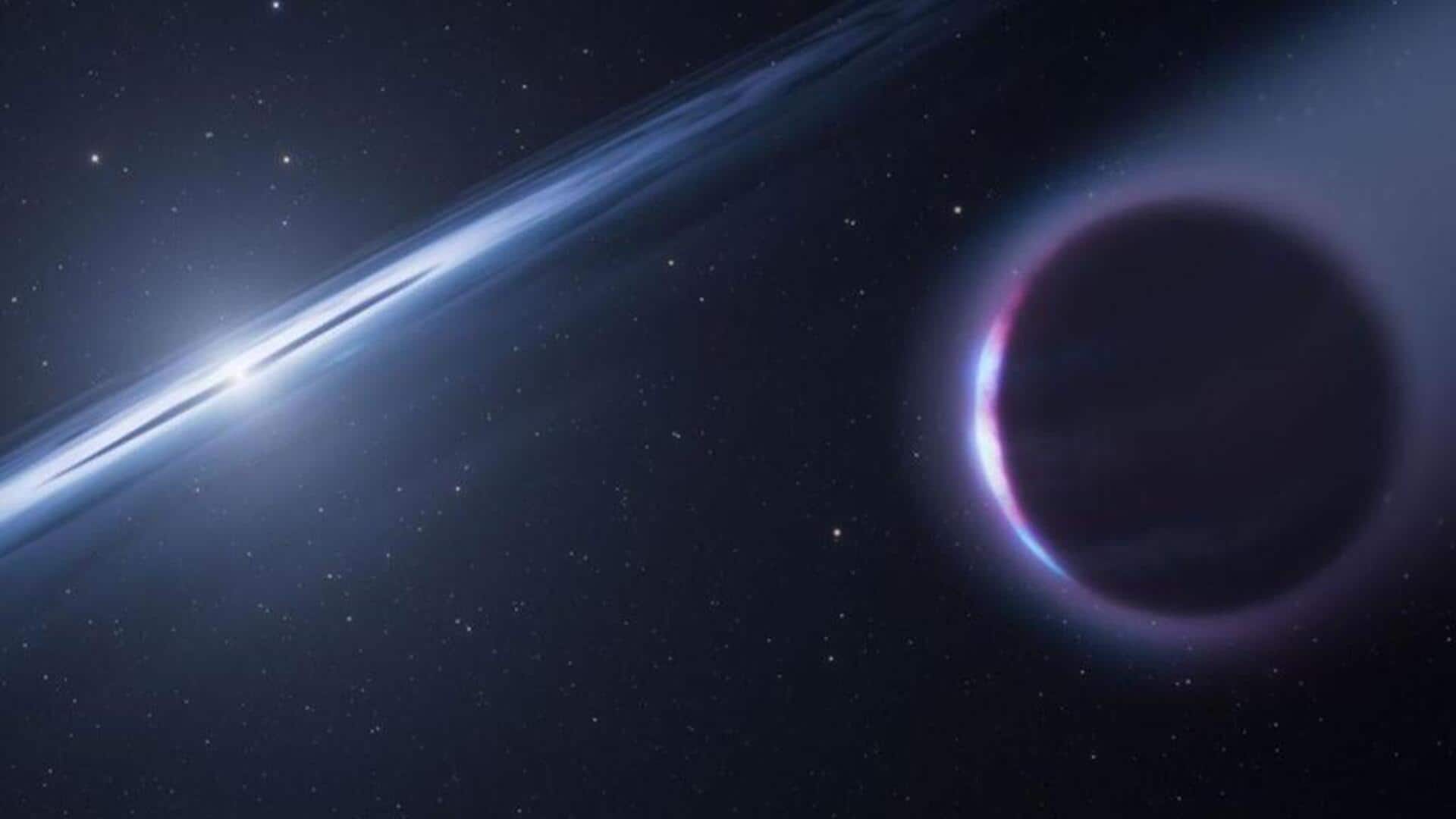
A possible second-generation planet exists around 270 light-years away
What's the story
Astronomers have discovered the first-ever evidence of a possible second-generation planet around a white dwarf star, HS 0209+0832, located some 270 light-years away. The groundbreaking finding was detailed in a study published last week in Nature Astronomy. The research team, made up of UK-based scientists, analyzed data collected by NASA's Hubble Telescope back in 1999 and identified around 100 unidentified chemical features surrounding the dense dead star.
Unique formation
Heavier-than-iron elements indicate planet formation
The researchers theorized that presence of "astronomically special" elements like niobium and other heavier-than-iron elements indicated formation of a planet.
They think this planet was formed from stellar material ejected by the dying white dwarf, which is different from our solar system's planets that were formed when stars were born.
"These heavy elements can only be synthesized in exotic conditions that briefly emerge inside dying stars," said Dr. Nicholas Stone, a theoretical astrophysicist at University of Wisconsin-Madison and study co-author.
Orbital characteristics
Repeating brightness cycle of about 4.4 days
The researchers also observed a repeating brightness cycle of about 4.4 days, which could correspond to the day-night temperature variation of a massive planet orbiting very close to its star.
If this proposed planet exists, it is located at.04 Astronomical Units, or 25 times closer than Earth is to the Sun.
Despite losing atmosphere, researchers are hopeful about its survival due to the white dwarf eventually cooling and maintaining a stable temperature for millions of years.
Confirmation required
Discovery yet to be verified
The discovery of this potential second-generation planet has yet to be officially verified, with experts calling for more research.
The steady temperature of the white dwarf could mean a close-in rocky planet could remain habitable for tens of billions of years, much longer than Earth, which will be engulfed or burned by the Sun when it dies within five billion years.