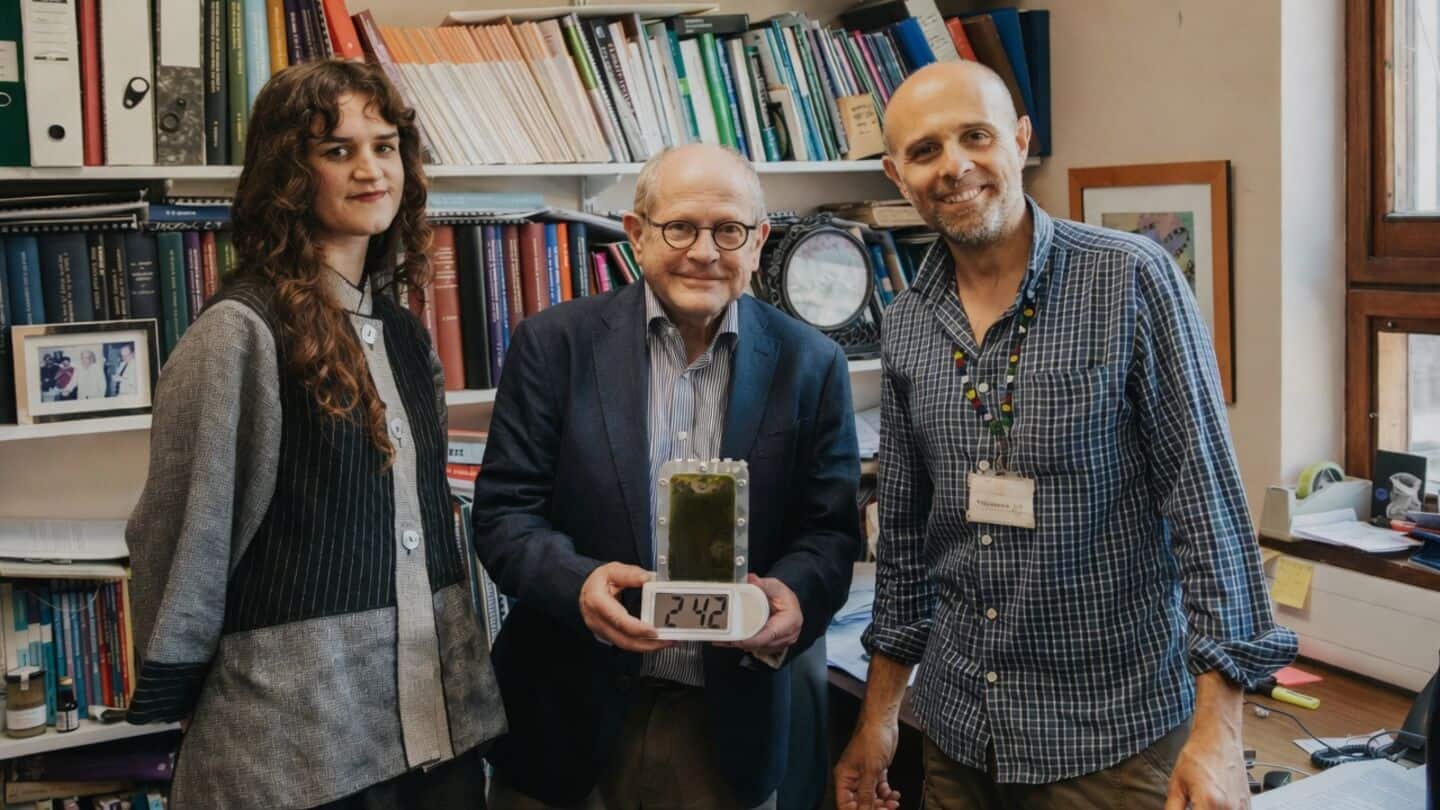
Cambridge scientists build cyanobacteria battery using photosynthesis and night respiration
Cambridge scientists have built a new kind of battery powered by cyanobacteria (yes, algae).
This bio-battery uses the bacteria's natural processes, photosynthesis during the day and respiration at night, to generate a steady stream of electricity, all without harming the organisms.
Unlike regular batteries, it keeps working even in total darkness.
Algae battery has run 6 years
This algae-powered battery has run nonstop for over six years without needing new bacteria.
While it doesn't power big gadgets yet, it's great for low-energy devices such as sensors or remote controls.
It's also made from recyclable materials instead of mined metals such as lithium or cobalt, so it's much better for the planet.
The Cambridge team is already testing prototypes (for example, plant monitors and clocks) and hopes to bring clean energy to places that aren't on the grid.