China's latest Moon laser communication slower than NASA's in 2013
What's the story
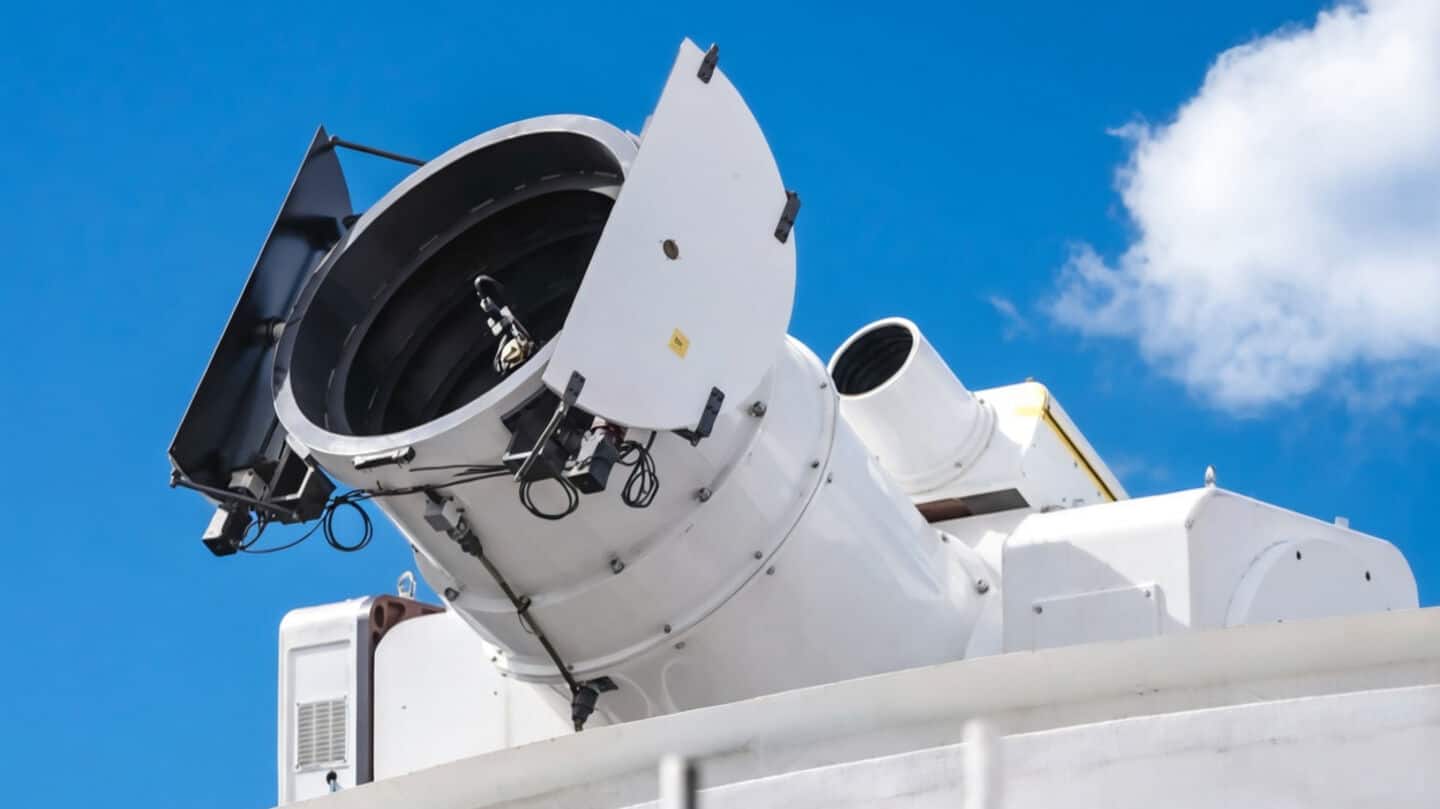
China has successfully achieved two-way laser communication between Earth and the Moon, becoming the second country after the US to do so. However, the data rates achieved by China are significantly lower than those recorded by NASA over a decade ago. The Chinese Academy of Sciences led this groundbreaking project, which used telescopes in Yunnan province and an experimental satellite that is now orbiting the Moon after a launch mishap in 2024.
Speed comparison
China's data rates are significantly lower than NASA's
The Chinese team's downlink speed was 100 megabits per second (Mbps) while the uplink speed was a mere 1.25Mbps.
In contrast, Nasa's 2013 lunar laser communications demonstration achieved download speeds of 622Mbps and upload speeds of 20Mbps.
This means China's data rates are around six times slower for downloads and 16 times slower for uploads than those achieved by NASA over a decade ago.
Expert opinions
Space experts and researchers weigh in on the findings
The disparity in data rates has left space experts puzzled.
Jonathan McDowell, a London-based space historian and former Harvard astronomer, said the Chinese and US experiments were comparable but China hasn't yet matched the US's data rates.
He admitted he was unsure what accounted for this gap.
Yang Lei, a deep-space laser communications expert and head of the research team, highlighted the speed advantage of lasers over other methods in an interview with state news agency Xinhua last week.