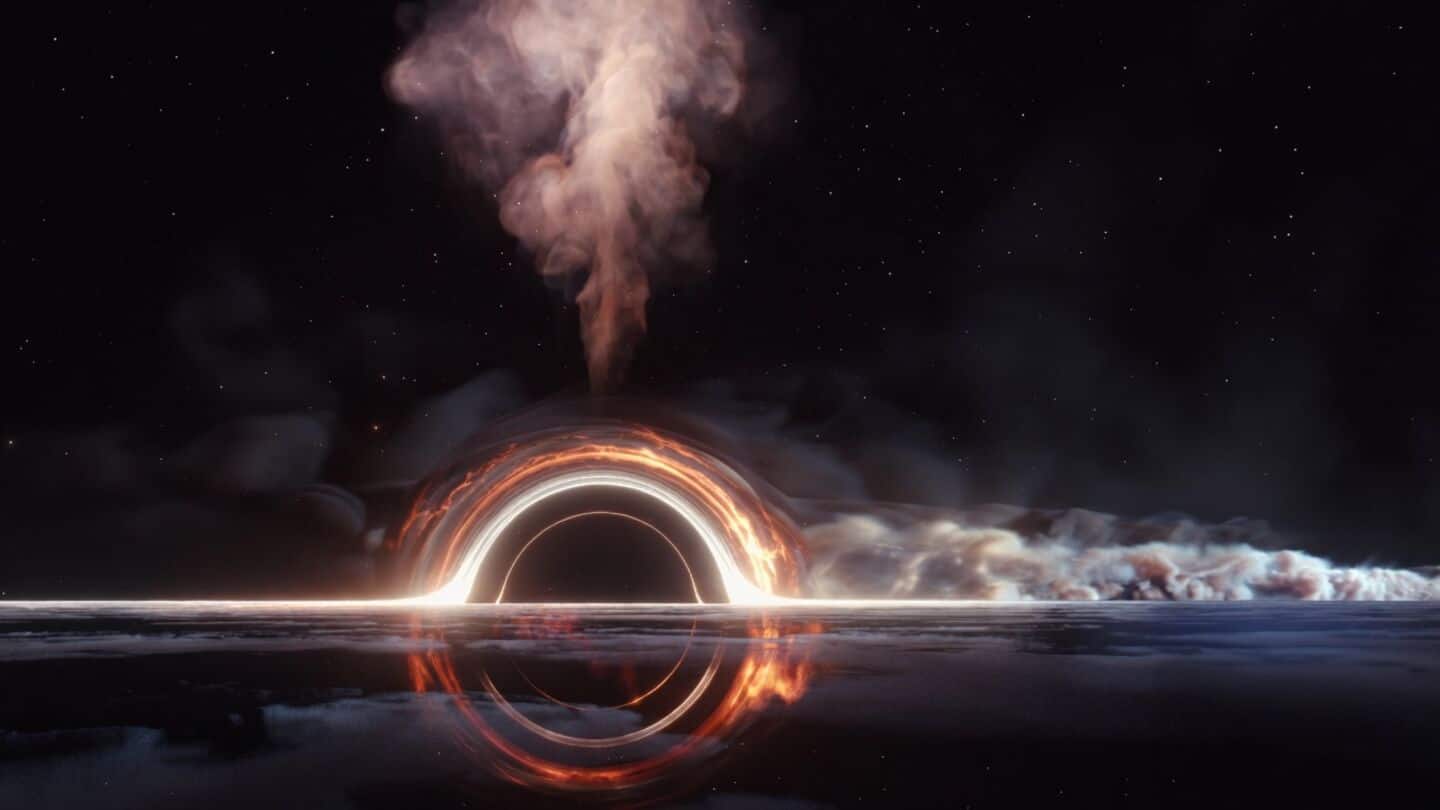
Curtin University team finds rule predicting black hole jets
Astronomers just found a simple rule that explains when black holes shoot out their powerful jets, no matter how big they are.
Led by Dr. Adelle Goodwin, an astrophysicist at Curtin University's International Centre for Radio Astronomy Research (ICRAR) and a Forrest Research Foundation Fellow, the team discovered these cosmic eruptions can happen in two distinct stages of the black hole's "feeding" cycle.
This could make it much easier to predict what black holes will do next and how they affect the surrounding galaxy.
Black hole jets at 2% Eddington
The team studied 20 events where supermassive black holes tore apart stars and noticed jets appear when the black hole's feeding drops to approximately 2% of its Eddington limit.
Since this pattern holds true for black holes of vastly different sizes, astronomers can now better plan observations and catch these wild space events in action.