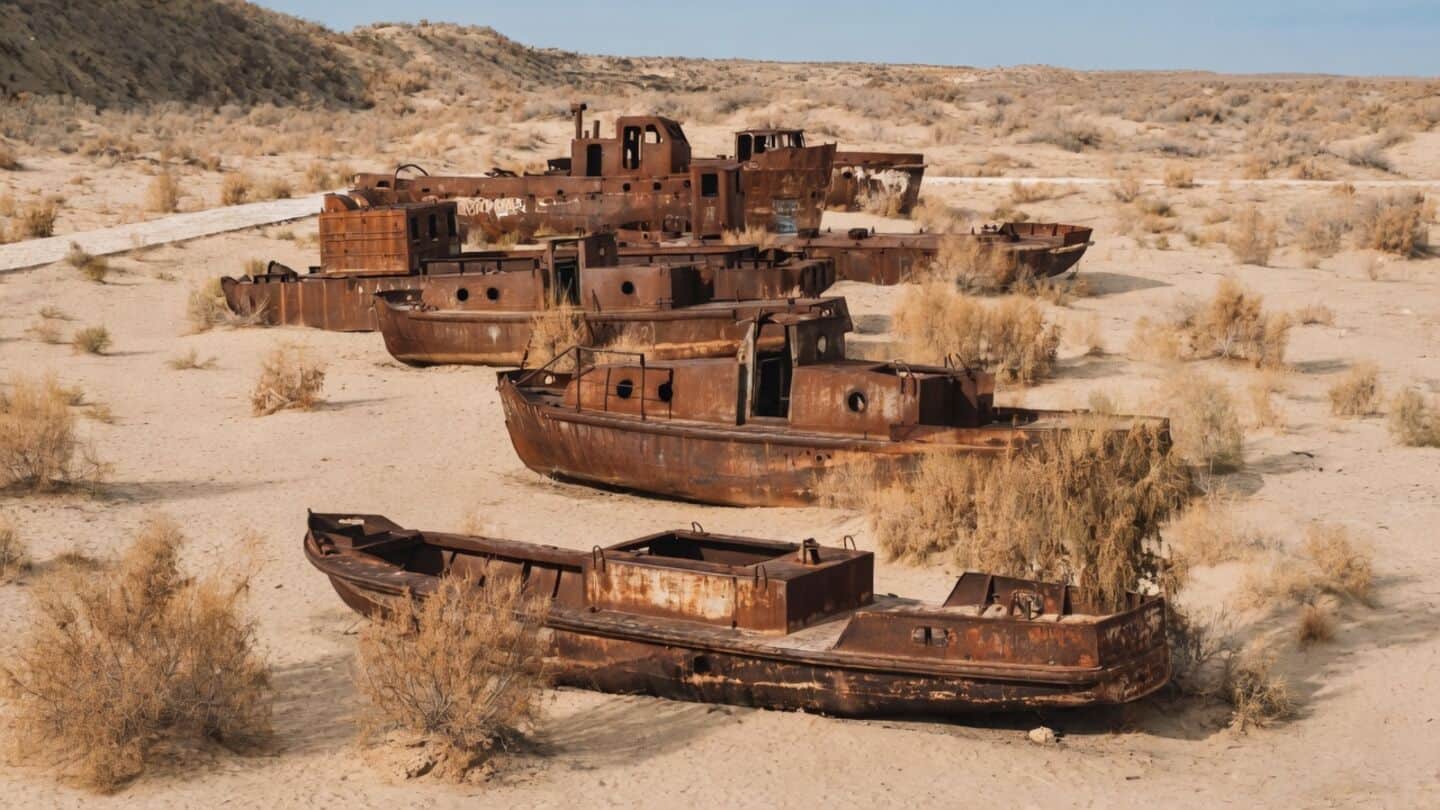
Dried Aral Sea exposed lakebed emitted 204 megatons CO2
Turns out, the dried-up Aral Sea, once the world's fourth-biggest lake, is quietly adding to climate change.
After its rivers were diverted for cotton farming in the 1960s, most of the lake vanished by the 1990s.
From 1960 to 2022, all that exposed lakebed released about 204 megatons of carbon dioxide into the air.
Reflooding could reverse Aral Sea emissions
Nearly 20% of those emissions came from windblown dust, which scientists hadn't really counted before.
There's still a lot more carbon trapped in those dry sediments. Unless something changes, even more could leak out.
Experts say reflooding could flip the Aral Sea from a carbon source to a climate ally.
Plus, losing the lake created ecological and socio-economic problems, a reminder that environmental changes hit both climate and communities hard.