CME to brush past Earth today: Should we be worried?
What's the story
A coronal mass ejection (CME) from the Sun is expected to brush past Earth today. The event was triggered by a magnetic filament eruption on August 14 and could result in a minor G1-class geomagnetic storm. This solar activity could also lead to enhanced auroras in parts of northern North America and Europe.
Storm impact
What is a geomagnetic storm?
The incoming solar material could trigger a G1-class geomagnetic storm, the lowest category on the US National Oceanic and Atmospheric Administration's five-level storm scale.
Although minor, these storms can still disrupt Earth's magnetosphere.
Geomagnetic storms occur when charged particles and magnetic fields from a CME interact with Earth's magnetic shield, potentially affecting satellites, radio communications, navigation systems and even power infrastructure in more severe cases.
Auroral activity
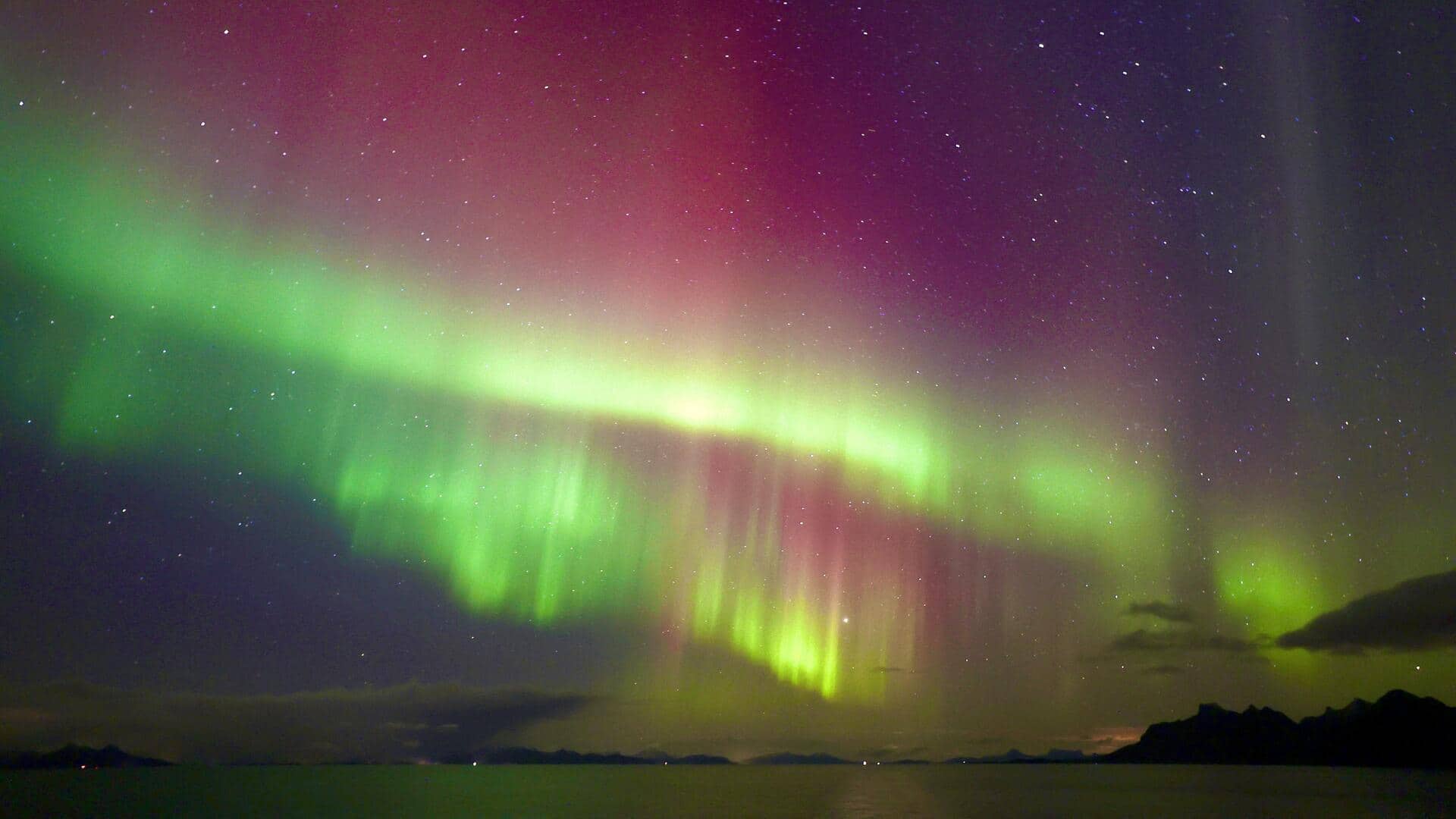
CME may enhance auroras
One potential outcome of the incoming CME is heightened auroral activity.
If the solar material interacts with Earth's magnetic field under favorable conditions, observers in parts of northern North America and Europe could witness brighter or more extensive Northern Lights.
However, it's important to note that a geomagnetic storm forecast doesn't guarantee visibility from a specific location; it depends on various factors like actual storm intensity and local weather conditions.
Solar cycle
CME comes amid heightened solar activity
The latest CME comes as the Sun remains active, producing solar flares, magnetic filament eruptions, and Earth-directed CMEs.
The Sun follows an approximately 11-year cycle of activity, with periods of greater and lower solar activity.
During active phases, eruptions capable of sending charged particles toward Earth become more frequent.
Scientists closely monitor these events because stronger geomagnetic storms can disrupt technologies that modern society relies on.