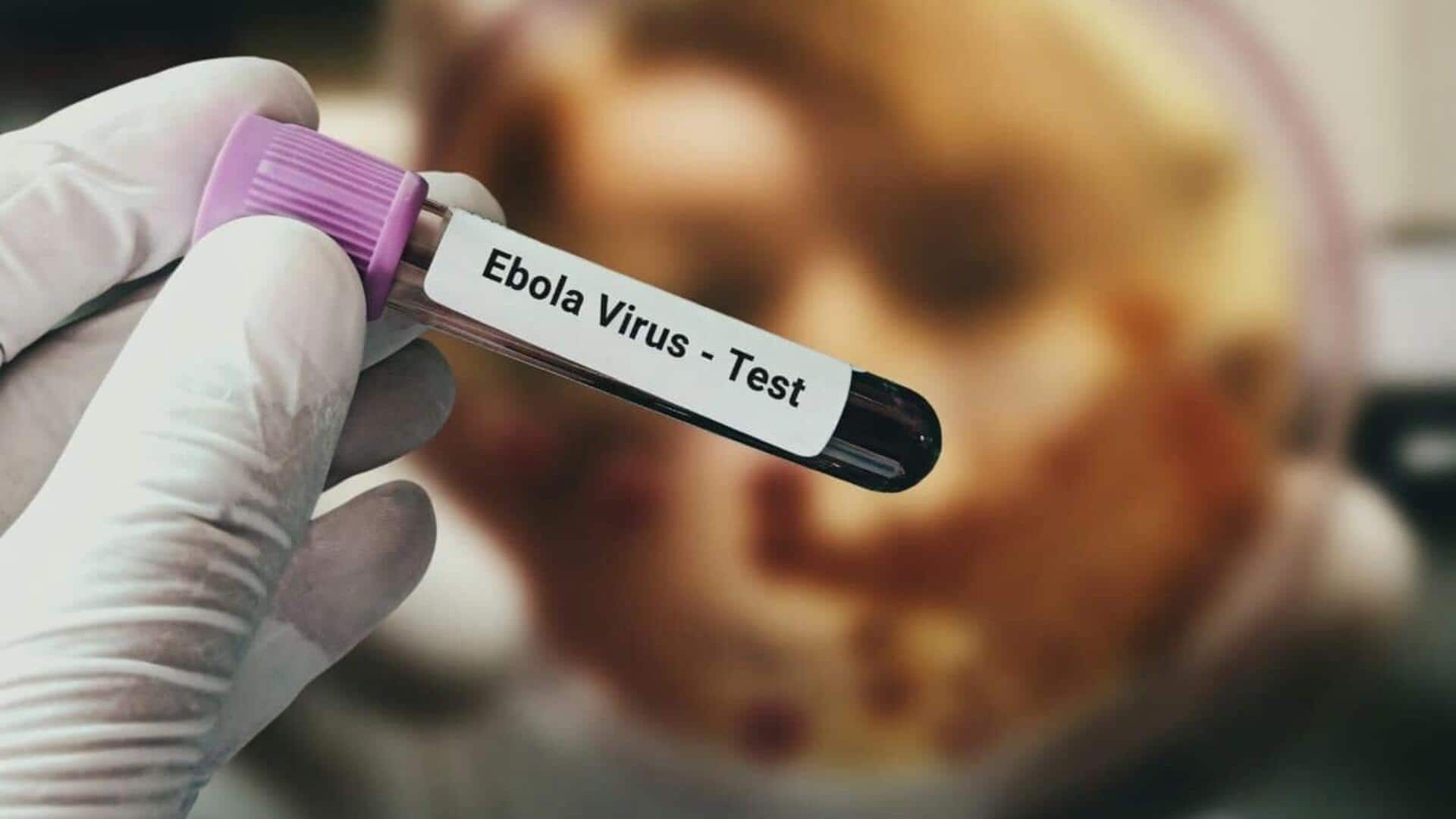
Experimental treatment trial for Ebola patients begins in Congo
What's the story
The Democratic Republic of the Congo (DRC) has begun a groundbreaking clinical trial to test two experimental drugs for treating Ebola. The study, which is being conducted in the Ituri region, comes just six weeks after the World Health Organization (WHO) declared an outbreak of the Bundibugyo strain of Ebola a public health emergency. The trial's rapid initiation is being hailed as a major milestone in medical research.
Community response
Local community hopeful about drug trials
The local community in Bunia, the capital of Ituri province, is eagerly awaiting the results of these drug trials.
Neema Haba, a banana seller and mother of three, expressed her hope for quick progress in the trials. She said, "Financially, we are being driven to the brink by this outbreak and nothing is going right."
As of July 9, there have been 1,792 confirmed cases and 625 deaths due to this deadly strain of Ebola.
Strategy
Response to outbreak hampered by low trust in authorities
The response to the Ebola outbreak relies on basic techniques such as case identification, isolation for care, and tracking contacts.
However, low trust in authorities and a highly mobile population are hampering these efforts.
Some frontline workers even stopped work this week in protest at a lack of pay.
The bodies of Ebola victims are highly contagious and have to be buried safely by trained professional teams.
Medical hopes
Hopes rest on scientists searching for effective medicines
The DRC officials have said payments had been made but it is unclear whether activities have fully resumed.
The closure of the local airport in Bunia was also hampering the response by impeding the supply of banknotes.
Now, hopes of turning the tide against this deadly disease rest with scientists searching for effective medicines.
The Partners treatment trial has opened with two drugs - remdesivir and MBP134.
Drug details
What are the 2 drugs being tested?
Remdesivir, an antiviral drug made by Gilead Sciences, and MBP134, a monoclonal antibody developed by Mapp Biopharmaceutical, are the two drugs being tested.
Both are administered intravenously - MBP134 as a one-off infusion and remdesivir over 10 days of intravenous therapy.
Professor Laurens Liesenborghs from the Institute of Tropical Medicine in Antwerp said, "These two drugs actually have been proven to work against the Bundibugyo virus in animal models."
Trial flexibility
Trial allows addition of other potential treatments
The design of the trial also allows for the addition of other potential treatments if they become available.
A result is likely to need between 700 and 1,000 patients to be enrolled, Liesenborghs said.
WHO officials have said enough remdesivir and MBP134 have been donated for 1,200 patients to be enrolled in this groundbreaking study.