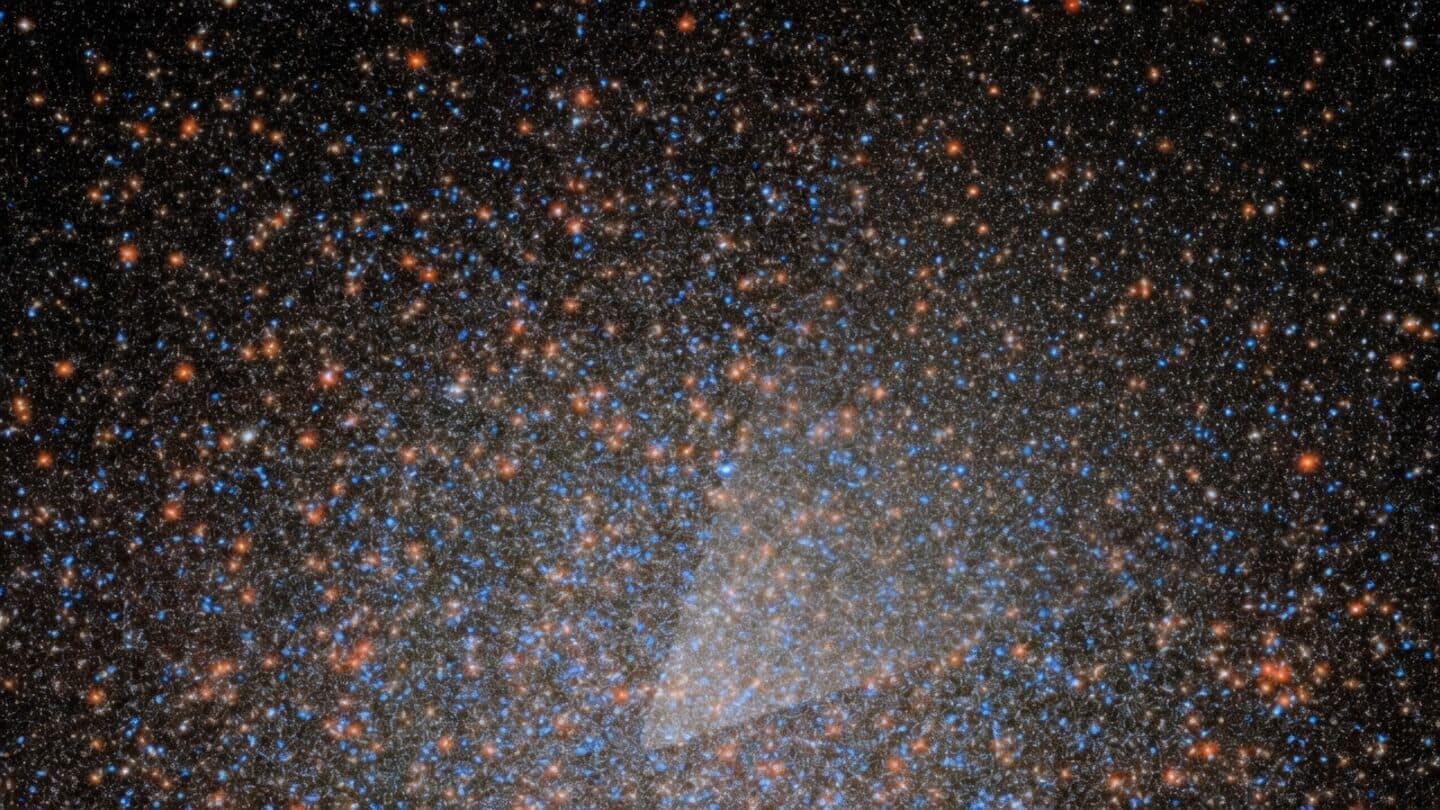
Hubble and Webb data confirm oMEGACat BH-2 in Omega Centauri
Big news from space: scientists have found a stellar-mass black hole in Omega Centauri, a globular cluster about 18,000 light-years away.
This newly confirmed black hole, called oMEGACat BH-2, is just one of thousands believed to be hiding there.
The discovery happened thanks to years of data from the Hubble Space Telescope and the James Webb Space Telescope.
Black hole mass 4.46 solar masses
Researchers spotted the black hole by watching how it tugged on a nearby star (about three-fourths the mass of our Sun).
Turns out, this black hole weighs 4.46 times as much as our Sun, so it's definitely not a neutron star like some thought before.
This find helps us understand how black holes form and how their pairs might create those famous gravitational waves.
Omega Centauri likely dwarf galaxy core
Omega Centauri is thought to be the leftover core of an old dwarf galaxy, making it a unique place to study black holes and their origins.
With more observations coming up, including NASA's Roman Space Telescope, scientists are excited for even more discoveries in this cosmic neighborhood.