ISRO now 1 step closer to sending humans to space
What's the story
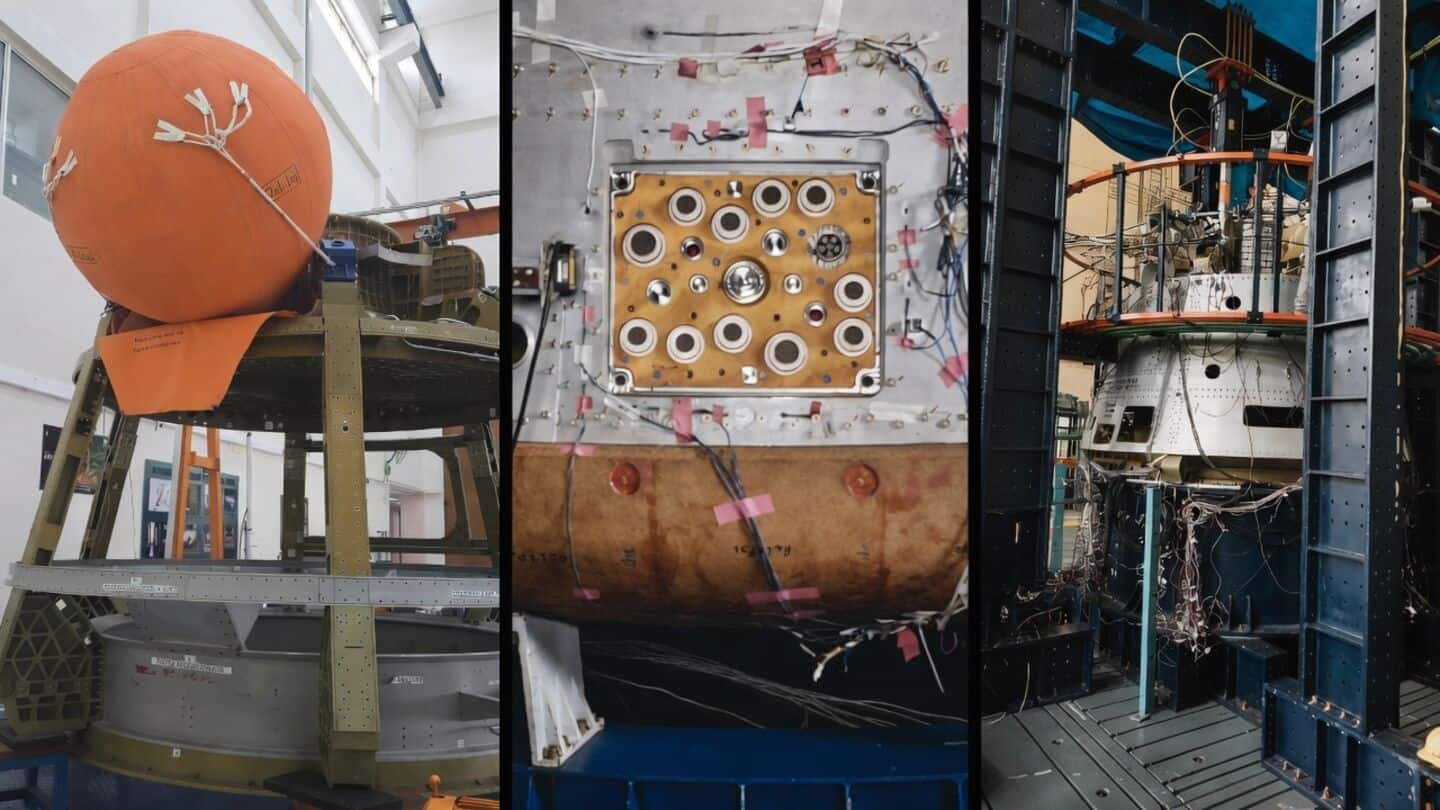
The Indian Space Research Organisation (ISRO) has cleared three key qualification tests for the Gaganyaan mission, India's first human spaceflight program. The tests were conducted on July 12, and focused on systems crucial for astronaut safety during splashdown recovery, module separation, and parachute deployment. These include the Crew Module Up-righting System (CMUS), Crew Module-Service Module Connect and Disconnect System (CS-CDS), and apex cover structural qualification.
Safety feature
CMUS ensures crew capsule returns upright after splashdown
The CMUS is designed to ensure that the crew capsule returns to an upright position after splashdown.
This is vital as ocean conditions could leave it floating at an awkward angle or upside down.
The system uses a cold gas-based flotation mechanism, which was successfully tested by inflating flotation bags with compressed gas from high-pressure bottles through control valves.
Module separation
CS-CDS guarantees safe separation of crew, service modules
The CS-CDS ensures a clean separation of the crew and service modules before re-entry.
This is crucial as they remain connected through electrical cables and fluid lines during most of the mission.
The test confirmed that this mechanism works without damaging the capsule or its interfaces, with sufficient safety margins.
Parachute deployment
Apex cover jettisoning simulated under extreme loads
The apex cover protects the parachute compartment and must be jettisoned at a precise altitude during re-entry for safe parachute deployment.
To test this, ISRO simulated loads 1.75 times greater than those expected during an actual mission.
Measurements confirmed that the structure remained within design limits, validating its strength for flight.
Mission progress
These tests are crucial for ensuring safety during the mission
While these tests don't involve rockets or launches, they are critical in ensuring that every component works as intended.
This is especially important for human spaceflight, where there's no room for error.
Although ISRO hasn't announced a date for its first uncrewed mission, these successful tests bring India one step closer to its first manned spaceflight.