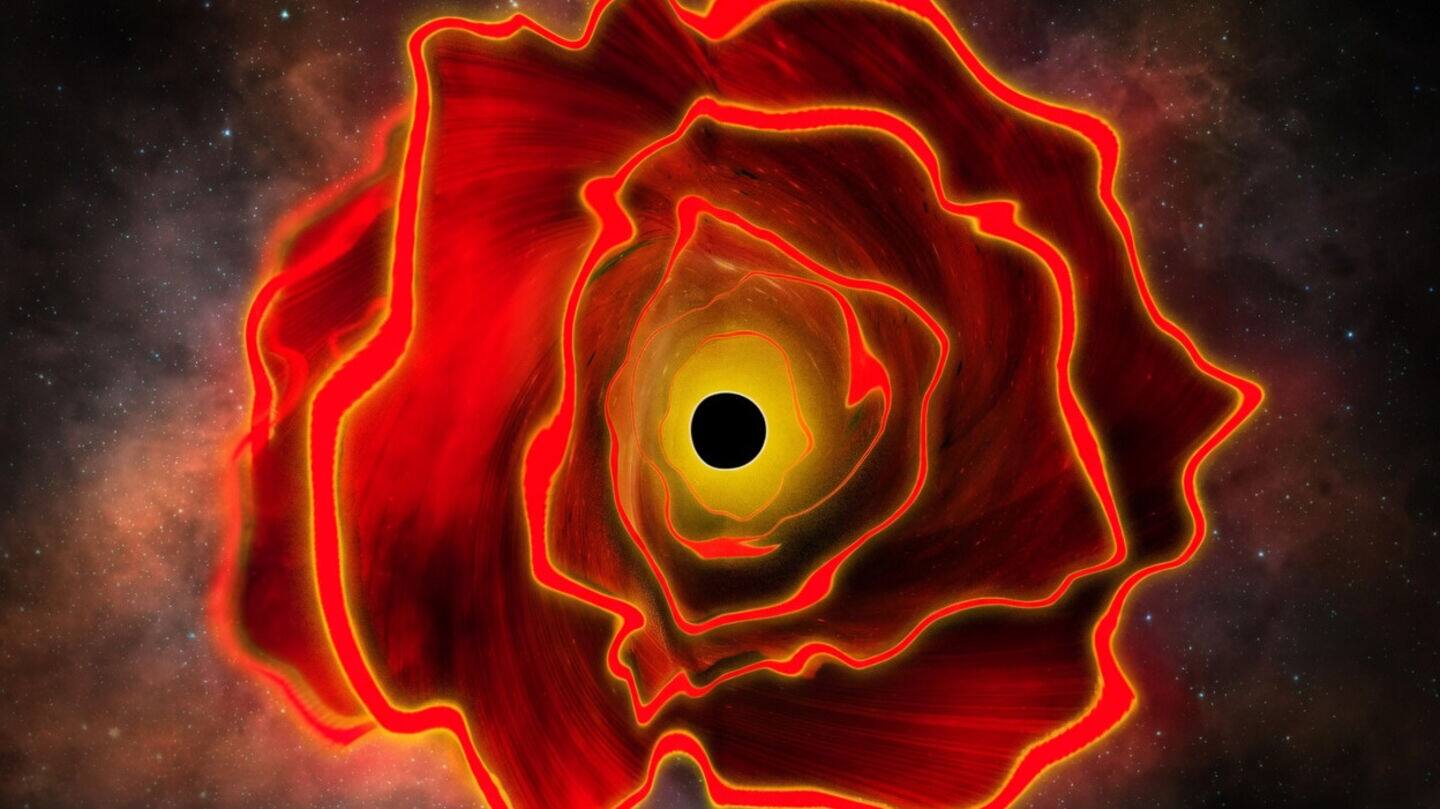
James Webb finds black hole star hybrid MoM-BH-1 in nature
A team using the James Webb Space Telescope just found something pretty mind-blowing: MoM-BH*-1, a cosmic mashup that's part black hole, part star.
This rare hybrid was discovered while scientists were searching for the universe's furthest, oldest galaxies in the universe as part of the MoM survey, and their findings were published today in Nature.
MoM-BH-1 outshines its entire galaxy
MoM-BH*-1 is no ordinary space object: it has a gas structure as big as our solar system and a black hole component that's 100,000 times the size of the sun.
It shines 100 billion times brighter than typical stars and even outshines its whole galaxy.
The discovery could finally explain those mysterious "red dots" spotted by Webb in the early universe and help us understand how massive black holes formed so quickly.
MIT's Rohan Naidu plans December observations
Study author Rohan Naidu, an astrophysicist at MIT, called MoM-BH*-1 "one in a billion."
He plans more telescope observations this December to dig deeper into what makes these cosmic hybrids tick.
This find opens up new questions about how black holes grew up in the universe's earliest days.