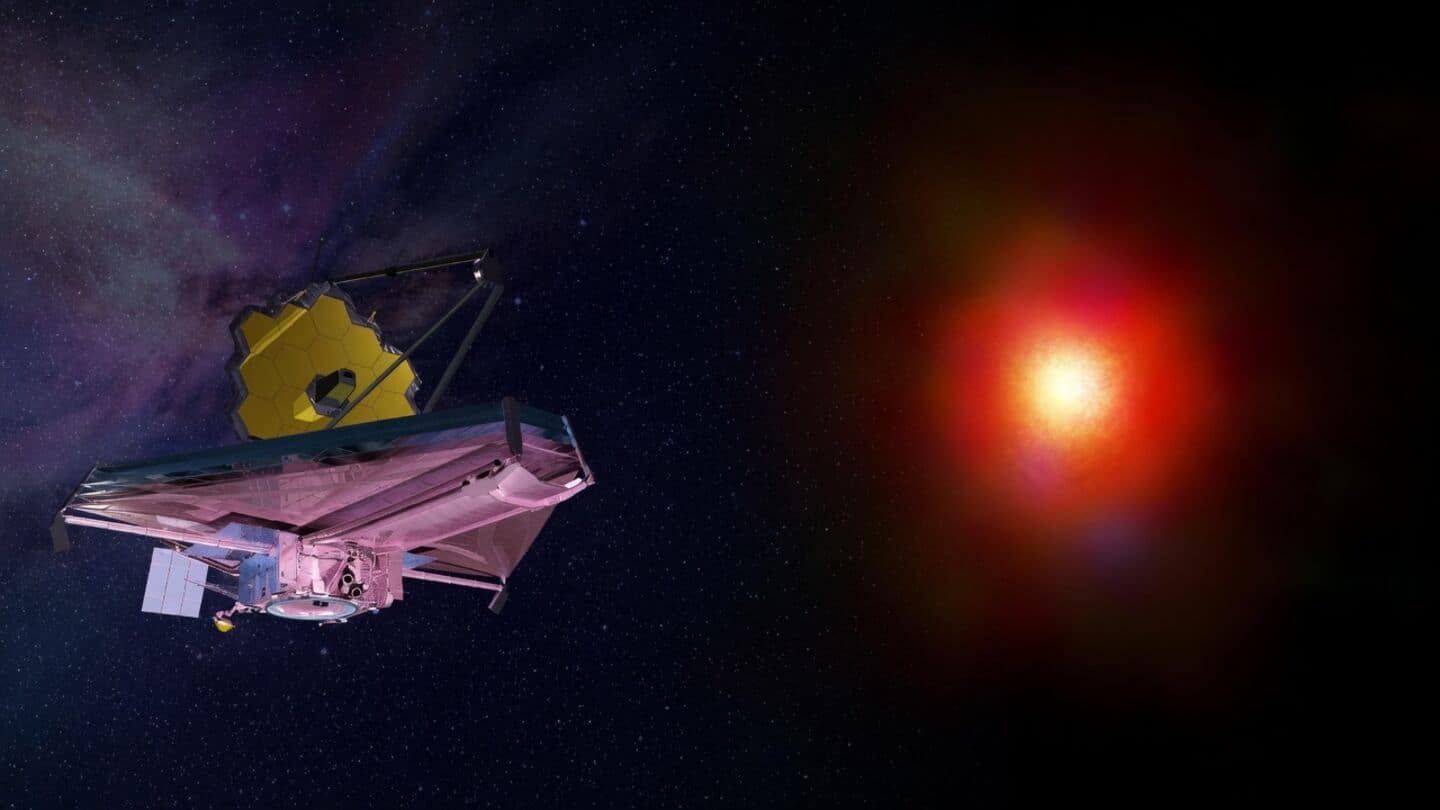
James Webb finds faint light around early 'Little Red Dots'
Technology
The James Webb Space Telescope has just helped scientists investigate the mystery behind the mysterious "Little Red Dots" (LRDs) seen in the early universe.
By zooming in on galaxies around these LRDs, researchers found faint light surrounding the objects, shedding new light on a cosmic mystery that's puzzled astronomers since 2022.
LRD host galaxies compact and metal-poor
Turns out, LRD-host galaxies are super compact (about 1,400 light-years wide) and have comparatively low metallicity than most others from that era.
Jorge Zavala from UMass Amherst says this combo could mean wild bursts of star formation.
Scientists could use spectroscopy to see if LRDs are part of how galaxies (or even black holes) grow up, giving us a better idea of how our universe evolved.