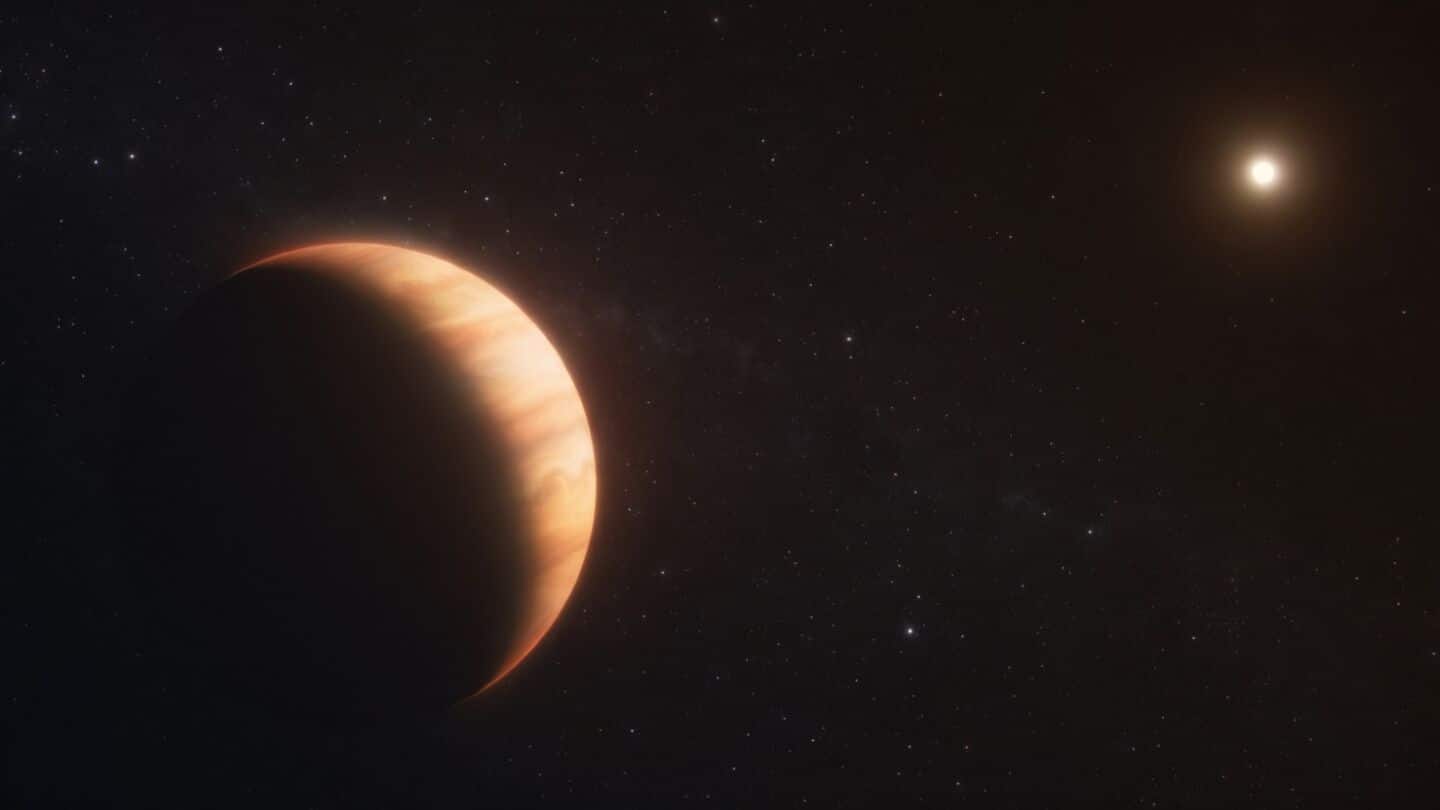
James Webb shows WD 1856b survived its star's death
Astronomers used the James Webb Space Telescope to check out WD 1856b, a massive planet orbiting a dead star (a white dwarf) just 82 light-years from Earth.
Their findings, published July 2, 2026, reveal that some planets can actually survive after their stars die: a big deal for understanding how worlds evolve in extreme environments.
WD 1856b 7 times Jupiter mass
WD 1856b is seven times heavier than Jupiter but only a bit smaller. The twist? It's way hotter than anyone expected: about 126 degrees Celsius instead of freezing cold.
Scientists think tidal forces from a nearby binary star reheated it and shifted its orbit closer to the white dwarf.
As lead researcher astronomer Ryan MacDonald of the University of St Andrews put it, giant planets like Jupiter can have a "second life" after the death of their star, with the planet moving close-in, being reheated, and experiencing changes in their atmospheric chemistry.