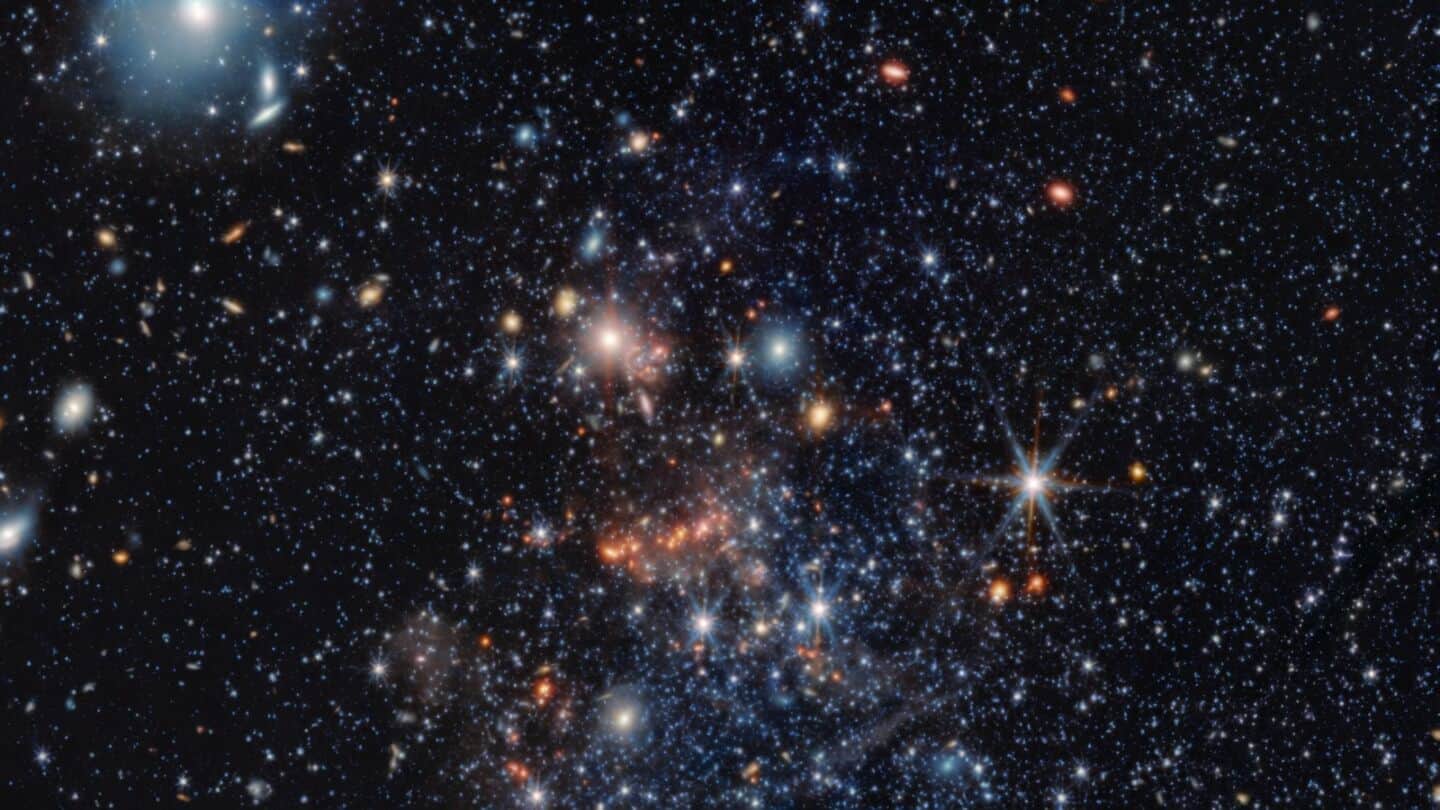
James Webb Space Telescope reveals stardust origins in Sextans A
Technology
The James Webb Space Telescope just helped scientists figure out how the universe got some of its earliest stardust.
By studying Sextans A, a tiny galaxy 4.6 million light-years away with far fewer heavy elements than our sun, astronomers got a glimpse into what the first galaxies might have been like.
Twenty dusty stars in Sextans A
Using JWST's powerful cameras, researchers spotted about 20 stars in Sextans A surrounded by thick dust shells, created two to three billion years ago by stars only a bit bigger than our sun.
These dust factories helped fill space with metals needed for new stars to form, showing how even small galaxies played a big role in building up the universe as we know it.