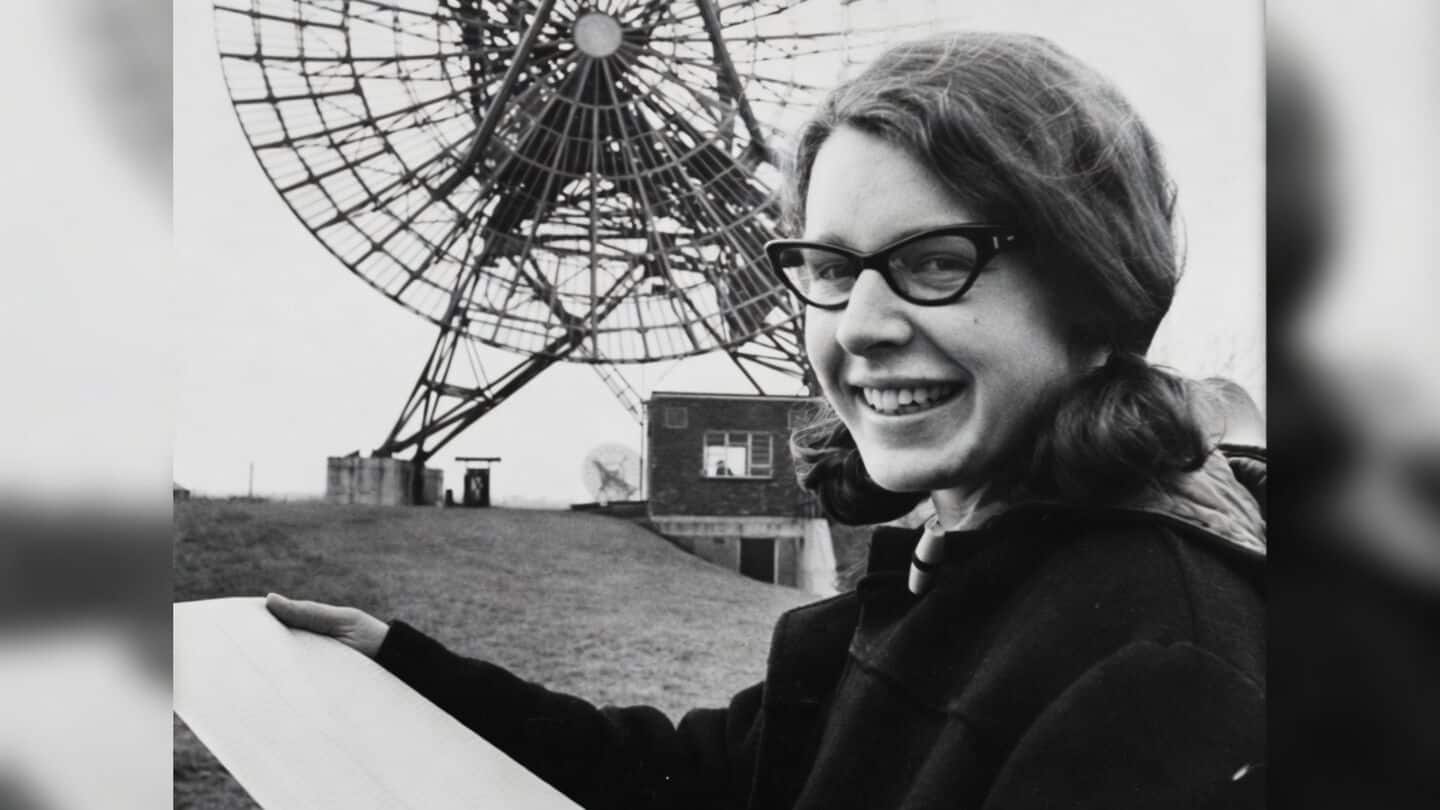
Jocelyn Bell Burnell discovered pulsars at Cambridge in 1967
Back in 1967, Jocelyn Bell Burnell was just 24 and working on her Ph.D. at Cambridge when she spotted a weird, repeating signal in radio telescope data: something nobody could explain.
Turns out, she'd found pulsars: super-dense neutron stars spinning fast and shooting out beams of radiation.
Her discovery changed how scientists understand stars and gave proof that neutron stars exist.
Bell Burnell donated $3 million Breakthrough Prize
Pulsars opened up new ways to study extreme space physics and even helped test Einstein's theories.
Although Bell Burnell didn't get the Nobel Prize (her supervisor did), she later received the $3 million Breakthrough Prize and generously donated it to support students from underrepresented backgrounds in physics.
Today, pulsars are still helping scientists solve big cosmic mysteries, and Bell Burnell's work continues to inspire future researchers.