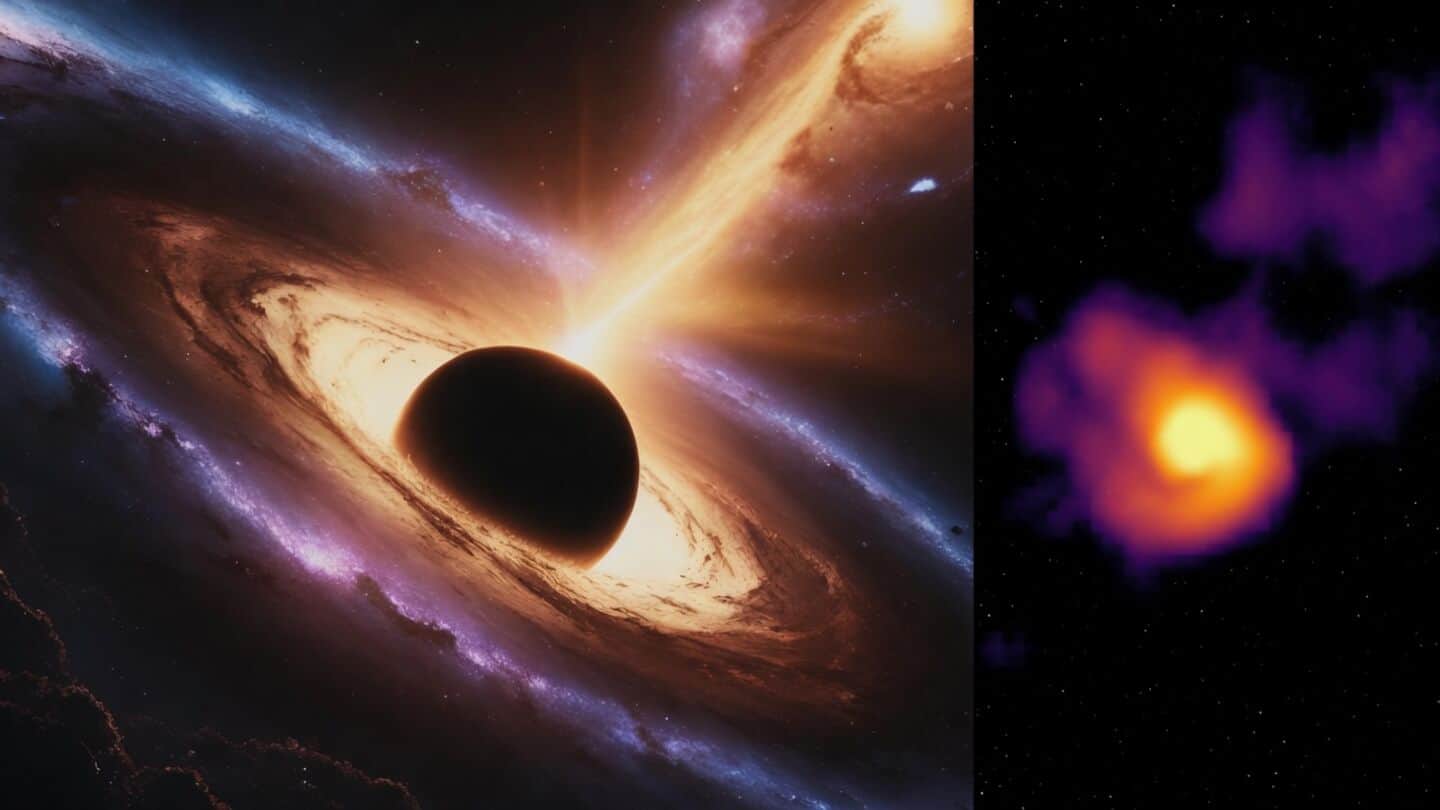
JWST shows supermassive black holes recycle gas, curb star formation
Technology
The James Webb Space Telescope just uncovered a wild space secret: supermassive black holes don't just eat up gas and dust. They actually spit some of it out, then pull it back in later.
This "cosmic recycling" helps them keep growing, even as they slow down star-making in their galaxies.
NGC 4696 filaments explain rapid growth
This cycle explains how black holes bulked up so fast after the Big Bang, which older theories couldn't quite figure out.
JWST spotted this happening in galaxy NGC 4696, about 145 million light-years away, where gas filaments zip around at over 1 million miles per hour before looping back to feed the black hole again.
Science just got a little cooler!