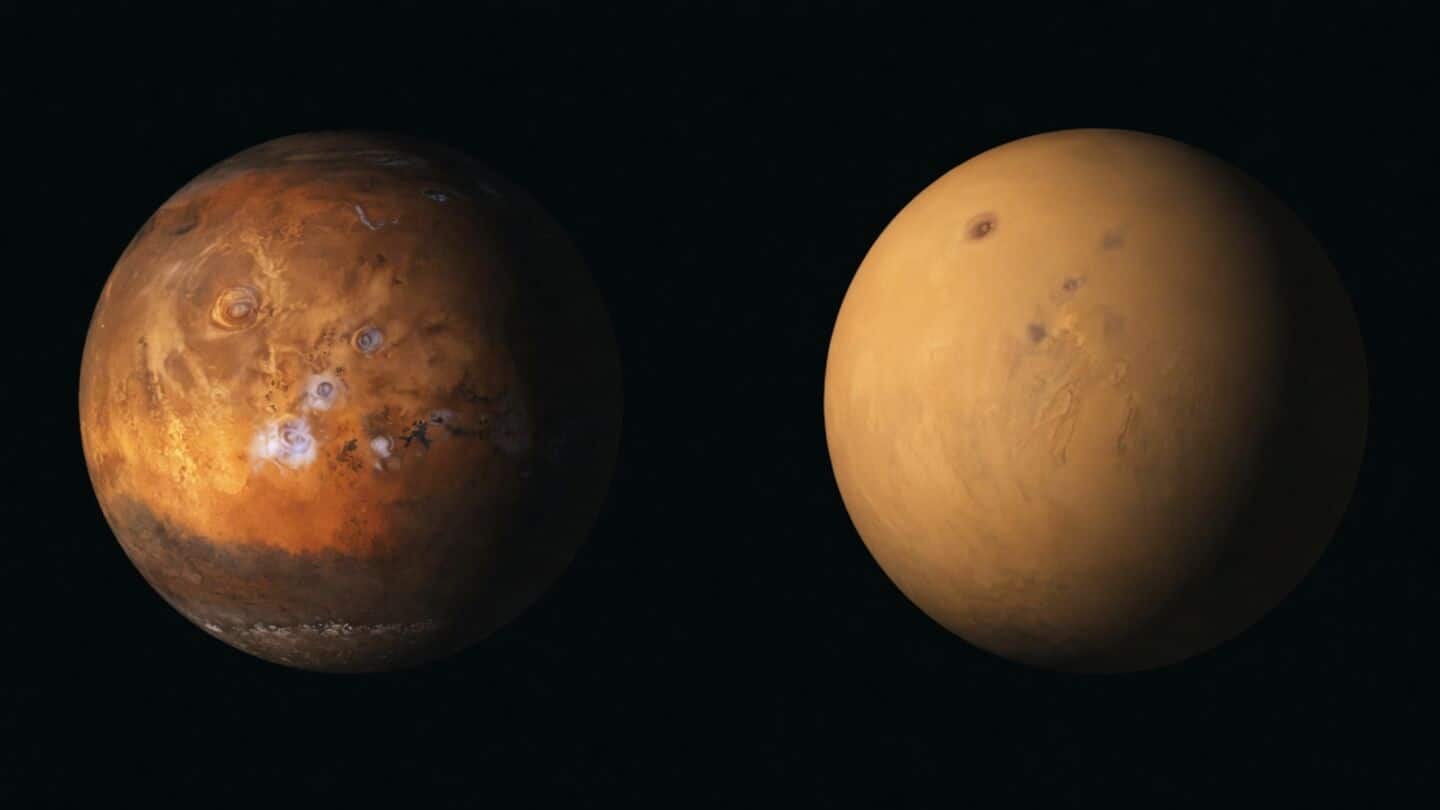
Mission data show solar storms intensify Martian dust storms
Turns out, solar storms don't just mess with Earth: they can make Mars's dust storms way more intense.
Scientists shared at the 2026 National Astronomy Meeting that when bursts of energy from the Sun hit Mars during a dust storm, temperatures in the lower atmosphere can jump dramatically.
This was spotted using data from NASA and ESA missions.
Researchers saw 90°F spike above surface
The effect first showed up during a huge 2018 storm that knocked out NASA's Opportunity rover: researchers saw temperatures spike by about 90 Fahrenheit (50 Celsius) high above the surface.
Lead scientist Lana Williams called it a complex interplay between solar energy and Martian dust.
The team is now looking at more recent events, hoping to better understand how these wild weather combos could impact future Mars missions and our knowledge of its climate.