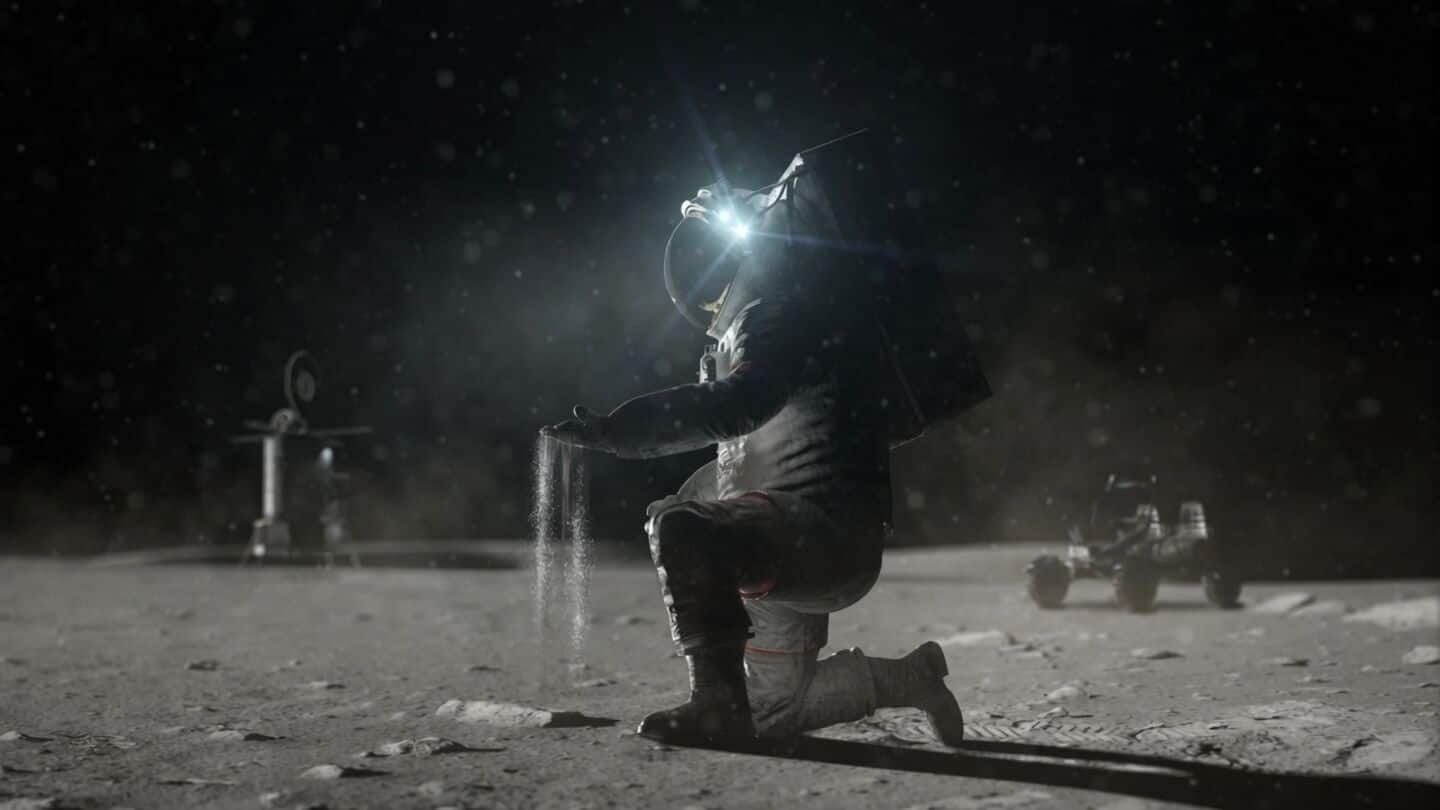
Moonwalking astronauts might accidentally generate sparks and damage spacecraft
What's the story
NASA has launched a "Lunar Grounding Challenge" to find solutions for a potential problem on its upcoming Moon missions. The agency is concerned that astronauts walking on the lunar surface could accidentally generate sparks that might damage their spacecraft. To avoid this, NASA is inviting innovative ideas and designs from industry partners and offering a prize of $150,000 for the best submission by January 15.
Technical hurdles
NASA's Artemis missions to return humans to the Moon
NASA plans to land astronauts at the Moon's south pole in 2028 during its Artemis 4 or 5 missions.
However, simulations show that "tribocharging" (the transfer of electric charge between two objects) and plasma charging (from ambient gas) could build up an electric charge on spacesuits.
This problem is worse in lunar shadows and permanently shadowed regions, areas where sunlight never reaches due to deep craters.
Safety concerns
The risks of electric charge buildup
The concern is that astronauts' spacesuits could get electrically charged, with an excess of electrons (negatively charged particles) compared to ions (positively charged).
This risk occurs when an astronaut returns to the spacecraft.
The lander would have a slight positive charge, creating a problem once the "highly negatively-charged astronaut approaches the vehicle," NASA explained.
Mission risks
Electrical discharges could cause fires or shocks
The problem of electrical discharge could lead to several issues, including an electrical arc that could damage spacesuits, spark fires in the oxygen atmosphere of a spacecraft, or create electrical shocks.
A Mars simulation in 2018 was reportedly derailed due to a crew experiencing such issues.
The challenge aims to develop designs that would safely discharge an astronaut and their spacesuit before they touch the lander.
Design specifications
NASA's requirements for the solution
NASA's challenge also specifies that the solution should be small in terms of mass, volume, and power.
It should work even in extreme temperature swings on the lunar surface.
The technology must also support up to four extra-vehicular activities (moonwalks) over a period of 10 days.
The presence of suspended lunar dust and heavy dust buildup on a suit could increase arcing lengths, allowing sparks to jump across larger gaps than they would in a clean vacuum.