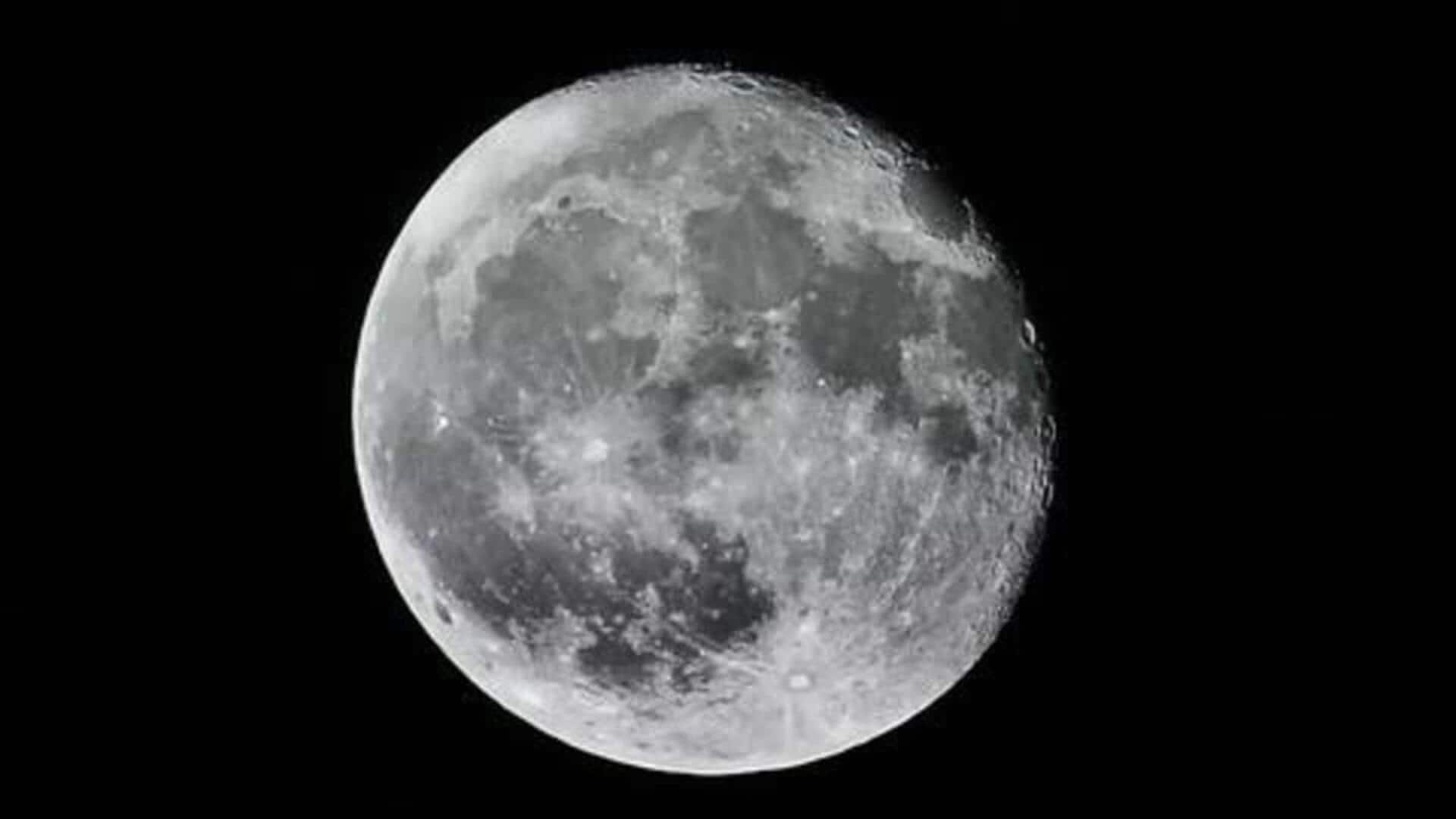
Artemis II crew now in Moon's 'sphere of influence'
What's the story
NASA's Artemis II mission has reached a major milestone, with the four-member crew entering the Moon's "sphere of influence." This is the area where the Moon's gravity pulls more strongly on a spacecraft than Earth's. The transition was made four days, six hours, and two minutes into their journey. At that point, they were about 62,764km from the Moon and 373,367km away from Earth.
Upcoming milestone
Next major milestone is the far side of the Moon
The next major milestone for the Artemis II crew will be their journey to the far side of the Moon.
This will take them farther into space than any humans have ever been before.
"We're all extremely excited for tomorrow," said Lori Glaze, NASA's Exploration Systems Development Mission Deputy Associate Administrator.
"Our flight operations team and our science team are ready for the first lunar flyby in more than 50 years."
Historic mission
Artemis II crew will get a full view
The Artemis II crew, which includes Americans Christina Koch, Reid Wiseman, Victor Glover, and Canadian Jeremy Hansen, is the first group of astronauts to head toward the Moon in over 50 years.
Their closest approach will be just over 6,437km from the lunar surface.
This will give them a full view of the Moon's spherical surface including regions near both poles.
Observations
Planned communications blackout for about 40 minutes
During their six-hour flyby, the Artemis II crew will observe the Moon with their naked eyes and onboard cameras.
This journey will give them a view of the Moon's far side that was too dark or difficult for the Apollo astronauts who came before them.
When Orion goes behind the Moon, it will enter a planned communications blackout of about 40 minutes as its surface blocks radio signals needed for Deep Space Network to connect with it.
Historic capture
Artemis II crew already took historic images
The Artemis II crew has already seen parts of the lunar surface that no human has ever seen before.
On Sunday, NASA released an image taken by the crew showing a distant Moon with the Orientale basin (also known as the Moon's "Grand Canyon") visible.
"This mission marks the first time the entire basin has been seen with human eyes," NASA said.