NASA rover finds origin-of-life molecules on Mars
What's the story
NASA's Curiosity rover has made a groundbreaking discovery by detecting a wide range of organic molecules on Mars. The chemicals are largely considered to be the building blocks for life on Earth. This is the first time such an experiment has been conducted on another planet, marking a major milestone in space exploration and our understanding of extraterrestrial life.
Mission details
Curiosity has been exploring Mars since 2012
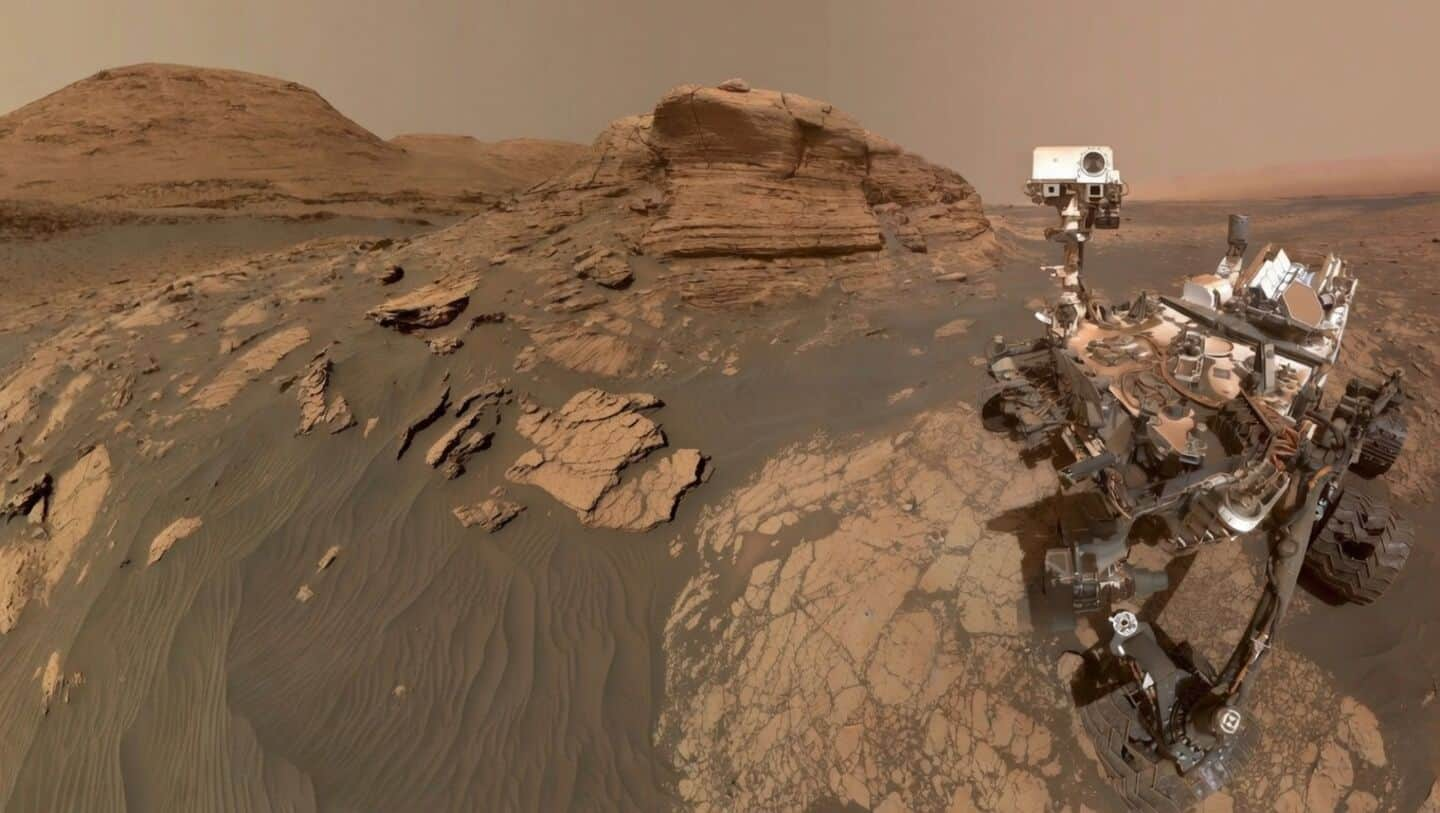
Since its landing on August 6, 2012, the car-sized rover has been exploring Gale crater and Mount Sharp.
It is currently studying Glen Torridon in Gale crater, a region believed to have once hosted conditions suitable for ancient life.
Curiosity recently used its Sample Analysis at Mars (SAM) instrument suite to look for carbon compounds linked with life and understand how these compounds are created or destroyed in the Martian environment.
Detection process
SAM instrument identified nitrogen and sulfur-bearing compounds
Curiosity's SAM instrument used a chemical called tetramethylammonium hydroxide (TMAH) to identify organic molecules in the clay-rich sandstone of Glen Torridon.
The newly discovered chemicals include nitrogen and sulfur-bearing compounds, similar to the raw materials that gave rise to life on Earth.
However, it remains unclear whether these chemicals are remnants of ancient Martian life or products of non-biological geological processes.
Research findings
Over 20 organic molecules detected in ancient Martian rocks
The study led by Amy Williams, an associate professor at the University of Florida, found over 20 organic molecules from clay-bearing sandstones in the 3.5-billion-year-old Knockfarrill Hill section of Glen Torridon.
The variety of organic molecules observed suggests that some chemical diversity has been preserved in ancient Martian sediments despite billions of years of diagenesis (the process by which sediment turns to rock) and radiation exposure.
Mission implications
Ongoing search for life on Mars
The ongoing study of organic matter on Mars is a key aspect of modern robotic exploration. It helps space agencies investigate Mars's past and present habitability, and search for signs of life.
The TMAH experiment on Curiosity was used to identify cyclic (or aromatic) organic compounds that derived from more complex macromolecular carbon.
Meanwhile, NASA's Perseverance rover has also detected both cyclic organic compounds and macromolecular carbon using different instruments.