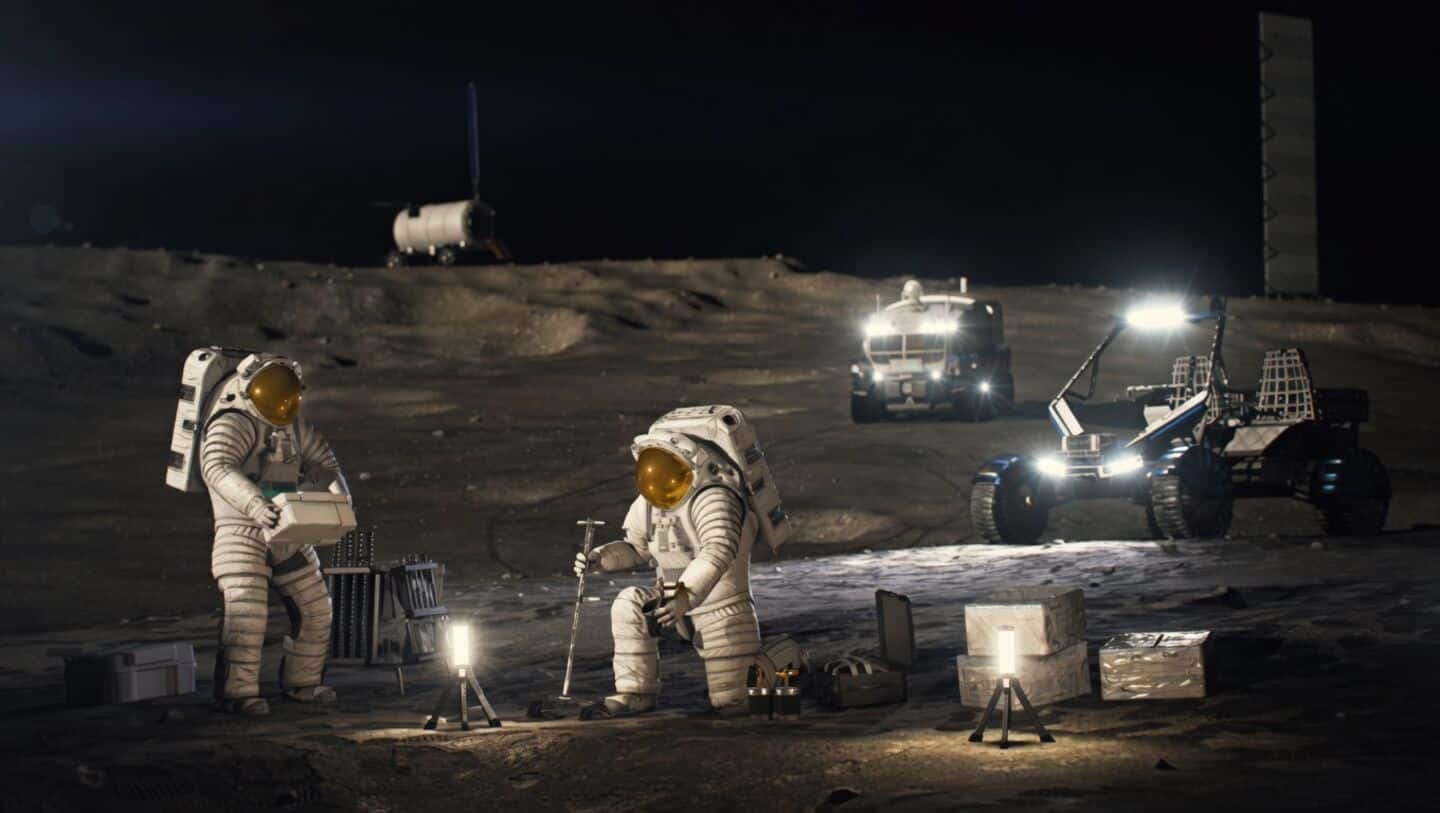
NASA unveils ambitious plan for permanent Moon base
What's the story
NASA has announced plans for a permanent human settlement on the Moon, called the Moon Base. The initiative is part of a larger effort to enable continuous exploration, scientific research, and commercial activities at the lunar South Pole. The project will also serve as a stepping stone for future manned missions to Mars.
Project details
Major component of Artemis program
The Moon Base project is a major component of NASA's Artemis Program, which seeks to return humans to the Moon and establish a sustainable presence there for the first time since the Apollo missions.
The lunar habitat will be developed in three phases, starting with small-scale technology demonstrations and gradually expanding into an inhabited outpost.
Initial phase
Phase 1 focuses on technology demonstrations
In the first phase, NASA will focus on gaining access to the lunar surface and testing key technologies for long-term habitation.
The agency plans 25 launches and 21 landings during this stage, delivering some 4,000kg of payload to the Moon.
This phase will include experiments and tech demos to identify landing sites for future bases. It will also see the first crewed Moon Base mission.
Expansion phase
Second phase will start crewed missions
The second phase will focus on building the initial lunar infrastructure and expanding operational capabilities on the Moon's surface.
NASA has outlined 27 launches and 24 landings in this stage, with nearly 60,000kg of payload expected to reach the lunar surface.
The agency plans to start semi-annual crewed missions, conduct regolith manipulation/site preparation activities and continue scaling up infrastructure needed for operations during this phase.
Final phase
Final phase envisions fully operational Moon base
The third phase envisions a fully operational Moon Base with a continuous human presence on the lunar surface.
NASA plans 29 launches and 28 landings during this phase, transporting nearly 150,000kg of payload to the Moon.
The agency will further increase CLPS payload capability to eight metric tons and introduce uncrewed cargo return systems to support long-term lunar habitation/scientific operations.
Project hurdles
NASA says lunar south pole poses unique challenges
The Moon Base project faces environmental and engineering challenges due to the harsh conditions at the lunar South Pole.
Unlike the equatorial regions explored during Apollo missions, this area presents lighting challenges with long shadows and extended periods of darkness.
NASA said future Moon Base systems, operational plans and infrastructure will need to withstand these demanding conditions, including surviving long lunar nights and operating in permanently shadowed regions.