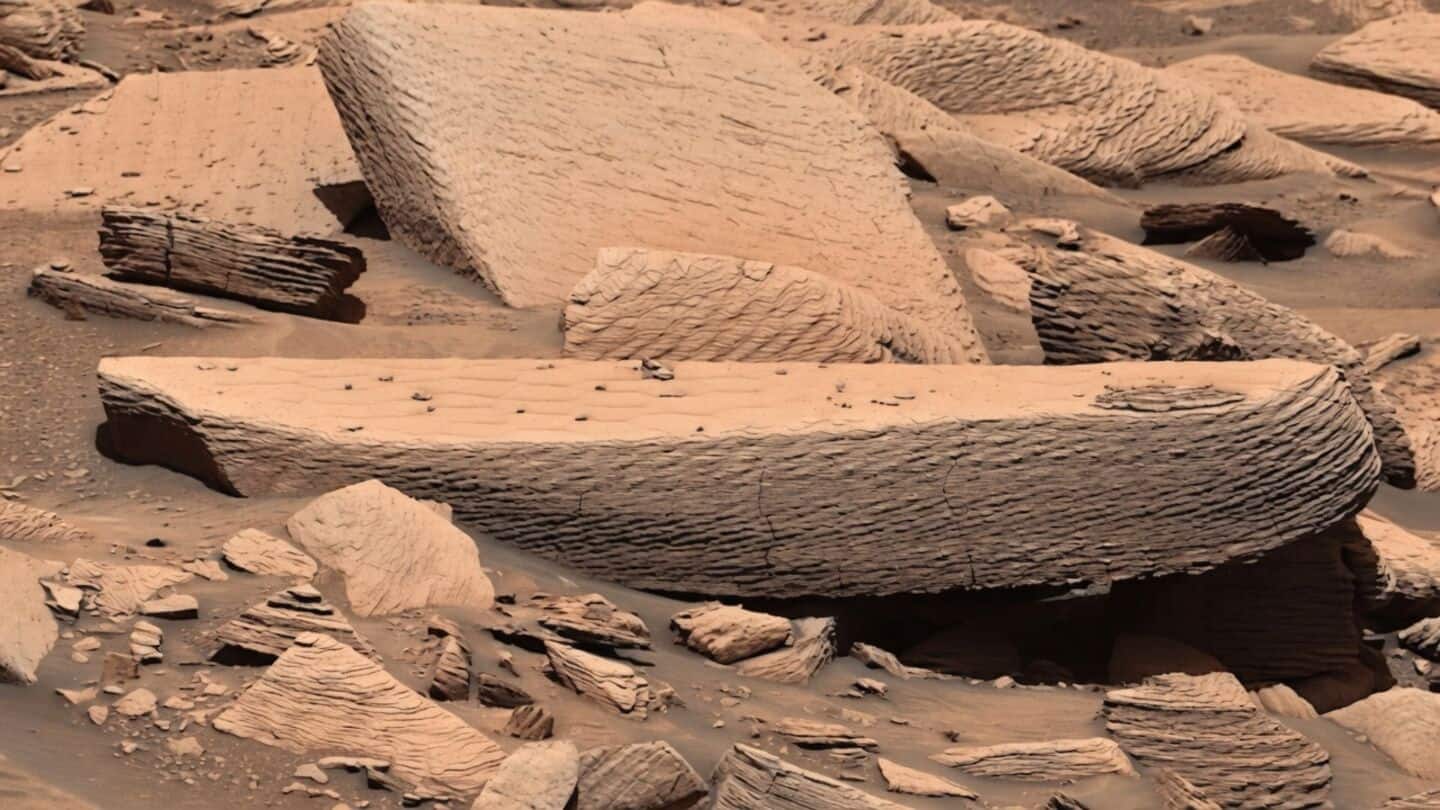
NASA's Curiosity finds wind-driven sand layers in Gale Crater rocks
NASA's Curiosity rover has uncovered traces of a massive sandstorm that hit Mars billions of years ago, all preserved in rocks inside Gale Crater.
What first looked like cracked slabs turned out to be special layers formed by wind-driven sand during a storm, basically, Mars's version of weather history caught in stone.
Discovery suggests thicker ancient Martian atmosphere
This is the first time scientists have found these kinds of structures on Mars, and it's a big deal.
The discovery suggests that 3.5 billion years ago, Mars had a much thicker atmosphere and stronger winds than it does today.
It also fits with earlier clues that Gale Crater once had rivers and lakes, hinting at a warmer, wetter planet.
As lead researcher Steven Banham put it, the find was unexpected, and he hopes future missions spot even more cool records, maybe even preserved raindrop impact marks!