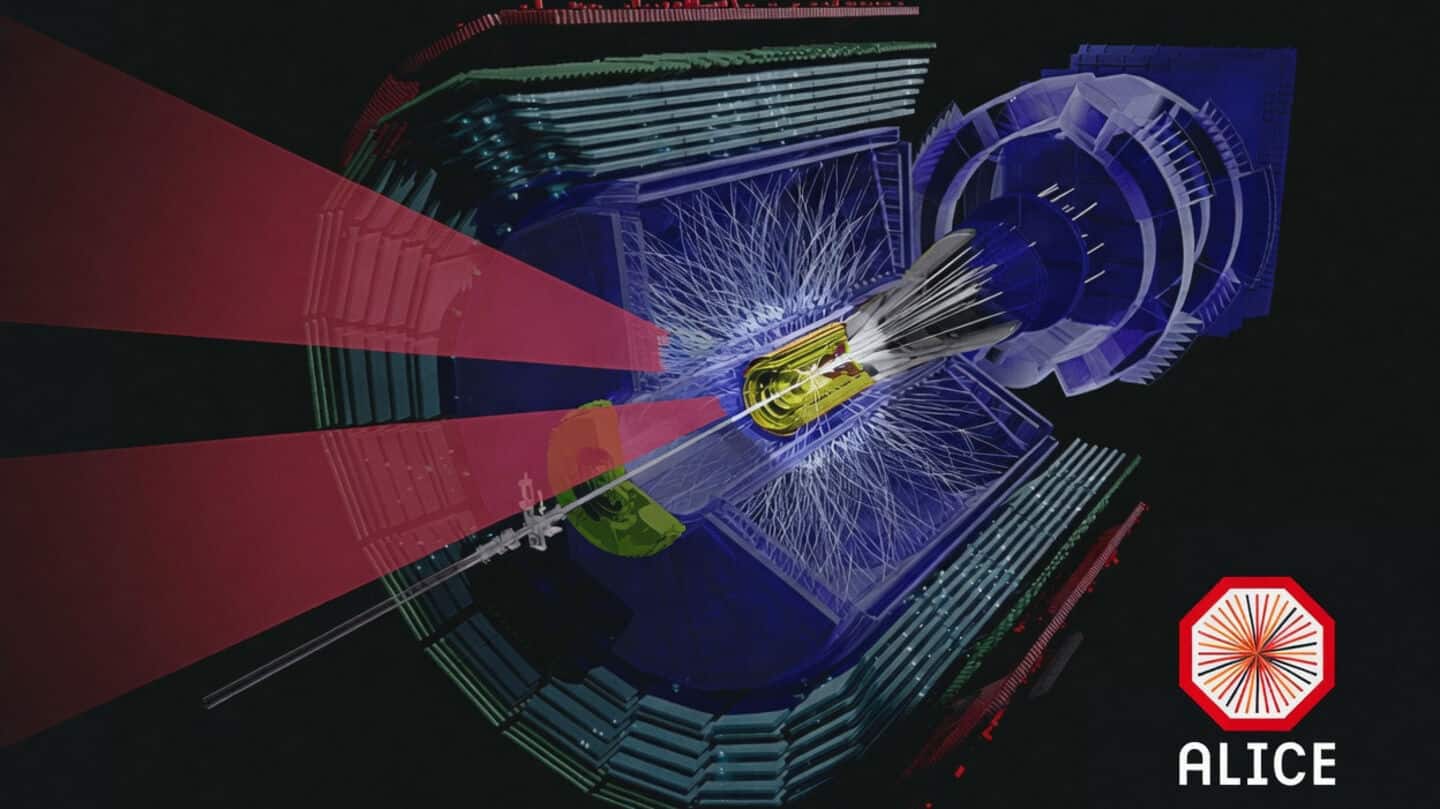
Niels Bohr Institute recreates early universe quark gluon plasma
A team at the Niels Bohr Institute just pulled off something pretty cool: they recreated a tiny version of the universe's early moments after the Big Bang.
By smashing oxygen-16 and neon-20 nuclei at nearly light speed, they made quark-gluon plasma, which is like a super-hot particle soup believed to have existed right after everything began.
Findings show plasma to matter conversion
The plasma droplets expanded and cooled too fast to watch directly, so scientists studied the patterns left behind.
Oxygen collisions created rounded sprays, while neon made bowling pin-shaped ones.
Emil Gorm Dahlbaek Nielsen shared that by studying how the particles move after the collision, we can gain insights into atomic nuclei that are otherwise difficult for physicists to obtain.
Their findings (published in Physical Review Letters) also show how quark-gluon plasma turns into matter, and it's a big step forward since past experiments needed much heavier atoms to get similar results.