Worrying: Patients rushing to plastic surgeons for 'AI face' look
What's the story
Plastic surgeons in the UK are increasingly concerned about their patients asking for an "AI face." The term refers to a look that is heavily edited by artificial intelligence (AI) tools. Dr. Nora Nugent, a cosmetic surgeon and president of the British Association of Aesthetic Plastic Surgeons, has seen this trend firsthand. She said many of her colleagues have had similar experiences with their clients.
Unrealistic expectations
Patients expect surgery to achieve AI-enhanced looks
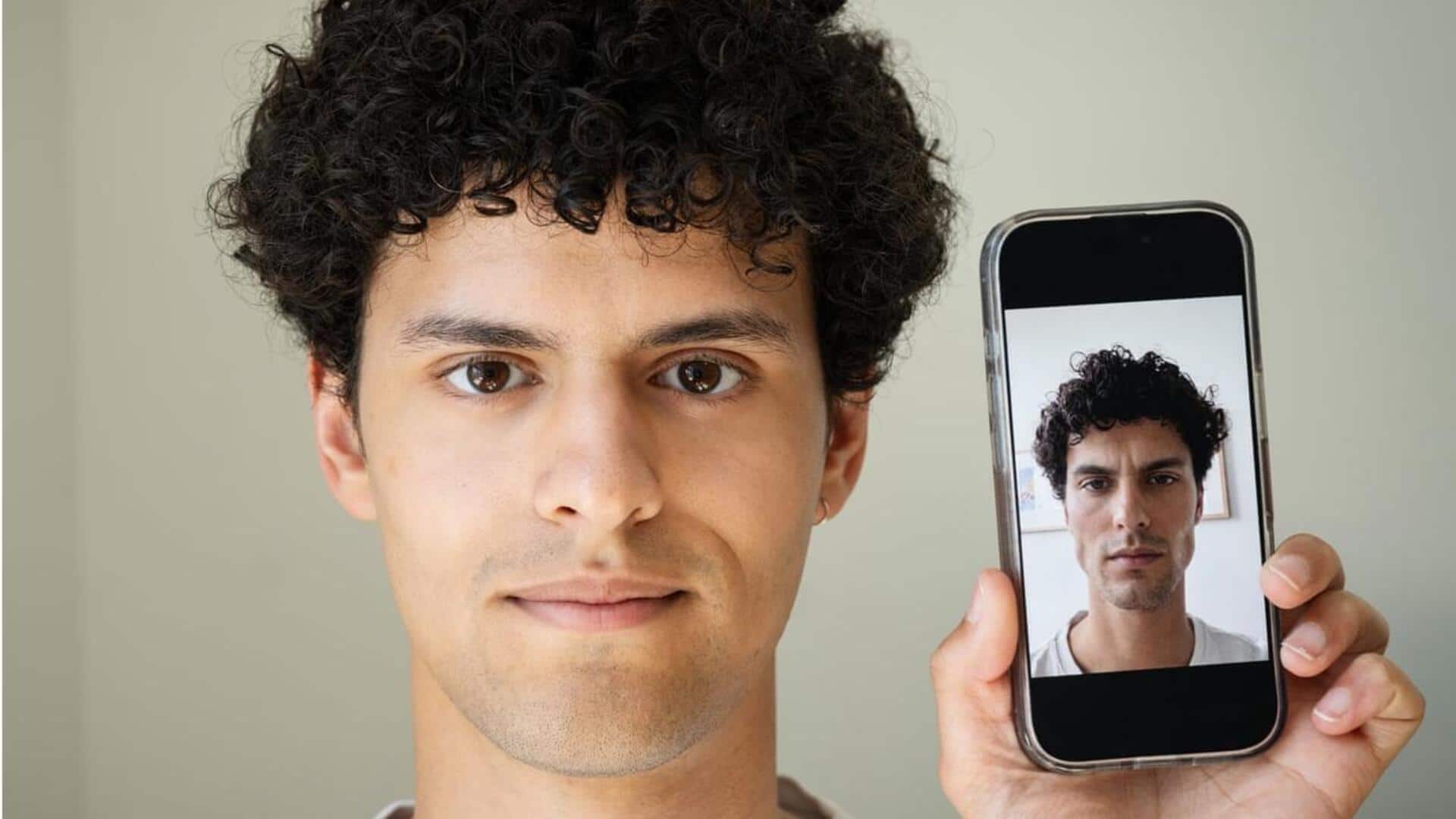
Patients are now coming to surgeons with photos of their AI-enhanced faces and expecting those results to be achievable through surgery.
They want flawless skin, sharply sculpted cheekbones, refined noses, and near-perfect symmetry: standards that are often time-consuming, expensive, and physically unattainable.
Dr. Alex Karidis, a west London-based surgeon, emphasized that while AI can control every pixel in an image, surgery doesn't work on such a detailed level.
Psychological impact
AI images altering patients' perceptions
The influence of AI-generated images on patients' aesthetic ideals is profound.
Dr. Nugent explained that once you see an image, it becomes ingrained in you.
Dr. Karidis echoed this sentiment, saying these images are "seared" into patients' minds and have been flooding their practices recently.
This psychological effect often leads to unrealistic expectations about the results of cosmetic surgery procedures.
Human factors
Surgeons stress importance of managing patient expectations
Surgeons are stressing that the results of cosmetic surgery are not guaranteed.
Dr. Nugent said patients need to understand there is human variation in how they heal, age, and what can be done.
She added, "It's not limitless what I can do in surgery. Neither of us control everything."
This highlights the importance of managing patient expectations when it comes to cosmetic procedures.
Aesthetic consistency
The challenge of achieving symmetry in real life
Surgeons have also noticed that "AI face" has a certain aesthetic consistency, particularly hyper-symmetry. This is something AI can create easily but which is often impossible to recreate in real life.
Dr. Julian de Silva, a Harley Street cosmetic surgeon, explained how AI alters physical features like eye level in seconds but rearranging anatomy is much more complex and risky.
Beauty standards
Influence of social media on beauty standards
When AI edits a client's photo, it often defaults to widely accepted beauty ideals.
For women, these include a V-shaped jawline and heart-shaped face; for men, broader jawlines and fuller upper eyelids.
Dr. de Silva is also worried about the growing trend of clinicians posting surgery results on social media that look incredibly effective but may be AI-generated themselves.