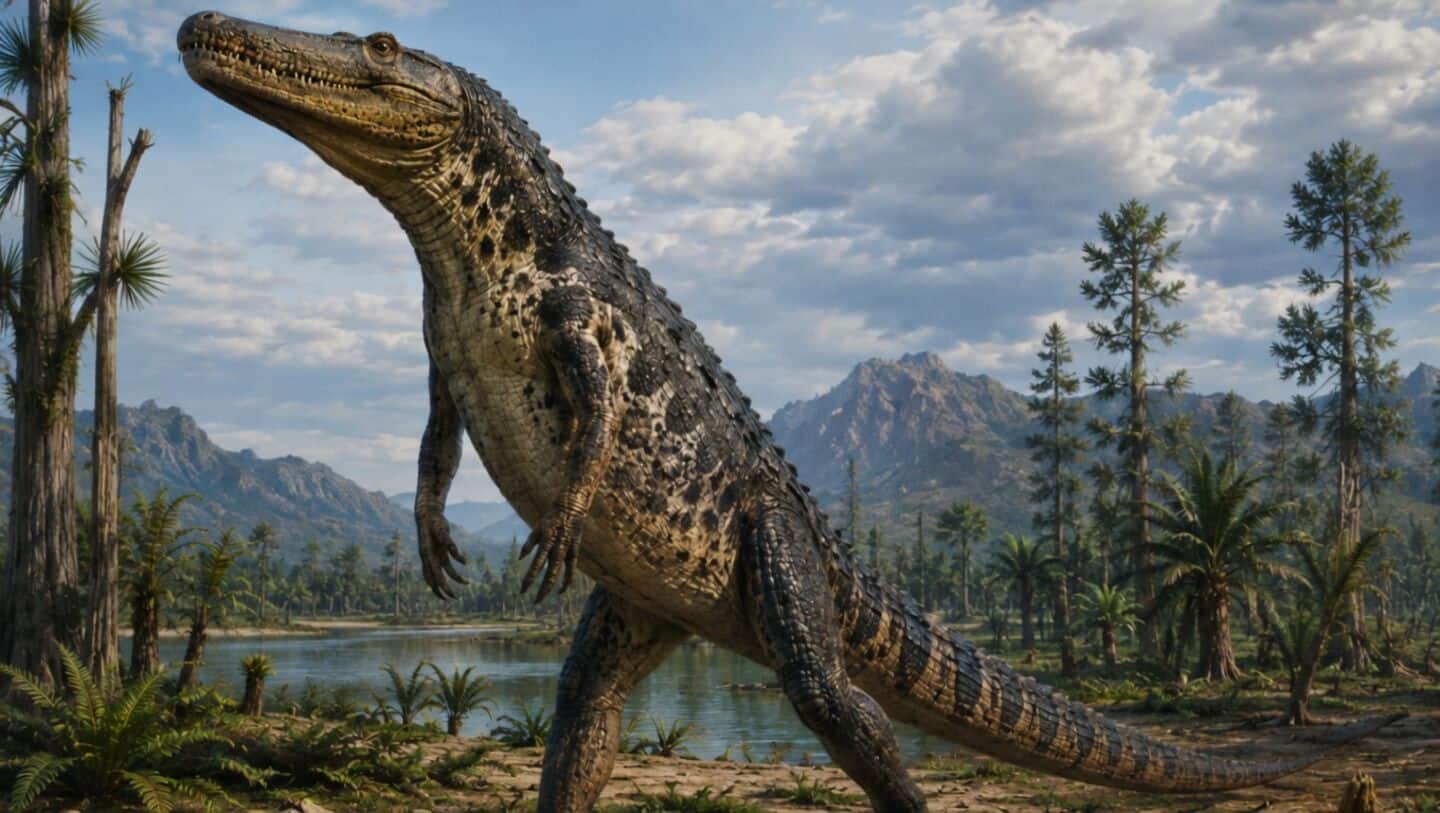
Scientists discover Labrujasuchus expectatus in New Mexico, bipedal crocodile cousin
Scientists just uncovered a new prehistoric creature called Labrujasuchus expectatus, a distant cousin of crocodiles that lived 212 million years ago in what's now New Mexico.
Unlike today's crocodiles, this one walked on two legs, had a toothless beak, and tiny arms that probably weren't much help for moving around.
Researchers reclassify 2006 fossils to Shuvosauridae
Although its fossils were dug up in 2006, researchers only recently realized it was a brand-new species in the Shuvosauridae family thanks to unique features like its humerus bone.
According to Alan Turner, who led the study, L. expectatus evolved some dinosaur-like traits, like an upright walk, even though it wasn't closely related.
This find helps scientists understand how ancient animals adapted, and highlights just how diverse life was when dinosaurs were first appearing.