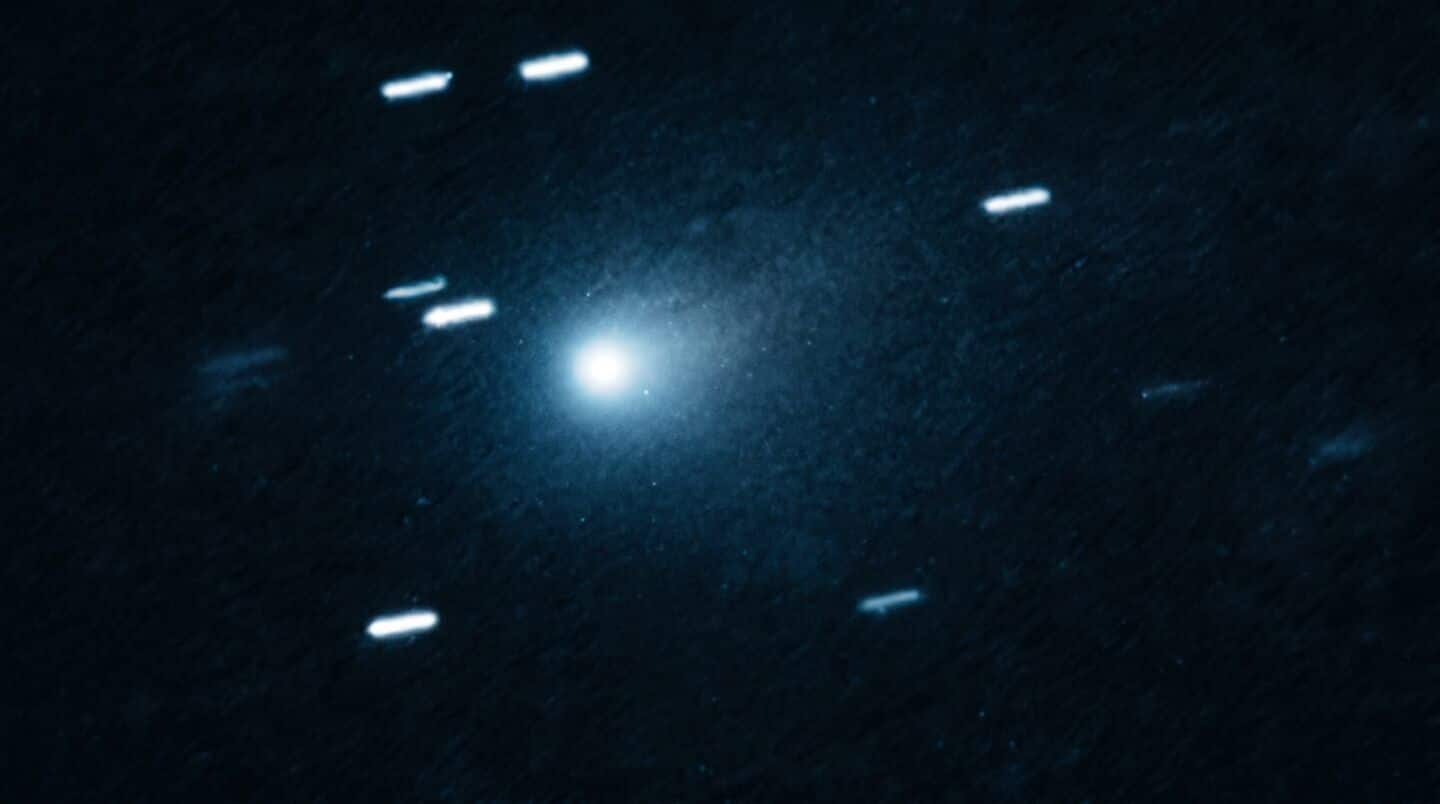
Scientists find 3I/ATLAS formed in much colder environment than ours
Scientists have found clues about interstellar comet 3I/ATLAS, revealing it was formed in a much colder place than our own solar system.
This is only the third time we've spotted an interstellar visitor like this, and the discovery gives us fresh clues about how different planetary systems might come together across the galaxy.
ALMA measures 30x D/H in 3I/ATLAS
Researchers found that 3I/ATLAS has a deuterium-to-hydrogen ratio much higher, 30 times more than any comet here and almost 40 times what's in Earth's oceans.
These findings, made possible by Chile's ALMA telescope, suggest it was born somewhere extra cold and far from strong radiation.
As study co-author Teresa Paneque-Carreo put it, "This is proof that the conditions that shaped our solar system are not universal," and "Planetary systems can form in very different environments across the galaxy," reminding us just how diverse our universe really is.